| |
A Resource by Mark D. Roberts |
|
Are the New Testament Gospels Reliable?
Part 1 of 3
by Rev. Dr. Mark D. Roberts
Copyright © 2005 by Mark D. Roberts
Note: You may download this resource at no cost, for personal use or for use in a Christian ministry, as long as you are not publishing it for sale. All I ask is that you give credit where credit is due. For all other uses, please contact me at mark@markdroberts.com. Thank you
My Various Wrings on Jesus
The Birth of Jesus: Hype or History?
Was Jesus Divine? The Early Christian Understanding
Why Did Jesus Have to Die?
Was Jesus Married? A Careful Look at the Real Evidence
What Was the Message of Jesus?
How Can We Know Anything about the Real Jesus?
What Languages Did Jesus Speak and Why Does It Matter?
Recovering the Scandal of the Cross?
The Passion of the Christ: An In-Depth Review
Unmasking the Jesus Seminar
Jesus Revealed: Know Him Better to Love Him Better, by Mark D. Roberts
Please pardon some shameless self-promotion, but I really do think this book has something to offer. Jesus Revealed examines many names and titles of Jesus (Son of God, Son of Man, etc.), explaining their historical, theological, and personal significance. Plus, I've added an appendix that answers the question "Was Jesus Married?" This book includes study questions for personal or group study. I've heard that it's helpful been helpful in adult classes and small groups. For more information or to purchase, click here. |
|
Are the New Testament Gospels Reliable?
Part 1 of series: Are the New Testament Gospels Reliable?  
Part 11 of series: Unmasking the Jesus Seminar
Posted on Monday, September 26, 2005
This post serves as a bridge between two different blog series. It's the last post in a series called Unmasking the Jesus Seminar, and the first post in a new series called Are the New Testament Gospels Reliable?
In my Unmasking series, I showed that the Jesus Seminar, a gathering primarily of New Testament scholars, appeared to be an objective attempt to determine what Jesus really said (and did). But, in fact, it was part of the overall vision of its founder, Robert Funk, to undermine orthodox Christianity, and especially its understanding of and faith in Jesus. The collection of Seminary Fellows, combined with the methodology they followed in their work, predetermined the Seminar's results. Beginning with extreme skepticism concerning the reliability of the gospels as historical sources about Jesus, the Seminar concluded – surprise! – that the gospels tell us relatively little about the historical Jesus. I don't mean to imply that every Fellow in the Jesus Seminar was a poor scholar (some were quite fine), or that everything the Seminar produced was worthless. But, on the whole, the main thrust of the Seminar's work was both academically suspect and injurious to Christian orthodoxy.
For the most part, the Jesus Seminar is old news these days. It no longer makes headlines because it ran out of sayings and actions of Jesus to debunk. Once it showed that Jesus didn't say much of what was attributed to him in the gospels, and that He didn't do much of what was attributed to him in the gospels, there wasn't much left for the Seminar itself to say or do.
Nevertheless, it seemed good to me to engage the Jesus Seminar on a critical basis. I wrote the Unmasking series, partly because some of the Fellows from the Jesus Seminar, like John Shelby Spong or Marcus Borg, continue to pass on the sins of the fathers to the children through their writings. Moreover, many people who never read one actual word published by the Jesus Seminar still live under its ominous shadow. I know Christians who have had a nagging feeling that sometime in the recent past a bunch of objective scholars got together and discovered that Jesus didn't say much of what the gospels record. And I know non-Christian folk who read the newspaper accounts of the Jesus Seminar and, to this day, have had no reason to doubt what was so enthusiastically reported about the historical unreliability of the gospels. I've tried to suggest many reasons to doubt the results of the Jesus Seminar, so that people might not be haunted or inspired by its ghost.
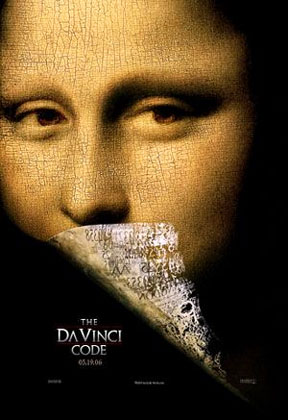
Yet the Jesus Seminar's passing didn't put an end to imaginative speculation about Jesus and the gospels. The most recent version of such comes from Dan Brown's bestselling book, and soon to be hit movie, The Da Vinci Code. To his credit, Brown doesn't claim to have written non-fiction. His book, after all, is a novel. Yet within the construct of the novel there is a lot of what is presented as if it were in fact historically accurate information about Jesus and early Christianity. And then there's the tantalizing statement on the first page of the book: "All descriptions of artwork, architecture, documents, and secret rituals in this novel are accurate." Since The Da Vinci Code has much to say about many early Christian documents, it seems as if Dan Brown is claiming that anything he says about these documents is actually true.
In fact, many readers, both Christian and non-Christian, have taken the fictional history of early Christianity as its presented in The Da Vinci Code as fact. When characters say things like, "All scholars know that . . .," many readers have taken this as a statement of fact, rather than an fictional claim of a novel. The result is that many people now believe that the biblical gospels, Matthew, Mark, Luke and John, are unreliable sources of information about Jesus, and that the non-canonical gospels, like the Gospel of Mary or the Gospel of Philip, provide the unabridged truth about Jesus. |
|
| |
This movie, staring Tom Hanks, is due to be released on May 19, 2005
|
In my series called Was Jesus Married? A Careful Look at the Real Evidence, I've examined the latter part of this belief. I've shown that the non-canonical gospels, in addition to being unreliable sources of information about Jesus, actually provide almost nothing to support the fiction of Jesus's marriage as it's presented in The Da Vinci Code. But this book has left a lingering impression, rather like the distant echoes of the Jesus Seminar, that the New Testament gospels are unreliable.
Therefore, as I finish up my Unmasking the Jesus Seminar series, I'd like to segue into a new but related series, one I'm calling Are the New Testament Gospels Reliable? In the several posts of this new series, I want to explain why Matthew, Mark, Luke, and John are, in fact, reliable.
I'm thinking of reliability in two different senses. On the one hand, I intend to show that the biblical gospels are reliable sources of historical information about Jesus. In spite of their various limitations, these documents can help us to know quite a bit about what Jesus said and did. On the other hand, I also want to show that the New Testament gospels are reliable as a basis for faith in Jesus. Christians who take these documents seriously as guides to knowing Jesus are, in my view, acting reasonably, and I want to explain why. (Yes, of course I have a bias in this matter. But I think I can defend my bias with reasonable arguments and ample evidence.)
My new series, therefore, will pick up where the Unmasking series leaves off. I hope that I have shown why the Jesus Seminar should be dismissed by folks who want to know the facts about Jesus. I hope that I will show a better way to determine who Jesus was, what He said, and what He did. Therefore, this new series is the positive flip-side of the Unmasking series.
Before finish this post, I want to mention five further points.
First, this new series will be an elaboration of another series I did called How Can We Know Anything About the Real Jesus? I won't repeat everything in that series, especially the material about non-biblical sources of information about Jesus. But I will take the closing points of that series and develop them much further in this new series.
Second, as I stated at the beginning of How Can We Know Anything About the Real Jesus?, I am well aware that the topic I'm planning to discuss is vast, complex, and filled with controversies. If you're not familiar with my background, I should mention that I completed a Ph.D. in New Testament at Harvard, where I studied with some of the top critical scholars in the world, and where I had many bright colleagues, at least seven of whom ended up as Fellows in the Jesus Seminar. So I'm quite familiar with many of the critical issues associated with the gospels and the question of the historical Jesus. Moreover, when I wrote my book Jesus Revealed, I read a lot of the newer academic literature on Jesus, including things published by Jesus Seminar Fellows. So, though I'm not a full-time scholar, I'm reasonably up to date on the scholarly conversation about Jesus.
Third, this new series is meant primarily for my blog readers – an educated group composed mostly of non-specialists. In other words, I'm not writing for New Testament scholars. This means I will not footnote my comments as I would if I were producing an academic paper. And I will feel the freedom to make generalizations without backing up everything I say with reams of evidence.
Fourth, if you're the sort of person who likes those reams, you should check out the preceding post in the Unmasking series ("What Do Scholars Really Think About Jesus?") In this post I made reference to lots of scholarly literature on Jesus and the gospels. Perhaps the most directly relevant book for this new series is The Historical Reliability of the Gospels by Craig Blomberg. Blomberg is a top-notch evangelical scholar who defends the trustworthiness of the biblical gospels in 250 demanding yet readable pages.
Fifth, in this new series I hope to show why it's reasonable to regard the New Testament gospels as reliable, both for historical inquiry and for personal faith. I cannot prove that the gospels are accurate, however, because this sort of proof cannot be had in historical investigations. Nor can I solve all of the problems that attach themselves to the question of the trustworthiness of the gospels. Many of these, quite honestly, I'm still working on in my forays into academia. But I do believe that a reasonable person, looking at the facts with an open mind, will conclude that the New Testament pictures of Jesus, while not photographic, are sufficiently realistic to merit both scholarly and spiritual confidence.
Can We Know What the Original Gospel Manuscripts Really Said?
Part 2 of series: Are the New Testament Gospels Reliable?
Posted on Tuesday, September 27, 2005
When we open a Bible and look for the gospels, we find them in English translation, neatly collected at the beginning of the New Testament, complete with book names, chapter and verse numbers, punctuation, paragraphs, and these days, usually with chapter headings and reference notes. None of these were present in the original manuscripts of the writings we know as Matthew, Mark, Luke, and John. (Yes, even punctuation wouldn't have been present in the original documents.) What we find in our Bibles is the result of a process of preservation, translation, and publication. It makes sense to wonder if what we read bears any resemblance to what the gospel writers actually penned almost 2,000 years ago. Can we know what the original gospel manuscripts really said?
It's not uncommon these days for people to answer "no" to this question, though these skeptics almost inevitably have no idea what they're talking about. Critics of Christianity often allege that the gospels as we know them bear little resemblance to the originals. This criticism appears on the lips of Sir Leigh Teabing, a fictional historian in Dan Brown's The Da Vinci Code. Teabing "reveals" the truth about Jesus and early Christianity to Sophie, a naïve and willing learner in the novel, whose "education" also instructs the novel's reader. In his typically condescending fashion, Teabing begins to enlighten Sophie about the true nature of the Bible in this way:
"The Bible is a product of man, my dear. Not of God. The Bible did not fall magically from the clouds. Man created it as a historical record of tumultuous times, and it has evolved through countless translations, additions, and revisions. History has never had a definitive version of the book." (p. 231)
Of course there's a measure of truth here, as is usually the case with Teabing's revelations, but only a measure. The Bible is indeed a human product, though this in no way implies that it is not also "of God." And it did not fall from the clouds. But, contra Teabing, the Bible has not "evolved through countless translations, additions, and revisions." It has indeed been translated into more than 2,000 languages – far more than any other book – and it has been released in myriads of additions. But these translations and additions are all based on the same basic ancient documents, as I'll show in a moment. The "evolved through countless translations" part is fictional.
The original gospels were written sometime in the second half of the first century A.D. (I'll say more about the dating of the gospels later in this series.) It's likely that they were written on scrolls of papyrus (a rough, paper-like substance). But it's highly unlikely that any of the original gospel manuscripts (called by the technical term "autographs") exist today. They were probably worn out through use, lost, burned, destroyed, reused, or even eaten by critters.
Yet ancient people had a way of preserving the information contained in their scrolls: copying. Trained scribes would copy the words from one document onto a new document. Their training taught them to minimize errors and maximize accuracy. Yet their's was not a slavish task, because there were times when scribes would make changes as they copied (when, for example, they believed that their source text contained an error). Even the best of scribes, however, sometimes made unintended errors.
So, the fact that the original gospel manuscripts did not survive to this day, combined with the fact that for centuries the text was passed on through a process of copying, makes one wonder whether we can trust that the Greek text of the gospels we have today looks anything like what the authors originally wrote down.
The answer to this query is an enthusiastic "yes." Though we cannot be completely sure that every word in our Greek manuscripts precisely reproduces what was first penned, we can have confidence that we're pretty close in most cases. Let me explain why.
First of all, we have well over 2,000 Greek manuscripts of the gospels (and other ancient translations like Latin). Compared with other ancient writings, this is a veritable wealth of material. Classical scholars are often forced to rely on a handful of manuscripts of ancient texts, whereas New Testament scholars are overwhelmed with primary material. |
|
| |
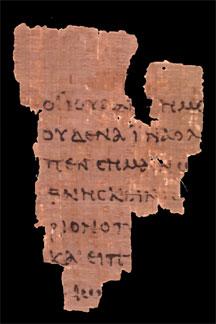
This is p52, the oldest fragment of the New Testament. (The 'p' stands for papyrus, the substance of the fragment.) It has been dated to around 125 A.D. The text is from the Gospel of John, which was written around 90 A.D. So the gap between the original and this copy is about 30-50 years. The text reads (in translation, with bold letters represented in p52): The Jews replied, “We are not permitted to put anyone to death.” (This was to fulfill what Jesus had said when he indicated the kind of death he was to die.) Then Pilate entered the headquarters again, summoned Jesus, and asked him, “Are you the King of the Jews?” (John 18:31-33). |
Second, many of the gospel manuscripts are quite old, and therefore trustworthy. We have a few papyrus fragments and documents of the gospels that date from the second century A.D., with more from the third century. Full-scale manuscripts of the gospels and the rest of the New Testament can be dated to the fourth and fifth century. Now this might seem like a significant time gap between the writing of the gospels and the manuscripts we now possess, but in comparison with other ancient Greek writings, the New Testament documents are in a different league. For example, the earliest manuscripts of Herodotus (5th century B.C. Greek historian), Plato (4th century B.C. Greek philosopher) and Josephus (1st century A.D. Jewish historian) are at least 1,000 years later than the time of writing.
Third, though the process of copying ancient documents wasn't flawless, as I explained above, it was actually quite reliable. Moreover, because contemporary scholars understand this process, and because there are so many texts of the New Testament, scholars are able to identify scribal errors and changes with a high degree of probability.
Fourth, the discipline of text criticism – by which experts seek to identify the earliest form of the text – is the most objective in New Testament scholarship, and therefore offers the most certain results. Though text critical scholars might disagree about some passages, the amount of agreement among diverse critics is exceptional, unlike what you'd find when it comes to other New Testament disciplines, like exegesis, for example. This doesn't necessarily mean that we always get back to the original autographs, but it does mean we can have a high level of confidence in the findings of text criticism. |
|
| |
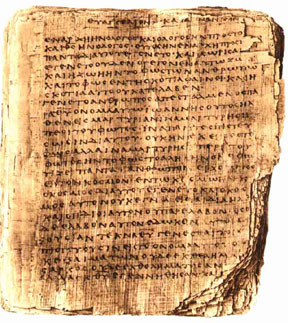
This is p66, which is called the Bodmer Papyrus. It dates from around 200 A.D. The text is John 1:1-13, plus the first word of verse 14. As you can see, there are many more pages in this papyrus. |
Fifth, though there are a few verses in the gospels (less than 3%) in which some words may still be uncertain, the vast majority of verses in our critical texts reflect the original writing, or something very close to it. Moreover, the disputed words are almost always trivial. The only exception I can think of is the ending of Mark's gospel, where we can't be sure about the originality of everything after Mark 16:8. Most translations put the latter verses in brackets. This passage is the one in which Jesus promises that believers will speak in tongues and be immune to the venom of snakes or to deadly poison. Quite a few Appalachian Christians literally stake their life on a passage that may not be part of Mark's original gospel. If you're not into snake-handling, however, you don't have to worry about the textual authenticity of the biblical gospels.
All of this means that when you read one of the New Testament gospels, you are almost certainly getting the words of the original author (in translation, of course, unless you can read Greek). Can we know what the original gospel manuscripts really said? Yes, with a high level of confidence. This doesn't guarantee the truthfulness of gospel writers, of course. I'll begin to address this topic in my next post.
When Were the New Testament Gospels Written?
Part 3 of series: Are the New Testament Gospels Reliable?
Posted on Wednesday, September 28, 2005
When we're considering the reliability of the New Testament gospels, the date when they were first written seems relevant. If Matthew, Mark, Luke, and John were composed fairly soon after Jesus's death, this would seem to increase their historical value. But if they were written much later, this would appear to minimize their trustworthiness as historical sources. (We must remember, however, that an eyewitness could fabricate events, while a careful historian writing much later could accurately portray the facts. But the basic idea that earlier gospels would tend to be more accurate is correct.)
There are dozens of documents called "gospels" that date from the first few centuries of the Christian era. Four of these appear in the New Testament; the others appear today in various collections, like the Nag Hammadi Library, the New Testament Apocrypha, and so on. Many of the non-canonical gospels don't resemble the New Testament models, except insofar as they contain information about Jesus. Almost without exception, the non-canonical gospels were written in the second or third centuries A.D. So, for example, The Da Vinci Code bases its notion of Jesus's marriage to Mary Magdalene upon two "gospels," the Gospel of Mary Magdalene and the Gospel of Philip. When were these "gospels" written? Almost all scholars date the writing of these texts to the second (Mary) or third (Philip) centuries. (The possible exception to the rule of the non-canonical gospels being written in the second century or later is the Gospel of Thomas, which some scholars would date in the first century. The majority, however, would place its composition in the first half of the second century.)
How does the dating of the New Testament gospels compare with the non-canonical gospels? Almost every scholar, of no matter what theological stripe, would date Matthew, Mark, Luke, and John earlier than all the apocryphal gospels (except for Thomas). Yet identifying the precise time of authorship is difficult and fraught with subjectivity. If, as I suggested in my last post, text critical scholarship leads to some of the most certain results when it comes to gospel studies, the dating of the gospels leads to some of the least certain.
We can be sure, however, that by 180 A.D., the New Testament gospels were well-known in church circles and believed to be authoritative. Irenaeus of Lyons, in his treatise Against Heresies, specifically mentions Matthew, Mark, Luke, and John, in that order, and refers to them as authoritative "gospels" that affirm the same basic rule of faith. The details mentioned by Irenaeus, having largely to do with who wrote these gospels, place their authorship in the latter half of the first century A.D. (Against Heresies 3.1.1-2). |
|
| |
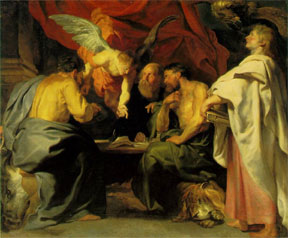
"The Four Evangelists" by Peter Paul Rubens, c. 1614. Rubens uses traditional symbols for the four evangelists (gospel writers): Matthew/human; Mark/lion; Luke/ox; John/eagle.
|
Fifty years earlier than Irenaeus, a bishop named Papias, who lived in Heirapolis (modern Turkey), wrote a document known as An Exposition of the Lord's Sayings. It doesn't exist anymore, but it is quoted in other early Christian writings that we do have today. One of these quotations, in the writings of the church historian Eusebius, mentions that Mark wrote down things that Peter taught about Jesus, and that Matthew complied reports about Jesus "in a Hebrew dialect" (Eusebius, History, 3.39.15-16). Though the precise meaning of this passage from Papias isn't clear, it seems likely that he is referring to what we know as the gospels of Mark and Matthew. If so, then we have a reliable latest possible date for the writing of these two gospels: prior to 130 A.D., when Papias died. Moreover, what Papias says about these gospels dates their authorship into the first century.
Other arguments for the dating of the New Testament gospels refer to "internal evidence," to hints in the documents themselves that suggest a certain period in which the first writing occurred. For example, scholars pay close attention to the ways that Matthew, Mark, Luke, and John talk about Jerusalem, especially in light of its destruction in 70 A.D. Yet if you read the arguments of this sort, they are filled with subjective judgments as to what an author "surely would have said" or "might have meant," and so forth and so on.
When all is said and done, almost all biblical scholars believe that the New Testament gospels were written in the latter half of the first century A.D. The most common dates for the writing of these gospels are:
Matthew: 70-80 A.D.
Mark: 60-70 A.D.
Luke: 70-80 A.D.
John: 80-90 A.D.
It should be noted, however, that there may have been earlier editions of these gospels, and that they may well contain earlier written sources. I'll say more about this later.
The New Testament gospels are assuredly earlier than all the other so-called "gospels," with the possible exception of Thomas, which may have been written in the latter part of the first century, though most scholars think it is somewhat later. This suggests that the biblical gospels are more reliable as historical sources than their non-canonical counterparts. But the conclusion that the New Testament gospels were written 30-60 years after the death of Jesus makes one wonder whether they can be trusted as historical sources. How did the gospel writers get back to what really happened two or three generations earlier? This, in turn, leads to questions about the sources used by Matthew, Mark, Luke, and John. To these questions I'll turn in my next post.
What Sources Did the Gospel Writers Use?
Section A: Written Sources
Part 4 of series: Are the New Testament Gospels Reliable?
Posted for Thursday, September 29, 2005
As I explained in my last post, the New Testament gospels are much older than the other so-called "gospels" that get a lot of press these days. With the possible exception of the Gospel of Thomas, the non-canonical gospels were written at least a hundred years after the death of Jesus, and many were written more than two hundred years later. By contrast, Matthew, Mark, Luke, and John were penned within 30 to 60 years after Jesus departed from this earth. So it's logical to conclude that, among the "gospels," the biblical documents are likely to be more reliable as historical sources for knowledge about Jesus than their non-canonical counterparts. (Some of these other gospels probably do preserve some genuine traditions about or sayings of Jesus, ones that are independent of the biblical gospels. For the most part, however, the non-canonical gospels tell us quite a bit about those who wrote and read them, but relatively little about Jesus Himself.)
Yet, if the writers of the biblical gospels produced their works even 30 to 60 years after Jesus, we might wonder whether this still counts against their historical validity. Is there reason to believe that the gospel writers had reliable information about Jesus? And if so, in what forms did this information come? What sources did the gospels writers use?
A Christian might respond at this point: "Well, they were inspired by the Holy Spirit. Isn't that enough? I believe that the Spirit guided them and helped them to write the truth about Jesus, just as Jesus had promised (John 14:26; 16:13-15)." This is a fine article of faith, and one that I would affirm, except for the question "Isn't that enough?" Yes, it is enough for many Christian believers. But for others, the historical questions are also important. This goes for many Christians, especially those who find themselves in evangelistic or apologetic conversations where historical knowledge of the gospels is essential.
The fact that the gospel writers used sources isn't something made up by biblical scholars. In fact, it appears in the very text of the gospels. The Gospel of Luke begins with this prologue:
Since many have undertaken to set down an orderly account of the events that have been fulfilled among us, just as they were handed on to us by those who from the beginning were eyewitnesses and servants of the word, I too decided, after investigating everything carefully from the very first, to write an orderly account for you, most excellent Theophilus, so that you may know the truth concerning the things about which you have been instructed.
Notice carefully what Luke claims:
1. "Many" have already "set down" (in writing) an orderly account of the events concerning Jesus. We don't know exactly what "many" means, except that it surely implies more than one or two written sources.
2. The events concerning Jesus "were handed on to us by those who from the beginning were eyewitnesses and servants of the word." "Handed on" is the language of oral tradition. "Eyewitnesses" are those who actually saw and heard Jesus. "Servants of the word" are those who preach and teach. So Luke attests to a thriving oral tradition about Jesus, which is based on eyewitness testimony, and is passed on in the church by preachers and teachers.
3. Luke decided to write his gospel "after investigating everything carefully." In other words, he has read the "many" written accounts of Jesus studiously, and has made an effort to gather and sift through the oral traditions about Jesus.
So Luke refers to two different kinds of source material, written and oral. I'll say more about the oral tradition from which Luke and the other gospel writers drew later on. In the rest of this post I want to discuss the written sources used by Luke and his fellow evangelists. ("Evangelist" is often used to refer to the gospel writers, since they were writing "good news," or in Anglicized Greek, the "evangel.")
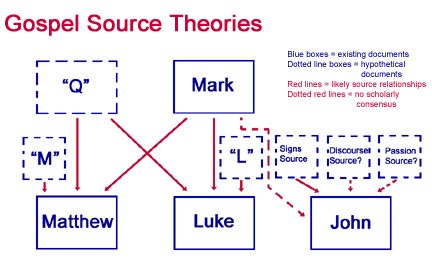
One of the problems we face when seeking the written sources for the biblical gospels is that we don't have copies of these sources, with the exception of the gospels themselves, one or more of which may have been used by other gospel writers. Thus scholars have come up with a number of theoretical sources, the most famous being the source known as "Q," (the first letter of the German word Quelle, which means "source"). Q is part of a larger theoretical framework that seeks to explain the relationships between the New Testament gospels and their sources. This framework is represented in the following diagram:
 |
|
This chart is a greatly simplified representation of what might be called "currently scholarly consensus." My guess is that reality is much more complex than this, but that the basic outlines in this chart are correct. (Chart to left Copyright © 2005 Mark D. Roberts. May be used without charge if appropriate credit is given.) |
Though I don't have the space to explain the reasons for this schema, I do want to make five quick comments.
1. Q is a collection of more than 200 sayings that appear in both Matthew and Luke, but not in Mark. Though a few scholars try to explain the existence of these sayings by arguing that Luke used Matthew, this theory hasn't gained widespread acceptance. It does seem likely that one of the written accounts Luke used was a collection of sayings, which Matthew also used in writing his gospel.
2. The majority of New Testament scholars, representing a wide variety of academic and religious opinion, believe that Matthew used Mark as one of his major sources. The other sources include Q and "M," which is shorthand for "Matthean sources." M would include material that is unique to Matthew, such as the visit of the Magi. There are a few scholars who argue that Matthew wrote first, and Mark abridged Matthew, but it's hard to account for the peculiarities of Matthew and Mark according to this scenario.
3. "L" is shorthand for "Lukan source material," which would include, for example, the infancy narratives in Luke. Some have suggested that "L" includes remembrances of Mary, Jesus's mother.
4. Theories about the sources for and development of John are many and complicated. I've given a simplified version in the diagram. Some scholars have made a strong case for John's use of the Gospel of Mark, though the jury is still out on this one.
5. My guess is that reality was actually far more complex than what is depicted in the chart above. L, for example, may have been several documents. Likewise with M, and perhaps even Q.
Whether this framework is accurate or not, it is clear, both from the testimony of the gospels and from thoughtful scholarship, that the writers of the New Testament gospels used written sources when they wrote. It's impossible to date these sources with any accuracy, though some scholars have given it the ol' college try. Nevertheless, the fact that the evangelists used sources increases the likelihood that what they portrayed about Jesus actually happened. Though Matthew, Mark, Luke, and John exercised a measure of literary freedom in writing, they based their compositions upon older sources, sources that may were probably written within 15-30 years of Jesus's death. It's certainly true that the didn't just make things up from scratch.
Moreover, Luke's introduction tells us quite a bit about this intentions and his methods. It's clear that he wasn't writing a neutral history of Jesus, as if such were even possible. Yet it's equally clear that Luke didn't just sit down and whip off a piece of religious propaganda. He was a careful scholar who sought to write a trustworthy account of the ministry of Jesus.
Having noted the written sources used by the New Testament evangelists, we're still not talking about documents penned by eyewitnesses. In order to understand how the remembrances of those who actually saw and heard Jesus made it into the gospels, we need to talk about oral tradition and its trustworthiness. I'll tackle this topic next time.
What Sources Did the Gospel Writers Use?
Section B: Oral Sources
Part 5 of series: Are the New Testament Gospels Reliable?
Posted for Friday, September 30, 2005
In yesterday's post I discussed the written sources used by the writers of the New Testament gospels. Today I want to look at the oral sources utilized by the evangelists.
Let me emphasize, once again, that the existence of oral traditions about Jesus is mentioned in the New Testament itself. You may recall the preface of Luke's gospel:
Since many have undertaken to set down an orderly account of the events that have been fulfilled among us, just as they were handed on to us by those who from the beginning were eyewitnesses and servants of the word, I too decided, after investigating everything carefully from the very first, to write an orderly account for you, most excellent Theophilus, so that you may know the truth concerning the things about which you have been instructed. (Luke 1:1-4, emphasis added)
Notice that the events concerning Jesus "were handed on to us by those who from the beginning were eyewitnesses and servants of the word" (v. 2). Who were these "eyewitnesses and servants of the word"? No doubt they included the original disciples of Jesus, both the Twelve and others who observed Jesus during his earthly ministry and came to believe after His death and resurrection that He was the Messiah of Israel. Of course it makes logical sense that the first oral traditions about Jesus would have originated with those who had followed Him closely and knew His words and deeds.
The verb "to hand on" (Luke 1:2; paradidomi in Greek) is a technical term for the passing on of oral tradition. This same verb appears in one of Paul's letters to the Corinthians, where he describes receiving and delivering oral traditions about Jesus:
For I handed on [paradidomi] to you as of first importance what I in turn had received: that Christ died for our sins in accordance with the scriptures, and that he was buried, and that he was raised on the third day in accordance with the scriptures, and that he appeared to Cephas, then to the twelve. (1 Corinthians 15:3-5)
Paul's testimony concerning early Christian oral tradition is significant for several reasons. Among them is that fact that he wrote his first letter to the Corinthians in the early 50's A.D., prior to the composition of the gospels. Thus, within about 20 years of Jesus's death we have clear evidence that the early Christians passed on information about Jesus. Moreover, the form of the tradition Paul mentions is obviously stylized, which assists in the accurate transmission of that tradition. Paul was not just passing on the content of the tradition in whatever words he happened to choose. Rather, he was delivering to the Corinthians the exact message that had been given to him earlier. This doesn't mean that all of the early traditions about Jesus were memorized and passed on verbatim, of course, but it does suggest that this sort of thing both could and did happen, and that it was important to the early followers of Jesus to pass on traditions about him accurately. (Note: we do not find in Paul's letters, much evidence that he himself knew the traditions that end up in the New Testament gospels. We also don't find Paul making up words of Jesus, either.)
Following the death and resurrection of Jesus, His early followers passed on stories about Him and things He said. This often happened, as Luke mentions in his prologue, in the context of the ministry of the word, namely preaching and teaching.
It's certainly possible that at a very early date some of these stories or sayings were written down, but we have no evidence to prove this conjecture. The fact is that the culture in which the first disciples of Jesus lived was predominantly an oral, not a literary culture. People tended to tell and remember things more than recording them in writing. The rabbis were adept at remembering and passing on the oral Torah to their disciples, who accurately retained both the oral Torah and the commentary of their masters. But even first-century Jewish pop culture had a strong oral component. In the synagogue and around the family table, in religious gatherings and at parties, in educational settings and in the local tavern, people told stories, quoted bits of wisdom, and in so doing shaped the culture in which they lived.
This picture of storytelling has suggested to some scholars a kind of creative free-for-all in which Christian teachers and prophets made up all sorts of stories about and sayings of Jesus. You'll find this perspective writ large throughout the published writings of the Jesus Seminar, for example. But the Seminar greatly overstates the creative license of early Christian storytellers, while at the same time greatly underestimating the extent to which the early Christians were strongly motivated to pass on the sayings and deeds of Jesus with considerable accuracy.
After all, remember what the early Christians believed about Jesus. They thought He was the Messiah, the Savior of Israel, and the One through whom God was inaugurating His kingdom. They saw Jesus, not only as a wise teacher, but in some way as the very embodiment of God's Wisdom. And, in what was shocking to the majority of Jews in the first century, the earliest Christians confessed Jesus to be Lord: not just an authoritative human being, but God. (Yes, I'm aware that some biblical scholars deny what I've just said. But the evidence is strongly on my side here. I've written extensively about this in my series Was Jesus Divine? The Early Christian Understanding.)
Furthermore, the New Testament gospels bear witness to how important the early Christians believed the words of Jesus to be. Consider, for example, the following passages:
Everyone then who hears these words of mine and acts on them will be like a wise man who built his house on rock. (Matthew 7:24)
Go therefore and make disciples of all nations, baptizing them in the name of the Father and of the Son and of the Holy Spirit, and teaching them to obey everything that I have commanded you. (Matthew 28:19-20)
Heaven and earth will pass away, but my words will not pass away. (Mark 13:31)
It is the spirit that gives life; the flesh is useless. The words that I have spoken to you are spirit and life. (John 6:63)
So Jesus asked the twelve, “Do you also wish to go away?” Simon Peter answered him, “Lord, to whom can we go? You have the words of eternal life. (John 6:67-68)
Do you not believe that I am in the Father and the Father is in me? The words that I say to you I do not speak on my own; but the Father who dwells in me does his works. (John 14:10)
But the Advocate, the Holy Spirit, whom the Father will send in my name, will teach you everything, and remind you of all that I have said to you. (John 14:26)
If you abide in me, and my words abide in you, ask for whatever you wish, and it will be done for you. (John 15:7)
At the moment I'm not claiming that Jesus actually said any of these things. My point is that whether He said them or not, the early Christians believed these things to be true. Thus it's clear that they had strong motivation to pass on the sayings of Jesus with considerable accuracy (and the same would go for his actions, by the way).
Yet, even if the early followers of Jesus had reason to preserve and pass down his sayings accurately, we may wonder if they were able to do so. Doesn't the oral dimension of this process suggest that errors could easily creep into the tradition, along with all measure of creative innovations?
Scholars who have studied oral cultures have found that there is a certain amount of variance in the way stories and sayings are repeated in such cultures. But, contrary to what one might think, this variance happens within fairly conservative limits. So, though the early Christian community would allow for limited freedom in the telling and retelling of Jesus traditions, the essential content and even the essential language of the tradition was accurately preserved. (I've written more extensively about this topic in my series Unmasking the Jesus Seminar, parts 7, 8, and 9. I've also there included a bibliography of scholarly writings on oral tradition.)
So, in conclusion, here's why I believe that the early Christian oral tradition in fact passed on traditions about Jesus in an accurate manner:
1. The first storytellers were eyewitnesses, including those who had followed Jesus closely during his earthly ministry.
2. The sayings and stories of Jesus were passed down in public settings, where errors or egregious additions could and would have been corrected.
|
|
| |
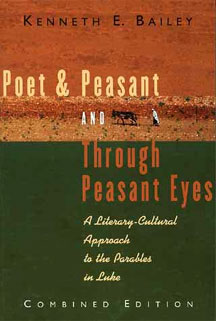
This book by Kenneth E. Bailey is a study of Jesus's parables through the lens of oral cultures. |
3. Oral cultures allow for a measure of freedom in the telling and retelling of stories, but they also guarantee the essential trustworthiness of the transmission process.
4. Some, if not many, of the traditions about Jesus were passed on in forms that made them especially easy to remember and recount accurately.
5. The early Christians, as products of an oral culture, were adept at hearing, remembering, and passing on stories accurately.
6. Some of the early Christians may even have been trained by their Jewish teachers to remember the sayings of their masters with extraordinary precision.
7. Given what the early Christians believed about Jesus, they were highly motivated to pass on oral traditions about him accurately.
8. Given what the early Christians believed about Jesus's teachings, even His words, they were highly motivated to pass them on carefully.
9. Accuracy and care do not translate into verbatim transmission, however, especially when translation from Aramaic to Greek is involved.
10. The demand for verbatim transmission is anachronistic, and is often used as a straw man to discount the basic reliability of the gospels.
11. None of what I've just described depends upon the help of the Holy Spirit. When you add in this spiritual element, you can have even greater confidence in the oral memory of the early church, but this is a theological more than a historical point. A non-Christian can still have confidence in the general reliability of the process by which the words and deeds of Jesus were passed down.
When these eleven points are taken together (along with other finer points that I don't have time to explain), they suggest to me that we can have a high level of assurance in the essential accuracy of the oral traditions about Jesus, at least in the first few decades after his death. It's clear that as time developed, the sort of creativity that some scholars mistakenly apply to the first Christians did in fact happen. We see this, not in the biblical gospels, but in the often fantastic and wildly creative non-canonical gospels. Compared to many of these second and third century works, the biblical gospels look like what junior highers in my church would call "boring history."
Did the Gospel Writers Know Jesus Personally? Section A
Part 6 of series: Are the New Testament Gospels Reliable?
Posted for Monday, October 3, 2005
This is the sort of question that gets biblical scholars, even conservative ones, into trouble with ordinary Christian folk. After all, many Christians (including me) grew up believing that the Gospel of Matthew was written by Matthew (Levi), a disciple of Jesus, and the Gospel of John was written by John, a disciple of Jesus. Furthermore, that's exactly what it says in our Bibles: "The Gospel according to Matthew" and "The Gospel according to John." So when scholars start questioning things like this, people often get bugged. Why can't scholars just leave well enough alone? Do they like undermining people's faith? (Yes, some do, but many don't. They do like asking lots of questions, though.)
Moreover, many of us like the idea that Matthew's gospel reflects his personal experience of Jesus, and John's his personal experience of the Lord. This seems to increase the likelihood of both gospels being historically accurate. It doesn't guarantee such accuracy, of course, because people can misrepresent what they know, or forget, or even make up things unintentionally. But it certainly feels better to know that Matthew and John really knew Jesus, even if Mark and Luke did not.
You won't be surprised to learn, I'm sure, that many scholars doubt these traditional views of gospel authorship. For reasons I'll explain later, they don't believe that any of the gospels were written by close followers of Jesus. But, given the tendency of much modern scholarship to be overly skeptical, you may be presently surprised to learn that quite a few scholars believe that the gospels, if not actually written by one of Jesus's disciples, nevertheless reflect genuine reminiscences by these disciples that were preserved in their Christian communities. So the Gospel of John, for example, may not have been penned by John himself, but may incorporate John's memories and teachings.
The basic problem we face when it comes to the authorship of the gospels is that they are anonymous, or at least they were at first. There's no evidence to suggest that whoever wrote Luke entitled his narrative about Jesus: "The Gospel according to Luke." He probably didn't even think he was writing something called a gospel. And he didn't put his name on it, at any rate. Yes, fairly early in the copying process scribes did begin to put the names "Matthew", "Mark", "Luke", and "John" next to the gospels supposedly written by them. But these names were not present in the first editions and copies of the gospels.
So how to scholars decide who wrote the gospels? They rely on two kinds of evidence: external evidence and internal evidence (though sometimes these overlap). External evidence is testimony from the early church about who wrote the gospels. Internal evidence is that which can be gleaned from the texts of the gospels themselves (or, in the case of Luke, from Acts as well, since the same author wrote both Luke and Acts). Let me supply some examples.
External Evidence for Gospel Authorship
In the second century A.D. it became common to identify the authors of the New Testament gospels as Matthew, Mark, Luke, and John. By early in the third century these identifications were solidly entrenched. We can't be sure how the tradition developed, but we can note a couple of significant signposts along the way. |
|
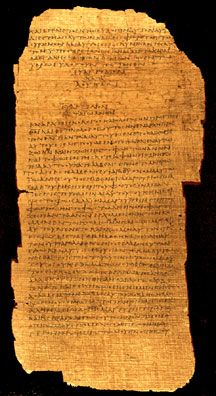 |
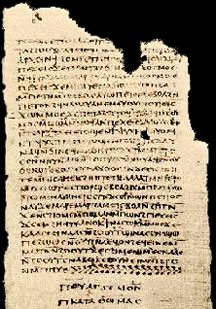
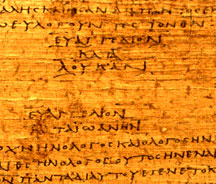
Above: A portion of p75 (Papyrus 75), which contains Luke and John, and was written around A.D. 200. This picture shows the place where Luke ends and John begins.
Below: This detail from the picture above shows the end of Luke and the beginning of John. The scribe has added: EUAGGELION KATA LOUKAN . . . EUAGGELION KATA IOANEN (Gospel according to Luke . . . Gospel according to John). |
 |
In about A.D. 180 Irenaeus of Lyon wrote a long refutation of various Christian heresies. In this piece he referred to the four New Testament gospels. To my knowledge, this is the first clear reference to all four with the traditional names attached. Here's what Irenaeus wrote:
Matthew also issued a written Gospel among the Hebrews in their own dialect, while Peter and Paul were preaching at Rome, and laying the foundations of the Church. After their departure, Mark, the disciple and interpreter of Peter, did also hand down to us in writing what had been preached by Peter. Luke also, the companion of Paul, recorded in a book the Gospel preached by him. Afterwards, John, the disciple of the Lord, who also had leaned upon His breast, did himself publish a Gospel during his residence at Ephesus in Asia. (Against Heresies 3.1.1).
There are lots of tantalizing details here that I don't have time to discuss. But I would say that, given the brevity of this paragraph and the lack of explanation, it seems like these traditions have already been well-established in the church circles in which Irenaeus was a leader.
The earliest bit of external evidence for gospel authorship comes from a passage I mentioned earlier in this series, when I was talking about the dating of the gospels. Around A.D. 130, a bishop named Papias wrote a document called An Exposition of the Lord's Sayings. This document, though not extant, is quoted by the church historian Eusebius. Here's what Papias had to say about the writing of the gospels:
And the presbyter said this. Mark having become the interpreter of Peter, wrote down accurately whatsoever he remembered. It was not, however, in exact order that he related the sayings or deeds of Christ. For he neither heard the Lord nor accompanied Him. But afterwards, as I said, he accompanied Peter, who accommodated his instructions to the necessities [of his hearers], but with no intention of giving a regular narrative of the Lord's sayings. Wherefore Mark made no mistake in thus writing some things as he remembered them. For of one thing he took especial care, not to omit anything he had heard, and not to put anything fictitious into the statements. [This is what is related by Papias regarding Mark; but with regard to Matthew he has made the following statements]: Matthew put together the oracles [of the Lord] in the Hebrew language, and each one interpreted them as best he could. (Eusebius, History, 3.39.15-16)
Again, I'm not going to pick apart this statement of Papias, though it certainly is tempting. I simply want to note that by about A.D. 130 the tradition of Matthew's and Mark's authorship was being passed down authoritatively. For various reasons, however, many scholars doubt the accuracy of the second-century traditions about gospel authorship. These reasons usually have to do with internal evidence, what the gospels themselves reveal about who wrote them (or not).
Given the length of this post, my discussion of internal evidence and my evaluation of all the evidence will have to wait until later. Stay tuned . . . .
Did the Gospel Writers Know Jesus Personally? Section B
Part 7 of series: Are the New Testament Gospels Reliable?
Posted for Tuesday, October 4, 2005
In my last post I began discussing the question of who wrote the New Testament gospels. In particular, I asked if there's any evidence that the gospel writers knew Jesus personally. I explained that when it comes to the question of gospel authorship, scholars scrutinize two different kinds of evidence: external evidence from church tradition and internal evidence from the gospels themselves. Then I surveyed some of the oldest external evidence, testimonies from the second century concerning the gospel writers. In this post I will talk about the internal evidence.
Internal Evidence for Gospel Authorship
As I mentioned in my last post, the gospels do not contain what would be the most helpful internal evidence of authorship: the name of the writer. The ancient Greek manuscripts begin to include these names perhaps a century or so after the gospels were first written. The original autographs were anonymous.
Most of the internal evidence for gospel authorship is fairly speculative. It involves such questions as: Since Mark's vocabulary included Latinisms (legion in 5:9; denarius in 6:37; centurion in 15:39, etc.), does this suggest that he was writing in a location where Latin was the primary language, such as Rome, and thus he might have been Peter's companion in Rome? Or, since Luke's theology differs from that of Paul in some respects, is it sensible to believe that the author of Luke/Acts had been a close companion of Paul? As you can see, there's lots of wiggle room in questions like these.
There are two pieces of internal evidence which, it seems to me, deserve serious consideration. One has to do with the authorship of Luke, the other with John.
Was the Author of the Third Gospel a Companion of Paul?
Second-century Christian tradition ascribes the authorship of the third gospel to Luke, a companion of Paul. Indeed, a person named Luke is mentioned in three of Paul's letters (Philemon 24, Colossians 4:14; 2 Timothy 4:11). Colossians adds that Luke is the "beloved physician" (Col 4:14).
Internal evidence for Luke's authorship for the third gospel comes from, not just the gospel, but also from Acts of the Apostles, which was written by the author of the third gospel (compare Luke 1:1-4 and Acts 1:1). In particular, there are passages in Acts where the author speaks as if he were a companion of Paul during some of his journeys (for example, Acts 16:10-17). Piecing together various clues, for centuries many have concluded that Luke was this companion of Paul, and therefore was the author both of Acts and the third gospel. Many scholars today believe this is a credible inference, while others deny it, largely on the basis of supposed differences between Luke's theology and Paul's theology, and because the "we-sections" in Acts are seen as a literary device.
If the connection between Luke and Paul can be made, this does increase the feeling of Luke's overall trustworthiness. His writings have, as it were, an apostolic imprimatur. But, of course, the curious thing about this connection is that Paul never knew Jesus personally. So linking Luke with Paul, though it might increase Luke's general believability, doesn't not provide evidence of how Luke knew the truth about Jesus. Of course the author of the third gospel explains right at the beginning that he consulted a variety of written and oral sources. He says nothing about his connection with Paul in this context.
Was the Author of the Fourth Gospel Jesus's Beloved Disciple John?
The most obvious, yet still tantalizingly cryptic, internal evidence for a writer of a New Testament gospel comes in the fourth gospel. In several passages near the end of the gospel, the text refers to someone as "the disciple whom Jesus loved." The last reference to this Beloved Disciple ends the fourth gospel. Here's what it says:
Peter turned and saw the disciple whom Jesus loved following them; he was the one who had reclined next to Jesus at the supper and had said, “Lord, who is it that is going to betray you?” When Peter saw him, he said to Jesus, “Lord, what about him?” Jesus said to him, “If it is my will that he remain until I come, what is that to you? Follow me!” So the rumor spread in the community that this disciple would not die. Yet Jesus did not say to him that he would not die, but, “If it is my will that he remain until I come, what is that to you?” This is the disciple who is testifying to these things and has written them, and we know that his testimony is true. But there are also many other things that Jesus did; if every one of them were written down, I suppose that the world itself could not contain the books that would be written. (John 21:20-24).
This passage appears to identify the writer of the gospel, though the Greek phrase behind "has written them" could mean "has caused them to be written," which would identify the Beloved Disciple as the source of and inspiration for the writing of the fourth gospel, but not its actual author. |
|
| |
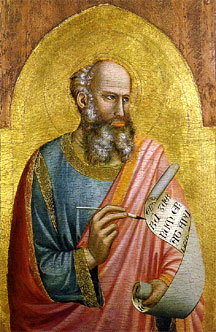
"St. John the Evangelist" by Giotto di Bondone, 1320-25 |
This passage appears to identify the writer of the gospel, though the Greek phrase behind "has written them" could mean "has caused them to be written," which would identify the Beloved Disciple as the source of and inspiration for the writing of the fourth gospel, but not its actual author.
Of course the other giant question is the identity of the Beloved Disciple. Traditionally, he has been seen as John the son of Zebedee, though this identification is never actually made in the fourth gospel itself. What is claimed, however, is that the one who wrote (or whose testimony stood behind) the fourth gospel was a disciple of Jesus, one whom Jesus dearly loved. This could well have been John, though surely Jesus might have loved another disciple John, someone whose name we don't know.
Most of the rest of the internal evidence for gospel authorship is, in my opinion, more speculative and less persuasive than what I've discussed above. If you're interested, you can check out any New Testament introduction for the arguments.
Tomorrow I'll sum up this discussion of gospel authorship and add a few personal observations.
Did the Gospel Writers Know Jesus Personally? Section C
Part 8 of series: Are the New Testament Gospels Reliable?
Posted for Wednesday, October 5, 2005
So far I've looked at some of the external (traditional) evidence and the internal (from the gospels) evidence for the authorship of the New Testament gospels. Now I'll sum up what we've found and offer my personal observations.
Summing Up the Question of Gospel Authorship
Most of the internal evidence for gospel authorship is quite speculative and, in my opinion, not terribly convincing. Scholarly opinion, therefore, rests largely on the weight given to the second-century traditions. Those who think that Irenaeus and his companions knew and passed on the truth tend to affirm traditional views. Those who doubt these traditions argue for more anonymity.
Why, you might wonder, would a scholar in the 21st century doubt the traditions that go back into the second century? Doesn't it make sense to think that those early traditions were based on actual testimony? Wouldn't you think that those who passed along the gospels also passed along information about who actually wrote them? Doesn't it seem like this information would have been important to the early users of the gospels?
All of this seems quite reasonable, unless you approach the tradition with a hermeneutic of suspicion. Quite a few scholars have argued that the names of the gospel writers were made up in order to gain authority for the writings. This is surely true when you consider the broader collection of Christian (or semi-Christian) "gospels." In the non-canonical writings you find such documents as: The Gospel of Thomas, The Gospel of Philip, The Gospel of Mary (Magdalene), The Gospel of Judas, The Gospel of Bartholomew, The Gospel of Peter, as well as many others. It's clear to almost all observers that these "gospels" were not actually written by the supposed authors. The names were attached to bring authority to the writings. So, some have concluded, the same is true of the New Testament gospels.
This argument could explain the naming of Matthew and John, though I think it reflects unwarranted skepticism about early Christian tradition. But the main flaw in this argument is obvious: Two of the biblical gospels were named after relatively inconsequential characters who did not actually know Jesus in the flesh. If you were some second-century Christian wanting to make up an author for a gospel, you'd never choose Mark, even if he was believed to be a companion of Peter. And you'd never choose Luke, because he had no direct connection to Jesus at all. If second-century Christians were fabricating traditional authorship, surely they could have done a better job. Assign the second gospel to Peter himself, for goodness sakes, not Mark! |
|
| |
This is a portion of the Gospel of Thomas manuscript found in Nag Hammadi in Egypt. The title at the bottom reads, in Coptic, "The Gospel of Thomas."
|
So, ironically, the tendency of the non-canonical gospels to assign authorship to disciples actually increases the likelihood that the traditions concerning New Testament gospel authorship are true, at least with respect to Mark and Luke. And if the tradition can be seen as trustworthy in these cases, then the presumption of suspicion about the tradition wrong-headed. We should accept the ancient tradition unless we have good reason to do otherwise.
Did the gospel writers know Jesus personally? With confidence, we can say "no" in the cases of Mark and Luke. But these writers clearly had access to reliable traditions about Jesus. Moreover, the fact that Mark was so quickly accepted by the early church (including Luke and Matthew, it seems) lends credence to the notion that Mark based his writing on reliable source(s), like Peter, for instance. Luke is clear in the introduction to his gospel that he used both oral and written sources for his narrative, with some of these going back to eyewitnesses of Jesus.
In the case of Matthew or John, it's possible that the evangelist was an eyewitness of Jesus Himself, and even one of the Twelve. There was a time when critical scholars seemed to discard this possibility energetically, almost glibly. But in recent years many have come to believe that the first and fourth gospels reflect the memory and the perspective of Jesus's own disciples, both Matthew and John (or the Beloved Disciple, at any rate). Matthew and John may not have been the actual writers of the gospels, but they, their memory, and their authority stand behind them.
If the writers of the first and fourth gospels actually knew Jesus personally, this does increase their reliability somewhat. But, given the fact that these gospels depend on earlier sources, both written and oral, their reliability does not depend on their authorship. (The same is true, by the way, for their spiritual authority. One could affirm the utter inerrancy of Scripture without affirming the traditional authorship of the gospels, which isn't claimed in the biblical text.)
So, did the gospels writers know Jesus personally? Mark and Luke did not. Matthew and John might have, but we can't be positive. Yet the reliability of the New Testament gospels does not depend on the question of who wrote them so much as on the nature and purpose of the writings themselves. If Luke, for example, did what he claimed to do in the prologue to his narrative, then he can be considered a reliable witness to Jesus even though he never actually saw Jesus in the flesh.
What are the New Testament Gospels?
History? Fiction? Biography? Or . . . ?
Part 9 of series: Are the New Testament Gospels Reliable?
Posted for Thursday, October 6, 2005
In this post I want briefly to discuss the question of the genre of the gospels, relating this to the issue of their reliability as historical sources for Jesus. If you know much about New Testament scholarship, you might think me a fool, because I'm taking on some of the most convoluted and disputed of topics in biblical scholarship, and trying to summarize them in a few paragraphs. But I'd better get going, because, in the classic words of Alexander Pope, "Fools rush in where angels fear to tread."
Viewing the Gospels in Their Own Milieu
One of the greatest problems when it comes to the discussion of the genre of the gospels is the popular tendency to weigh them in contemporary terms. This problem manifests itself in a variety of ways.
For example, if we compare the New Testament gospels to modern biographies, they don't fit this genre very well at all. Unlike our biographies, the gospels say very little about the early life of Jesus. They focus mainly on his works and sayings, and greatly upon his death. Moreover, the gospels are much shorter than biographies written today. So we'd be inclined to say that they're certainly not biographies. Yet if you compare the gospels with biographical writings in the Hellenistic world, you'll find many more similarities and fewer glaring differences. I'll say more about this in a moment.
For another example, consider the question of whether the gospels are in some sense history. They're obviously not histories like the classic writings of Herodotus and Thucydides, or the first-century works written by the Jewish historian Josephus. Yet it does seem that the gospels are a kind of history. (See especially the prologue to Luke's gospel, which bears a close resemblance to historical prologues in his time; Luke 1:1-4). Moreover, the gospel writers appear to have followed some of the conventions of history writing of their day, conventions which may seem foreign, or almost unhistorical, to us. Again, I'll say more about this in a moment.
In general, we must remember to evaluate the gospels, not anachronistically in light of our standards and genres, but in the context of writing in the Hellenistic world in which early Christianity flourished. Keeping this in mind will help us to avoid many of the pitfalls into which people plummet when discussing the genre and historical character of the gospels.
The Gospels as Hellenistic Biographies
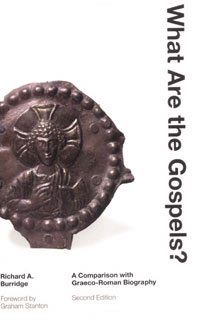
When I first began my academic studies of the New Testament, the party line among scholars was that the gospels constituted a unique genre. Though similar to ancient biography, history, romance, and aretology in certain ways, the gospels were unique, largely because of their focus on the death of Jesus and their theological emphases. More recently, biblical scholars have reassessed this conclusion, and argued that the gospels really do fit within the category of Hellenistic biography, albeit with some unique elements. This case has been presented persuasively by Richard A. Burridge in his manuscript, What Are the Gospels? A Comparison with Graeco-Roman Biography.
By and large, Graeco-Roman biographies were not the mammoth tomes we find in our bookstores today, but shorter and more focused works. It was common for the biography to skip over major parts of a character's life, limiting discussion to key events or speeches. Biographies were written, not so much out of antiquarian curiosity, but rather to make a contemporary, moral statement. The subject of the biography exemplified certain virtues, thus encouraging the readers to emulate these virtues. |
|
|
When seen in this light, the New Testament gospels seem to fit quite nicely within the genre of Hellenistic biography. Yet the gospels are distinctive in many ways, including their theological emphases and their focus upon the death of Jesus.
Literary Freedom and the Hellenistic Biographer/Historian
Those who do not believe the New Testament gospels provide much reliable historical information about Jesus often point to variations in the wording of sayings as they appear in different gospels, or to differences in the order of events between gospels. For example, when Jesus is baptized by John, a voice from heaven speaks, but the words differ slightly in Matthew and Mark (Luke agrees with Mark).
Matthew 3:17 - And a voice from heaven said, “This is my Son, the Beloved, with whom I am well pleased.”
Mark 1:11 - And a voice came from heaven, “You are my Son, the Beloved; with you I am well pleased.”
This sort of difference delights detractors of the gospels and perplexes the faithful. It would be pretty hard to argue that the voice from heaven said the same sentence twice in slightly different ways (though I expect this argument has been made somewhere). No, it seems more likely that Matthew and Mark use slightly different words for the same vocal event. If Matthew was using Mark, he made a few changes. (Or it happened the other way around.) Does this prove that one of the gospels is wrong? Does this mean that either Matthew or Mark was a sloppy historian?
Not if we see them in terms of their own time and culture. Yes, we expect historians and biographers to quote their sources with precision. My friend Ronald C. White Jr., for example, wrote a highly acclaimed study of Abraham Lincoln's second Inaugural, Lincoln's Greatest Speech. If Ron had misquoted Lincoln's words, or paraphrased then and put them in quotation marks, Ron would have been blasted by critics. In fact, his book would never have been published.
Yet in the ancient world, before there were transcripts, tape recordings, and podcasts, biographers and historians exercised greater freedom in paraphrasing or slightly altering spoken words for stylistic reasons. Quotation marks didn't exist in Greek of the first-century A.D. A good historian, if he knew that a character had made a speech at a certain time, would get available information about that speech and then write the speech with his own words. Nowadays, a historian who did this would be considered sloppy at best, or even dishonest. (Remember the case of Jayson Blair, not a historian, but a reporter for the New York Times. He disgraced the Times and himself by, among other things, making up quotes that his sources could have side, but didn't in fact say.)
So, assuming for a moment that Matthew used Mark as a source, if we evaluate Matthew according to today's standards, then we'd say he's not very reliable. Yet this sort of anachronistic approach is unhelpful, not to mention unfair to Matthew. For reasons of style or story, Matthew was doing what historians or biographers in his day were expected to do. Nobody would have accused him of falsehood. The proof of this is obvious and, I think, incontrovertible. Both Matthew and Mark were accepted as authoritative in the early church, even though there are many variations in wording such as we find in the baptism of Jesus, or the ordering of events, etc. The early Christians didn't see this as a problem because that's what they were accustomed to in their biographical and historical writings.
Biblical scholars sometimes make a helpful distinction between the ipsissima vox (his own voice) and the ipsissima verba (his own words) of Jesus. In most cases, the gospel writers sought to preserve the ipsissima vox of Jesus, not the ipsissima verba. Of course since Jesus spoke Aramaic as his primary language, and since the gospels were written in Greek, they almost never preserve Jesus's actual words. An exception would be Jesus's provocative use of Abba (Aramaic for "father") in addressing God, and other places where the gospels record the Aramaic words of Jesus. (See my series What Languages(s) Did Jesus Speak and Why Does It Matter?)
The Genre of the Gospels and Their Reliability
I know I've covered a lot of ground in a short time, but let me wrap up this post with a few conclusions.
1. I believe that the gospels are best understood as Hellenistic biographies with several unique characteristics that reflect the uniqueness of their subject matter and purpose.
2. The gospel writers functioned in the mode of biography and history writers of their day. This means they were permitted greater freedom in certain matters than would be granted to modern biographers and historians. Paraphrasing or rephrasing statements and speeches was acceptable, as was arranging events in thematic rather than chronological order.
3. When we evaluate the New Testament gospels in their own literary and cultural context, we can understand how reliable they are, and how they are reliable. For example, the gospels can faithfully represent the ipsissima vox of Jesus without reproducing his ipsissima verba. Minor variations of wording, or ordering of events, or emphasis do not mean that we should discount the reliability of the gospels as sources of genuine knowledge of Jesus. They do mean that we must closely examine the intent and process of the gospel writers, however, in order not to misconstrue their purposes.
4. Naysayers who deride the reliability of the gospels because of such things as verbal inconsistencies between the gospels are generally making an ananchronistic error. Their negativity is almost as silly as criticizing the gospels for failing to include digital JPEG's of Jesus.
My mentioning the inconsistencies between the gospels raises the whole question of how the existence of four biblical gospels impacts our evaluation of their reliability. To this topic I'll turn in my next post in this series.
What Difference Does It Make That There are Four Gospels?
Section A
Part 10 of series: Are the New Testament Gospels Reliable?
Posted for Friday, October 7, 2005
Four Gospels or One Harmony?
Around A.D. 175, a Syrian Christian named Tatian produced a comprehensive harmony of Matthew, Mark, Luke, and John called the Diatessaron. It included almost all of the four gospels, with strands carefully woven together into a seamless narrative of the ministry of Jesus. The Greek word diatessaron means "through four," because Tatian had created one gospel harmony "through four" originals. In his work of harmonization, Tatian "cleaned up" the narrative that had been given to him in the New Testament gospels, harmonizing apparent discrepancies, eliminating redundancies, and so forth.
For a quite a while Tatian's harmony was the standard version of the story of Jesus in parts of the Roman empire, especially in Syria. But, even there, the Diatessaron was eventually replaced by the canonical four gospels, which, elsewhere in the early church had always been authoritative in their separate versions. The church, it seemed, preferred the four distinct voices of Matthew, Mark, Luke, and John, even if this distinctiveness sometimes seemed discordant. Though you'd think that the church might have preferred the neatness and simplicity of a single, sanitized story of Jesus, in fact it hung onto the original stories in all of their peculiar richness and peculiarity.
So, today, we have four separate gospels in the New Testament rather than one harmonized account of Jesus. What difference does this make in the discussion of the reliability of these gospels?
The Benefit of Multiple Witnesses
On the most obvious level, the fact that we have four early witnesses to the ministry of Jesus increases our confidence about getting back to what Jesus Himself actually said and did. This is a matter of common sense. If you're sitting on a jury and there are four witnesses to an event, this generally helps you get a more accurate picture of what really happened. For example, if three witnesses agree against the fourth, and if you have no reason to question their motives or memory, you can safely go with the majority. And if there are lots of discrepancies in the testimonies, this makes the job of the juror much harder, but it's surely better than having only one testimony that cannot be measured against any other witness. So, if we want to know something about the Jesus of history, we're better off with four gospels than if we'd only had Matthew, for instance. And we're better off having the distinct perspectives of the evangelists rather than one blended Diatessaron, even if this gets messy sometimes.
This situation is somewhat like that of scholars trying to discover something about the real Socrates. The famous fifth-century Greek philosopher didn't write anything down, or at least none of his writings has survived. Almost everything we know about Socrates comes from three writers: Plato, Xenophon, and Aristophanes. The first two were disciples of Socrates who, after the death of their master, wrote dialogues in which Socrates played a major role. Aristophanes, on the other hand, was a Greek comic playwright who, in his drama The Clouds, made Socrates out to be a buffoon. Most scholars consider Plato and Xenophon to be more reliable sources than Aristophanes for information about the historical Socrates, though their tendency to idolize their master may be balanced by Aristophanes' more critical albeit exaggerated picture.
In the case of Jesus, we have four different portraits, which puts us in a better position than those who are seeking the real Socrates. Yet we do not have a contrary picture, like that of Aristophanes. To our knowledge, no Jewish writer in the first century wrote a Life-of-Brian-ish satire of the gospels. So we have more perspectives than for the historical Socrates, but from writers all of whom were in Jesus's camp, so to speak. (I'll talk later about whether this is a problem or not.) |
|
| |
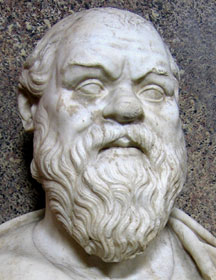
The bust of Socrates, now in the Vatican Museum in Rome.
|
Similarities and Differences Between the Four Gospels
When I was in high school, I asked a youth leader why there were so many similarities between the biblical gospels. He enthusiastically explained that this was because the Holy Spirit had inspired the different writers. The similarities between the gospels were miracles, and proof of the inspiration of the New Testament gospels. I was happy to learn this, and didn't bother to ask why the Holy Spirit hadn't done a better job getting every single detail to be the same in all the gospels.
Then I got to college and, during my freshman year, took my first New Testament class. There I learned that Matthew and Luke had used Mark in their compositions, and also a common source known as "Q." John, I was told, may have used Mark, but probably had access to traditions shared by Mark. In sum, the similarities between the gospels weren't miracles at all, but could be explained by all-too-ordinary means. Copying and collusion was much less inspiring than supernatural revelation.
|
|
Here, once again, is an illustration of the standard view of the relationship between the New Testament gospels. Quite a few scholars today aren't so sure about "Q," and some are promoting the priority of Matthew. But what I've portrayed remains the consensus of scholars, for today at least. |
Moreover, in my New Testament class, I learned about a relatively new scholarly discipline called Redaction Criticism (from the German term Redaktionsgeschichte, meaning "the history of editing" of the gospels). Redaction critics, assuming that Matthew and Luke used Mark and "Q," studied the editorial changes made by the later evangelists. These changes revealed the distinctive theologies of their gospels, if not their contradictory theologies (so I was told). In that class, and in my graduate studies, it was popular to emphasize the unique perspectives of Matthew, Mark, Luke, and John, and to minimize what they had in common, or even to deny that they had much in common at all. I heard plenty about the "contradictions" between the gospels.
Some scholars, especially of a conservative stripe, reacted negatively to Redaction Criticism, even suggesting that the discipline itself was inconsistent with biblical authority. But most scholars have come to see both the good and bad in Redaction Criticism. The good has been identifying the distinctive efforts of the gospel writers, who didn't merely collect material and paste it together, but who carefully wove that material into a coherent and creative narrative. The bad has been greatly over-emphasizing the differences between the gospels. Consider: if you were to sit down and read Mark, and then Matthew, do you think you'd come away thinking: "Wow! Now there are two unique, and almost incompatible pictures of Jesus"? Hardly! In fact, I think you'd be more inclined to say, after reading Matthew: "Well, he adds some more fascinating material (like the visit of the Magi or the Sermon on the Mount) but that's mostly the same story as Mark. It was kind of redundant in parts, actually."
What we know for sure is that there are similarities between the gospels and differences between the gospels. I don't think anybody would disagree with this statement. The tricky part is to decide what difference these actually make. In my next couple of posts I want to pursue in greater depth the actual similarities and the differences between the New Testament gospels (including John), relating these to the question of the historical reliability of the gospel accounts of Jesus.
For the next part of this series, go to Volume 2.
|