| |
A Resource by Mark D. Roberts |
|
The Protestant Mary?
Reflections on the TIME Cover Story
by Rev. Dr. Mark D. Roberts
Copyright © 2005 by Mark D. Roberts
Note: You may download this resource at no cost, for personal use or for use in a Christian ministry, as long as you are not publishing it for sale. All I ask is that you give credit where credit is due. For all other uses, please contact me at mark@markdroberts.com . Thank you.
A TIME-ly Coincidence
Part 1 of the series: "The Protestant Mary"
Posted at 11:30 p.m. on Wednesday, March 16, 2005
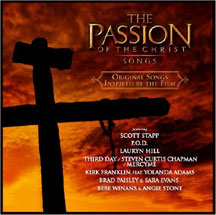
On Monday afternoon I was listening to a CD I had recently purchased: The Passion of the Christ: Songs (Original Songs Inspired by the Film). This collection includes pieces from more than a dozen musicians, most of whom are not generally considered to be "Christian artists." One song, "New Again," was written and performed by country music stars Brad Paisley and Sara Evans. Though country music isn't usually my cup of tea, I was struck by the inspiration and tenderness of this song, which is a duet sung as if by Jesus and his mother as he approaches the cross. It includes these lyrics:
Mother, do not cry for me
All of this is exactly how it's supposed to be
I'm right here. Can you hear my voice?
My life, my love, my Lord . . . my baby boy.
As they nail me to this tree
Just know my father waits for me
God how can this be your will?
To have your son and my son killed?
To hear a clip from this song, click here (264 K, .mov clip). To listen to samples from other songs and/or to purchase this album from Amazon, click here.
|
|
As I listen to this plaintive song, I found my heart moved by the thought of what it must have been like for Mary to witness the crucifixion of her son. I was also intrigued by the fact that she could indeed ask God, "How can this be your will, to have your son and my son killed?" Nobody else is history could ask that question.
From this point I began to reflect upon how Mary has been so much the attention of Protestant and evangelical discussions of Christ's death in the wake of Mel Gibson's film The Passion of the Christ. Millions of Christian who might never before have given Mary the slightest thought when they remembered the Cross were now envisioning her agony and faithfulness. "How odd this is," I thought to myself, "Who'd ever have thunk it?"
I listened to the "New Again" track a couple more times on Tuesday, playing for my wife, who found it quite moving even though she's not much of a country music fan either. Then, late on Tuesday evening, I surfed by Hugh Hewitt's website, only to find the following:

Strangely enough, I had not seen TIME magazine because mine had not yet been delivered. (It still hasn't shown up as of Wednesday evening.) I quickly checked out the TIME material online, however, and decided to pick up Hugh's challenge. I must say that I found it curious that what I had been pondering in my private reveries was all of a sudden emblazoned on the cover of TIME.
I plan to blog about the TIME material, mostly David Van Biema's article, "Hail Mary." I'm doing this not only because Hugh Hewitt thinks it's a good idea, though Hugh's intuitions about blogging are usually worth following. I also think there is some good grist here for our theological and devotional mill. I agree with Van Biema's basic thesis that Protestants are much more open these days to thinking about Mary. And I think that those of us who are Protestants (including evangelicals) can learn a few valuable lessons by looking closely at what's going on here.
I do not believe, however, that Van Biema gets many of the implications right. As I'll explain later, he seems to have read the data in an idiosyncratic fashion, as if he were more eager to prove his point than tell us what's really going on with Mary and the Protestants. But, of course, I may be projecting my own bias onto the data as well. You'll have to read this series to decide who's right.
But, lest I sound too negative about Van Biema's article, I did find it to include some fascinating tidbits regarding Mary in Protestant piety. And I appreciate the fact that Van Biema didn't fall into the debunking mode that plagues secular media accounts of Christian beginnings. He did not, for example, waste words trying to debunk the historicity of the gospels. In fact, when it comes to the Blessed Virgin Mary, Van Biema seems quite willing to accept the gospels as historically accurate sources. Imagine that! (I contrast this with his article on the birth of Jesus last December, which, though better than its Newsweek counterpart, still presented a hypercritical look at the nativity stories in the gospel. I put up an extended blog series on this topic: The Birth of Jesus: Hype or History?)
Tomorrow I'll lay out Van Biema's thesis and begin, as Hugh suggests, to deconstruct it. But before I sign off, I want to end with a bit of a challenge.
Van Biema rightly points out the influence of The Passion of the Christ on Protestant (including evangelical) reflection on Mary. Besides this movie, what else in the last two decades do you think has had a major impact on Protestant views of or feelings about Mary? I think Van Biema missed something quite significant. Can you guess what I'm thinking of? You can e-mail me your ideas, or, better yet, put them in the guestbook.
The TIME Cover Story: An Overview
Part 2 of the series: "The Protestant Mary"
Posted at 11:30 p.m. on Thursday, March 17, 2005
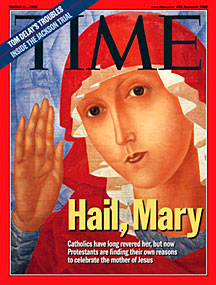
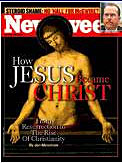
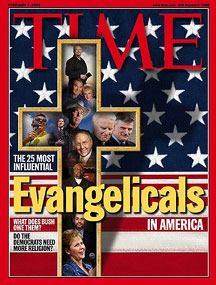
The cover of this week's TIME magazine proclaims: "Hail, Mary: Catholics have long revered her, but now Protestants are finding their own reasons to celebrate the mother of Jesus." The cover story, written by David Van Biema and entitled: "Hail, Mary" adds this bit of explanation: "She was there at the Cross. Yet Protestants seldom talk about Jesus' mother at Easter – or at most other times. But they are starting to now."
Van Biema's basic thesis is that, after years of silence among most Protestants, Mary (the Blessed Virgin mother of Jesus, not the Magdalene) is making a comeback. Van Biema brings forth a variety of data to support his claim:
• A Presbyterian pastor in Xenia, Ohio, plans to preach on the Annunciation to Mary during his Good Friday service this year, owing to an overlap on the calendar.
|
|
• Beverly Gaventa, a professor at Princeton Theological Seminary (also Presbyterian) has written a book on Mary and edited a collection of essays on Mary by feminist biblical scholars.
• Articles favoring new attention for Mary have appeared in Christianity Today (evangelical Protestant) and The Christian Century (mainline or liberal Protestant).
• A sermon on Mary was preached in a "mighty pulpit" by John Buchanan, senior pastor of Chicago's Fourth Presbyterian Church.
• Several theologians say Mary is gaining popularity among Protestants.
• Mary plays a significant role in the New Testament gospels.
• An evangelical writer has devoted a chapter of his book to Mary's Magnificat.
• Icons of Mary are showing up on the walls of Protestant divinity schools.
• Some Protestants have a deep personal devotion to Mary.
• The influx of Hispanics into American Protestantism is having a small impact on interest in Mary.
If you add all of these bits of data together, I think you have evidence for a growing openness among Protestants to take Mary seriously insofar as she is portrayed in Scripture. Traditional squeamishness about the Blessed Virgin among Protestants, stemming no doubt from the way she is revered among some Catholics, seems to have been replaced by a freedom to examine Mary's presence in Scripture and to take more seriously her unique place in Christian history and theology.
I agree with Van Biema's basic thesis. It fits the evidence he brings forth and my own experience as a pastor. (Though I must note that Presbyterians are disproportionately represented in Van Biema's article. Since I'm a Presbyterian, my experience might be skewed in the direction of Van Biema's evidence.)
But, apart from my agreement with this basic thesis, I find myself perplexed by some of what Van Biema believes to be true. And I think he fails to mention some of what is most important and relevant. So, in the rest of this series I'll critique what I think needs criticism and add what I think is missing.
I must admit that I have downplayed Van Biema's thesis somewhat. After surveying the evidence before him, he actually says this: "[These factors] may eventually accelerate progress toward a pro-Marian tipping point—on whose other side may lie changes not just in sermon topic but in liturgy, personal piety and a re-evaluation of the actual messages of the Reformation." Now that's quite a claim, and it's one I intend to evaluate quite carefully. It sure seems to go way beyond the modest evidence Van Biema has brought forth. But this will come later in the series, after I've done some basic spadework.
One of the things I find perplexing about Van Biema's article is his suggestion that there has recently been a pervasive Protestant anti-Mary conspiracy. Let me quote several lines from his article so you can see this conspiracy theory writ large. The words are Van Biema's; the italics are mine.
"Beverly Gaventa . . . has portrayed Mary as the victim of 'a Protestant conspiracy of silence: theologically, liturgically and devotionally'."
According to author Kathleen Norris, "We dragged Mary out at Christmas . . . . . [and] denied [her] place in Christian tradition."
The "long-standing wall around Mary appears to be eroding."
A "growing number of Christian thinkers . . . have concluded that their various traditions have shortchanged [Mary] in the very arena in which Protestantism most prides itself: the careful and full reading of Scripture."
Over time, Protestant anathemas against Mary lovers gave way to a kind of sullen neglect of the Virgin.
While Mary's role in the Nativity is recalled dutifully each December, largely overlooked is the subsequent presentation of Jesus at the temple . . . . Also neglected are her maternal frenzy when her 12-year old son goes missing . . . and her role at the wedding at Cana.
The most striking omission, at least from Protestant sermons, is a recognition of the import of her role at the Cross.
Almost all the revisionists find Mary's presence at the Crucifixion inspiring in a way that their denominations seldom acknowledge.
[In Mary there is] a central Christian image of love . . . that Protestantism never officially repudiated but from which it has been estranged almost from the start.
Wow! And to think I've been a Protestant for four decades – and a Presbyterian pastor for two – without ever knowing about this conspiracy against Mary. Either Van Biema knows a lot more than I do, which is possible, or else he's been hanging out too much with Oliver Stone.
Historically, there was a lot of negativity between Protestants and Catholics, and this surely inspired Protestant resistance to giving Mary much attention. But in my lifetime and in my experience of Protestantism (Presbyterian, Mennonite, Assemblies of God), Mary has been a minor yet welcome part of church life. Yes, she may have received less attention than she deserved. But I'd hardly characterize this as a conspiracy of silence, sullen neglect, and estrangement. Benign neglect would be more like it, or perhaps innocent ignorance.
Never in my Christian experience has anyone "dragged out" Mary at Christmas or "recalled dutifully" her role in the Nativity. On the contrary, I'd say that Mary has played a central and joyful role in my experience of Christmas, as a boy, as a worshiper, and as a pastor. Moreover, I have heard sermons and teachings involving Mary ever since my youth. I remember a marvelous sermon I heard several years ago in which Mary's reception of God's Word was used as an example of how we should receive God's Word in our own lives.
I've included Mary in my own preaching at several points. For examploe, eleven years ago in a Good Friday service I was working my way through the seven last words of Jesus. When I got to the third word, "Woman, behold they son! . . . Behold thy mother!" I reflected on Mary's pain as a mother. I related this to the suffering of mothers in my church who had lost their children, and to the statement by my grandmother when her son (my father) was dying, "No mother should ever have to experience the death of a child." I talked about how Jesus, though the Son of God, was also a beloved son of Mary, and how this fact reminds us of his humanness.
When I preached this Marian stuff, it never occurred to me that I was doing anything groundbreaking or edgy. I didn't think I was being particularly original or profound. I had heard things like this before in my Protestant experience. I'll bet if I were to ask my pastor friends, many of them have made similar points on similar occasions. Mentioning Mary in the context of Good Friday is common, at least in my experience. And, I might add, I didn't receive even the tiniest criticism for speaking about Mary in this way on Good Friday. My congregation received it with open minds and hearts. It just wasn't a big deal. Nobody from TIME magazine even bothered to quote me.
So, though I think Van Biema is onto something, I find his conspiracy theory to be exaggerated. I realize, of course, that he's trying to make his story more interesting. The facts rarely sell magazines. And Van Biema got the cover of TIME, for goodness sakes. But his rhetoric goes far beyond the evidence, in my opinion. Moreover, as I'll explain soon, he misses some insights that seem to me to be worth much more attention.
A Pro-Marian Tipping Point? Evaluating the Evidence
Part 3 of the series: "The Protestant Mary"
Posted at 9:30 p.m. on Friday, March 18, 2005
In yesterday's post I summarized the evidence David Van Biema amassed for his argument that Mary's popularity is growing among Protestants. As I mentioned, he actually goes beyond this observation to suggest that Protestants may be on the way to a "pro-Marian tipping point" that will impact Protestant liturgy, piety, and even the "actual messages of the Reformation." Quite a claim, I must say.
If you look critically at the evidence Van Biema puts forth, you'll see that it's rather thin. The author himself admits that though "arguments on the Virgin's behalf have appeared in a flurry of scholarly essays and popular articles," they are "not yet [being preached] in many churches." In fact the specific churches Van Biema mentions are few and hardly representative of mainstream Protestantism, let alone evangelicalism. But Van Biema has one "big gun," as it were:
[Arguments on the Virgin's behalf are being preached] not just at modest addresses like [a 300-member Presbyterian church in Ohio] but also from mighty pulpits like that at Chicago's Fourth Presbyterian Church [a 5,000-member church and growing], where longtime senior pastor John Buchanan recently delivered a major message on the Virgin ending with the words "Hail Mary . . . Blessed are you among us all."
Now this seems like a weighty piece of evidence. One of the largest and most influential churches within the Presbyterian Church USA (one that is center-left in theology, by the way) seems to be moving in the direction of exalting Mary. The senior pastor preaches a sermon on Mary, ending it with a gender-inclusive "Hail Mary." Wow! Maybe we actually are moving toward some sort of a "pro-Marian tipping point."
I thought it would be worthwhile to examine Rev. Buchanan's actual sermon, so I surfed over to the Fourth Presbyterian Church website. It's elegant and full of helpful information, including online sermon transcripts and PDF versions of recent worship bulletins. It didn't take long on this well laid out website to find Buchanan's sermon on Mary. |
|
| |
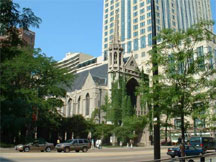
The classic sanctuary of Fourth Presbyterian Church in downtown Chicago.
|
Reading his sermon gave me a feeling of déjà vu. Much of it sounds awfully similar to Van Biema's article. No doubt it was a major source for the TIME writer, who quotes two more times from Buchanan's sermon, in addition to the "Hail Mary" line cited above:
"We're inclined, you and I, to think about our faith in terms of ideas and propositions and truth claims. [Yet] Mary reminds us that our faith is a response to a love that was expressed not in a carefully reasoned treatise but in a human life."
Mary, he said, is "a reminder to the mother whose son was killed in Iraq last week ... [to] children and wives and husbands who wait in fear and in hope. Let her be a reminder of the mercy and compassion and nearness of God."
It's worth noting that Buchanan didn't actually use the word "Yet" in the "We're inclined" quotation. Instead, he used "And." Van Biema rightly puts "Yet" in brackets, but in so doing shows his hand. Buchanan himself sees Mary as adding something to propositional faith. The TIME writer's "Buchanan" sees Mary as somehow oppositional to propositional faith, which far juicier but less accurate.
Buchanan's main thesis is that it's "time for Protestants to make a place of Mary." Okay, but what place? This is the key question. Does Buchanan's place for Mary confirm Van Biema's thesis of a Protestant "pro-Marian tipping point" that will impact Protestant liturgy, piety, and even the "actual messages of the Reformation"?
I've read Buchanan's sermon twice, and I just don't see it. Not at all. After calling Protestants to give Mary her place, Buchanan then explains exactlhy what place he means. Mary is to serve as "a reminder" for Protestants. She is not a focus of essential doctrine, not a heavenly queen who prays for us, not a co-redeemer alongside of Christ, and certainly not someone who should play a major role in our worship and piety. Of what does Mary remind us, according to Buchanan? She reminds us:
• "Of how grounded in life this faith of ours is."
• "That God cares deeply about the human condition. . . . Let Mary remind us of the wideness of God's mercy."
• "That God can use modest men and women who don't seem to have much to commend them . . . to do the most important work."
• Of "the profound compassion of God. . . . Mary has reminded the faithful that God is also infinite compassion and infinite love."
• "Of the mercy and compassion and nearness of God."
• "Of the love that came down at Christmas to be with us and to keep us every day of our lives."
None of these reminders focuses on Mary and her specialness. All but the first, which is about faith, focus on God. The last is about Jesus, who is God's "love that came down at Christmas. So Rev. Buchanan may be using Mary in an unusual way (through, frankly, I doubt it's that unusual). But his theological points are solidly Protestant and biblical. Mary is mostly a marvelous reminder of who God is and how God acts.
From this sermon we would hardly expect there to be any significant changes in the liturgy, piety, and theology of Fourth Presbyterian Church. And from what I can tell, this expectation is confirmed by the facts. I downloaded several orders of worship from the church website (from 2004 and 2005). In these, Mary shows up in very traditional Presbyterian garb. She's mentioned in the Apostles' Creed and in Christmas carols as the composer of the Magnificat or the mother of Jesus. That's it. No "Hail Mary's." No songs to Mary. No veneration of the Virgin. Just good ol' Protestant Mary.
"Ah," you say, "but what about the ending of the sermon. Buchanan's inclusive 'Hail Mary" is telling, isn't it?" Well, not exactly, if you place it in a larger context. On December 5, 2004 Rev. Buchanan preached a sermon entitled "Mary," which ended with the words, "Hail Mary . . . You are blessed among us all." Van Biema tells us this. But what he fails to mention is the fact that on December 12, 2004 Rev. Buchanan preached a sermon entitled "Joseph." After analyzing Joseph's situation and praising him for his exceptional goodness and responsibility, Buchanan concludes with these words: "So, yes, 'Hail Mary,' and 'Hail Joseph, blessed are you, as well, among us all.'"
Now that changes our perspective more than a little, don't you think? Buchanan utters "Hail Mary" on December 5th and "Hail Joseph" on December 12th. Does this sound like we're drifting toward some sort of Catholic-like reverence for Mary? Hardly. In fact the opposite is true. Even as the December 5th sermon gives Mary a Protestant promotion, the December 12th sermon promotes Joseph to the same level as Mary. Joseph and Mary, according to Buchanan, both deserve to be hailed. How many Marian Catholics do you think would be happy with the preacher saying "Hail Joseph, blessed are you among us all" in church?
I don't see any "pro-Marian tipping point" here. I don't see any changes in liturgy, piety, or theology. What I see is an appropriate, mainline Protestant use of Mary, in which her experience points to the goodness of God. Morever, I see a leveling of the playing field between Mary and Joseph, where both can be addressed in a sermon, but not in worship or prayer, with "Hail." If anything, I would take the actual evidence from Fourth Presbyterian Church as disconfirming Van Biema's main thesis. A little more attention for Mary, sure. But a "pro-Marian tipping point"? Hardly, especially when the classic Marian greeting is now made to include Joseph.
Van Biema draws upon another church from Chicago to support his thesis. Given the fact that he places this example at the end of his article, a rhetorical point of emphasis, it stands as his strongest example. I'll examine it more closely in my next post.
The Influence of La Virgen?
Part 4 of the series: "The Protestant Mary"
Posted at 11:30 p.m. on Saturday, March 19, 2005
In my last post I examined some of the evidence David Van Biema presents in support of his argument that Protestants may be on the way to a "pro-Marian tipping point" that will impact Protestant liturgy, piety, and even the "actual messages of the Reformation." Although his article in TIME magazine relies quite heavily on a sermon preached by John Buchanan, a Presbyterian minister in Chicago, a close examination of that sermon suggests that Van Biema has seen much more than the evidence would allow. Buchanan's sermon reveals, at most, a greater openness among Protestants to think of Mary as a human reminder of God's grace. But this is hardly news.
It's from another church in Chicago that Van Biema seems to draw even more proof for his thesis, given the placement of this example at the conclusion of his article. Here are the TIME excerpts in which we find this example:
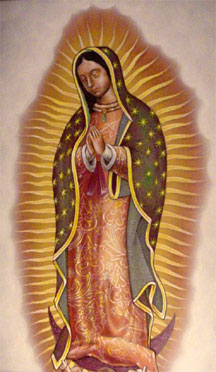
In the end, Mary's role may be less influenced by [Protestant theologians] than by a group only now beginning to make its considerable Protestant presence felt. A man stands at the lectern at the El Amor de Dios church on Chicago's South Side reading in Spanish, tears streaming down his cheeks. His text is a treatment of the Virgin Mary from one of the Bible's apocryphal books. Another congregant follows, reciting his own verses to the Virgin from a dog-eared notebook filled with tiny, precise printing. Flanking the altar are two Mary statues with fresh roses at their feet, and hanging from the hands of the baby Jesus is a Rosary. The altar cover presents the church's most stunning image: Mary again, this time totally surrounded by a multicolored halo, in the traditional iconography of the Our Lady of Guadalupe. The church is Methodist.
"Right now Marianism is not a front-burner issue for people revising liturgy in major denominations," says Marian agitator [and Lutheran theologian Carl] Braaten. "But I think it will come in because of the great influx of Hispanics into Protestantism." Indeed, there are some 8 million Protestant Hispanics in the U.S., with the count climbing. Many hail from Mexico, where the Guadalupan Lady is as much a national icon as a religious one, and are from historically Catholic families. El Amor de Dios' pastor, the Rev. Jose Landaverde, says his Marian additions are "mainly cultural." But "in the context of this neighborhood and embracing these people, this is what they need. "Our Lady, he says, "creates hope." Church rolls have risen, Lazarus-like, from a dozen people to several hundred since he added the Mary elements.
Some of Landaverde's fellow Methodists dismiss this new wrinkle. The Rev. Enrique Gonzales, pastor of El Mesías United Methodist in nearby Elgin, wrote a piece accompanying Christian Century's Mary story asserting that Latin Protestants are especially wary of such enthusiasm because "the Gospel of Jesus Christ is not actually introduced to Roman Catholic people in Latin America because only Marian doctrines are taught to them." Yet Ted Campbell, president of a local Methodist seminary in Evanston, Ill., says, "This is a phenomenon that's growing in a lot of Protestant churches." When he first heard what was going on at El Amor de Dios, he confesses, he thought, "Cool."
I did a little surfing around to confirm Van Biema's picture of what is happening at El Amor de Dios church. Indeed, it seems accurate. Last December 12th an article appeared in the Chicago Tribune with this title: "Methodist church stirs controversy with statue." The article explained how El Amor de Dios church had erected a statue of the Virgin of Guadalupe a year ago, chasing longtime members from the church, but drawing new crowds. This article also confirmed another point made by Van Biema, namely that other Latino Methodist leaders did not approve of the introduction of a statue of La Virgen into a Methodist worship service.
The pastor of El Amor de Dios church, according to Van Biema, defended his use of Mary as "mainly cultural" (meaning "not religious"? Wouldn't this count against Van Biema's thesis?). It should be noted that this pastor, Rev. Jose Landaverde, was a student pastor at the time of the introduction of Mary, and that he had once been a Roman Catholic seminarian – not exactly your run-of-the-mill Methodist minister.
Van Biema has obviously been influenced in his evaluation of the data by the Lutheran theologian Carl Braaten, whom Van Biema calls "a Marian agitator," a title that doesn't exactly suggest objectivity on Braaten's part. Braaten believes that the influx of Hispanics into America will, in time, lead to the revision of worship in mainline denominations. That may well be so. |
|
| |
Mary as the Virgin of Guadalupe, who is said to have appeared to a poor native Mexican in 1531. This recent rendering of the Virgin was painted by Hollister (Hop) David. For this and other of this works, click here. |
But I find it curious that Van Biema himself records two reactions to the Marianism of El Amor de Dios. The Anglo president of a Methodist seminary (who, incidentally, just announced his resignation as of March 2005, though this fact has nothing to do with our current investigation) thought the introduction of Mary into the Methodist church was "cool." On the contrary, a leading Hispanic Methodist pastor not only opposed the practice, but also wrote an eloquent defense of his position for The Christian Century. According to Enrique Gonzales, pastor of El Mesías Methodist Church, "the practical theology in the life of Catholicism in Latin America promotes the adoration [worship] of Mary." Thus Methodists and other Protestants restrict liturgical veneration of la Virgen. Gonzales concludes his article:
There is a place for Mary in the life of the Protestant church, but it is as an equal to all the other characters described in the Gospels (Peter, John, Mary Magdalene, Lazarus, etc.). Mary will be part of the life of the church until the day that the church ends its ministry on this earth. However, Mary is like you and me, just another good believer who believed in the only Son of God as Savior.
I've known Hispanic Protestant pastors who are more strongly opposed to things they regard as Roman Catholic – including the veneration of Mary – that I am because they have personal experience of the extent to which Mary can dominate Latino piety, "even to the point of claiming the supremacy of Mary over Jesus Christ," to quote Enrique Gonzales. Thus I'm disinclined to accept the views of Braaten and Van Biema on the growth of Marian piety within Protestantism just because Hispanics are moving to this country. It may turn out that having more Hispanics in Protestant denominations makes them less open to Mary, not more. It appears that both Landaverde and Gonzales have seen their approach to Mary draw Hispanics to church. Yet, at least as far as I can tell, Gonzales is more thoughtful in his rejection of Marian veneration than Landaverde is in acceptance of it. (This may not be fair to Landaverde, however, since I have little to go on besides a couple of quotes in articles.)
I want to conclude this post by returning once again to Van Biema's description of Marian veneration in El Amor de Dios church. In that description we see a man at the lectern reading "a treatment of the Virgin Mary from one of the Bible's apocryphal books." Another man recites "his own verses to the Virgin."
I must point out an error in Van Biema's description. He says that the man at the lectern is reading "a treatment of the Virgin Mary from one of the Bible's apocryphal books." Unfortunately, there is no such book in the biblical apocrypha. The biblical apocrypha is a collection of Jewish writings that is included in Roman Catholic and Eastern Orthodox Bibles as "deuterocanonical books," meaning "of secondary canonical status." Protestants regard these books as historical and inspirational writings, but not as God's Word. If you were to read every single document, you'd find absolutely nothing about the Virgin Mary.
Van Biema confuses the biblical apocrypha with what some scholars call "the New Testament Apocrypha," though these books were never included in the canonical New Testament. One of these books, written in the latter half of the second century A.D., is called "The Infancy Gospel of James" or "The Protoevangelium of James" ("the initial gospel of James"). This "gospel" does tell the story of Jesus's birth, but it spends much more time on the miraculous birth and early life of Mary, his mother. In this tale, Mary is rather like the biblical Samuel, born by God's help to aging parents and raised in the Jerusalem temple. When she was twelve years old she was betrothed to Joseph. From there on the story is much like the biblical nativity narratives, though with additional information, like Jesus's birth in a cave. (You can read "The Infancy Gospel of James" online.)
I think Van Biema's description of Marian veneration in El Amor de Dios church actually contains the seeds of its own destruction. Two men read passages honoring Mary. Okay, fine. Do you see anything wrong with this picture? I do. There's no connection to the Bible here. One of the defining characteristics of true Protestantism – our commitment to the authority of Scripture – is decidedly absent from this description of worship in El Amor de Dios. What do we find in its place? Readings from a non-canonical "gospel" and a "dog-eared notebook." Frankly, I don't see the seeds of Protestant Marianism here, or any compelling evidence of a "pro-Marian tipping point." What I see is a novel exception to the Protestant rule, a good-hearted but, for Protestants, theologically-inadvisable flirtation with Marian veneration.
Now if what happened at El Amor de Dios were based on canonical Scripture, then we'd have a completely different situation. This thought raises the question of what we can know about the Virgin Mary from the Bible, and to this topic I'll turn in my next post.
The Virgin Mary in the Bible: A Brief Overview
Part 5 of the series: "The Protestant Mary"
Posted at 10:30 p.m. on Sunday, March 20, 2005
In David Van Biema's recent article in TIME magazine entitled "Hail, Mary," he comments that "a growing number of Christian thinkers . . . have concluded that their various traditions have shortchanged [Mary] in the very arena in which Protestantism most prides itself: the careful and full reading of Scripture."
So, then, what does a careful and full reading of Scripture teach us about Mary? I propose to answer this question with an overview of the biblical material. I have examined every passage of the Bible that mentions (or may refer to) Mary and summarized what this passage teaches. I've put this raw data in an appendix to this series for my "Sergeant Joe Friday readers" who want, "Just the facts, ma'am." (Actually, it's an urban legend that Sgt. Friday said this.) For the rest of you, in this post I've summarized the biblical material under basic headings that describe different aspects of Mary as pictured in Scripture.
Different Biblical Pictures of Mary
Mary of Prophecy. Christians see Mary in three Old Testament passages. Two are obvious prophecies. The first is a little more obscure. After the man and woman sin in Genesis 3, God promised that the "seed" of the woman will "strike the head" of the serpent. If the seed in Christ, then the woman is, in a sense, Mary. Isaiah 7:14 refers to a virgin or young woman (same Hebrew word) who bears a child named Immanuel. Micah 5:2-5 refers to a woman who gives birth to a messianic ruler. |
|
|
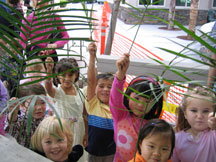
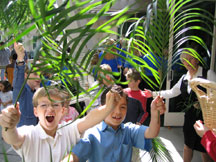
| Today is Palm Sunday, the day when Christians remember the triumphal entry of Jesus into Jerusalem. These pictures are of the processional of children in our worship service today. I thought you'd enjoy them. |
|
Mary the Birth Mother of the Messiah, the Son of God. Mary's greatest significance in Scripture is as the one who gives birth to Jesus, the Messiah and Son of God. Thus it makes sense that she appears most of all in the gospel stories of the nativity. Moreover, it is as the birth mother of the Son of God that Mary derives her timeless value. The virgin birth alone wouldn't have made her all that special if she had simply given birth to some ordinary human being. But she gave birth to one who was not merely human. In the terms of later theology, the baby in her womb was "fully God and fully human." Thus by the fifth-century A.D. Mary was recognized as "the mother of God" (theotokos).
Mary the Virgin. The second most important thing about Mary's motherhood is that it didn't begin in the ordinary way. Though she had not had sexual intercourse with a man, she conceived a child through the miraculous intervention of the Holy Spirit (Luke 1:33-38). The Bible itself doesn't explain the physiological process or even the theological significance of the virginal conception. That was left to theologians, who are still arguing about it today. Matthew explains that Mary did not have sexual relations with Joseph while she was pregnant with Jesus (Matt 1:25). The text seems to imply that after his birth she engaged in normal sexual intimacy with Joseph, though Catholic and Eastern Orthodox interpreters dispute this, of course. Moreover, the gospels attest to Jesus having brothers, with the implication that Mary was their mother (Matt 13:55). Other interpreters hold that these brothers were actually half-brothers, the children of Joseph and a first wife. There is no biblical support for this view. So, apart from post-biblical church tradition, there is no biblical evidence for Mary's remaining a virgin. In fact the obvious (but not only) reading of the text points in the other direction.
Mary the Favored, Blessed One. The angel who came to announce to Mary that she was going to give birth to a son addressed her as "the favored one" (Luke 1:28; Greek, kecharitomene, "graced one") adding later that she has "found favor" (Luke 1:30; Greek, charis, "grace") with God. She is also referred to by her relative Elizabeth as "blessed among women" (Luke 1:42; eulogemene). There is no question that Mary has been singled out by God for a uniquely great honor, the honor of bearing the Son of God. Scripture doesn't explain why she received this blessing, though from the text of Luke we learn that she has exemplary faith, that she has outstanding biblical theology (from the Magnificat, Luke 1:46-55), and that she has prophetic gifts (from the Magnificat).
Mary the Faithful Servant of God. When told that she would conceive by the Holy Spirit and bear a son, Mary responded with exemplary faith: "Here am I, the servant of the Lord; let it be with me according to your word" (Luke 1:38). Later she is referred to as one who believed "that there would be a fulfillment of what was spoken to her by the Lord" (Luke 1:45). Thus she exemplifies full submission to God and, as Protestants are happy to emphasize, genuine faith.
Mary the Mother of Jesus. The New Testament has very little to say about Mary's actual mothering of Jesus throughout the years of his life. We are left to fill in most of these blanks with historical analogies and imagination (such as Mel Gibson does in a few flashback scenes in The Passion of the Christ). The gospels do relate a few stories of Mary's interaction with Jesus as his mother, and these are quite surprising.
Mary is perplexed and anxious when Jesus disappears on the family's trip from Jerusalem to Nazareth. Then she doesn't understand Jesus's explanation of his behavior (Luke 2:41-51).
Mary motivates Jesus to turn water into wine, his first miracle in John. But his response to her seems curious, even disrespectful, though he does the miracle (John 2:1-11).
Mary comes, along with her other children, to speak with Jesus during his ministry. But he appears to diminish her significanceas his natural mother by referring to all who do God's will as his "brother and sister and mother" (Mark 3:31-35 and pars). Of course in Luke 1 Mary is a paradigm for one who does God's will.
Mary is with Jesus at the cross, though we learn nothing about her experience other than as the recipient of Jesus's making her the "mother" of the beloved disciple (John 19:25-27). Some theologians have read a great deal into this text, but seeing Mary as the mother of the church is adding more than the text itself provides.
Mary the Suffering Mother. Since John places Mary at the cross of Jesus, it's safe to assume that her suffering was unbelievably horrible. But the New Testament doesn't supply any description of her pain or behavior. There was a telling prophecy of Simeon, however, when Jesus was a baby. He predicted of Mary that "a sword will pierce your own soul too" (Luke 2:35).
Mary the Disciple of Jesus. Mary was among those who follow Jesus, and she was with him until the end. Like the other disciples, she seemed to be confused by Jesus's actions at times. After the resurrection, she remained with the disciples as they prayed (Acts 1:14), probably being present for the Pentecostal outpouring of the Holy Spirit. Mary is not mentioned after Pentecost, except in one theological statement in Galatians 4 and, perhaps, in Revelation 12.
Tomorrow I'll wrap up this look at the biblical Mary with some general observations. I'll also try to address some of the issues upon which Catholics and Protestants disagree.
The Virgin Mary in the Bible: Some Personal Reflections (Section A)
Part 6 of the series: "The Protestant Mary"
Posted at 9:30 p.m. on Monday, March 21, 2005
This post follows on the heels of yesterday's, in which I laid out in detail the different ways Mary is pictured in Scripture. (If you didn't read that post, you may want to scan it before beginning this one.) I'm going to begin with some personal reflections today, and finish up these reflections tomorrow. From there I'll talk about what I believe are the "real stories" behind Van Biema's article, stories that he didn't explore.
Without a doubt, Mary is unique among all woman, indeed, all human beings, as the one who gave birth to Jesus. The fact of Mary's uniqueness – at least it seems to me a fact – has often been overlooked by Protestants. I expect that this once reflected anti-Catholic attitudes and convictions. But in recent years I think it's more of an oversight than an intentional downplaying of Mary. Those who see some sort of anti-Mary conspiracy among Protestants are overplaying their hand, I think.
For example, in his TIME article, David Van Biema writes,
Over time, Protestant anathemas against Mary lovers gave way to a kind of sullen neglect of the Virgin. That was more pronounced among Presbyterians, some Baptists and others with a strong Calvinist tradition. (The Presbyterian Church U.S.A.'s 1991 Brief Statement of Faith praised the prophets, the Apostles and the Hebrew matriarch Sarah but omitted Mary.)
Van Biema is basically right to use my denomination's Brief Statement of Faith as an example of not including Mary, though this Statement didn't praise "the prophets, the Apostles and the Hebrew matriarch Sarah" so much as celebrate God's work through them. This is quite a significant difference in such a basic statement, where the triune God alone is praised. Frankly, I'd be surprised if those who neglected to mention Mary when they composed this Brief Statement were "sullen" in doing so. And, to be honest, until Van Biema mentioned the omission of Mary from this document, the thought had never occurred to me. Once again, I think "benign" is a better adjective than "sullen" to describe Protestant neglect of Mary, including my own.
Here is an astounding truth: Mary carried in her womb the divine Son of God. She was the physical source of his human nature. This is truly amazing. What happened within Mary is one of, perhaps even the greatest mystery of all time and history: the Word of God became flesh. (The death of the Son of God for us sinners is a mystery equal, maybe even greater than his Incarnation.) Thus Mary has been given a leading role in the drama of human history. As she said in the Magnificat, indeed "all generations will call me blessed." There is strong biblical support for singling out Mary as profoundly blessed, even the most blessed of all people. Nevertheless, in saying this we must remember that "blessed" speaks of God's gracious action more than the worthiness of the individual.
I do not doubt, however, that Mary was an extraordinary person, a woman of incredible faith and theological understanding. We get a glimpse of that faith in her response to the angel: "Here I am, the servant of the Lord; let it be with me according to your word" (Luke 1:38). This is the sort of faith and commitment that all of us should emulate. Moreover, Mary's hymn in Luke 1, called the Magnificat because of its first Latin word (magnificat = "magnifies"), is an extraordinary composition, reflecting both deep biblical insight and inspiration by the Holy Spirit. The biblical evidence doesn't suggest, in my opinion, the conclusion that Mary was a Prophet (with a capital 'P'). But it certainly places her squarely in the prophetic tradition.
We should remember that the emphasis of the New Testament is not upon Mary's worthiness to be the mother of Jesus, but rather upon God's grace in choosing her. The angel reveals that she has been the recipient of divine favor, using Greek language we often translate as "grace." I'm not denying the likelihood of Mary's exceptional faithfulness to God and purity of heart. My point is that this is not underlined in Scripture. The biblical accounts focus on God and his grace, and on Mary's laudable response to God's initiative. |
|
|
Newsweek
on
Jesus:
A Quick Summary |
|
| I knew it was going to happen. After Newsweek had done a cover story on the nativity of Jesus just before last Christmas, I expected the magazine to double-up its efforts by doing a story on Easter. And I was right. It was just as I expected. Well, sort of.
You see, I also expected that Newsweek's approach would be similar to its Christmas angle, relying heavily on skeptical biblical scholars to raise doubts about the historicity of the gospel accounts of Jesus's death and resurrection. I was gearing up for the need to do another critical series on the cover story of a national magazine, similar to my series on the nativity article. And when I saw that Jon Meacham, the writer who had done Newsweek's nativity story, was once again writing on Jesus, I gritted my teeth and girded up my loins to do intellectual battle.
And then I read Meacham's article. Several things struck me on my first reading. First, Meacham asked the right questions. He'd done his historical homework and it showed. Second, though maintaining a scholar's critical distance from the historical material he's examining, Meacham seemed more willing to treat the gospel accounts as if they were historically reliable rather than pious fictions. Third, his use of scholars was balanced and wise. Though he quoted from critical biblical scholars, he also included a quotation from Dr. R. Albert Mohler Jr., president of the Southern Baptist Theological Seminary in Louisville, Kentucky, and a well-known theological conservative. Twice in his story Meacham quoted from N.T. Wright, whose critical writing on Jesus is extremely balanced and, in my opinion, second to none in the world. Gone were the agenda-driven scholars of the Jesus Seminar. They were replaced by some of the finest scholars in the world (not only Wright, but others like Jaroslav Pelikan from Yale).
Although I could quibble with elements of the Newsweek article (which isn't saying much, because I could also quibble with things I've written myself), all in all I found the piece to be exceptionally fair. And fair is all I want. I don't expect Newsweek's cover story to sound like an Easter sermon. And I don't need it to represent only the views of evangelical scholars. Rather, I'd hope for a centrist, sober, respectful examination of the evidence. And this is what Meacham provides. Yet, beyond balance, at times his discussion is almost poetic. This article is not only well written from an academic point of view, but from a literary perspective as well.
So, rather than writing a long critical commentary, I simply want to thank Jon Meacham and Newsweek for a piece of solid journalism. |
I find it fascinating how freely the gospels portray the awkwardness of Mary's relationship with Jesus. This, by the way, would be a strong point in favor the historicity of the gospel accounts, since they certainly weren't "cleaned up" to make Mary and Jesus look better. The predominant picture of the post-partum relationship between Jesus and Mary is not one of ideal familial love or discipleship. The boy Jesus perplexes Mary by remaining in the temple and confuses her with his response. As a man he speaks oddly to her when she asks him to deliver more wine to the wedding reception. And he diminishes her importance as his natural mother by referring to any woman who does God's will as his "mother." Of course Mary, as one who does God's will, is then both Jesus's mother and his "mother." But Scripture doesn't make this point directly.
As many have pointed out, Mary is with Jesus in the key moments of his earthly life: conception, birth, moments of earthly ministry, and death. Surprisingly, she is not mentioned as a resurrection witness, though odds are that she did indeed see Jesus alive after death. She was with the disciples after the resurrection, and presumably participated in the Pentecostal outpouring of the Spirit. Thus it's correct to say that Mary was a disciple of Jesus, even his first disciple, after a fashion. |
|
| |
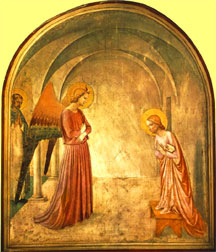
This fresco of the Annunciation (the angel's announcement to Mary) was painted by Fra Angelico in 1440-41. It is in the Convento di San Marco, in Florence, Italy. The man on the left, behind the angel, is St. Peter of Verona. (It pains me to say that last summer I was within a hundred yards of this fresco, but did not see it. Sigh!)
|
Tomorrow I'll continue these reflections on Mary in the Bible, considering her presence at the Crucifixion and the practice of "praying" to Mary.
The Virgin Mary in the Bible: Some Personal Reflections (Section B)
Part 7 of the series: "The Protestant Mary"
Posted at 10:30 p.m. on Tuesday, March 22, 2005
Today's post is a continuation of yesterday's personal reflections on the Virgin Mary.
It seems odd to me that the New Testament says so little about Mary's involvement in Jesus's death, especially given how much this comes to mean in later Roman Catholic tradition (for example: The Stations of the Cross, The Passion of the Christ). The Gospel of John places Mary at the cross (John 19:25-27), but says nothing else about her experience there (besides what Jesus says about her becoming the "mother" of the beloved disciple). Oddly, the other three Gospels do not mention Mary's presence at the cross, though I don't doubt the historicity of John's account. Its minimalism actually speaks to its accuracy in my view, since you'd expect that a fictional account would have added much more embellishment.
Given how little is said in the New Testament about Mary at the cross, I find Van Biema's comment about all of this to be rather peculiar. He writes, "The most striking omission [of Mary], at least from Protestant sermons, is a recognition of the import of her role at the Cross." This doesn't impress me as a striking omission at all. Roman Catholic tradition makes a great deal of Mary's presence throughout Jesus's crucifixion, adding all sorts of extra-biblical material to the gospel accounts. Moreover, in the Catholic tradition, Jesus's words to Mary and the beloved disciple are seen by some as establishing her as the mother of all believers. Furthermore, her suffering as the natural mother of Jesus, not to mention his devoted disciple, becomes paradigmatic of all human suffering. But a Protestant preacher isn't going to get this from of the New Testament sources, which is where we Protestant preachers go for our material. The "omission" of the "import" of Mary's role at the cross is "most striking" only if you look at it through Roman Catholic eyes. Then, I'll agree, it is remarkable to see how something so important in Roman Catholic piety appears to mean so little to Protestants. But this should come as no surprise to anyone, given the Protestant reliance on Scripture and the Catholic reliance on Scripture plus later tradition.
So much of what we'd like to know about Mary is not revealed to us in the Bible. Church tradition fills in some of the blanks, and this may reflect what really happened. But we who don't have an infallible Pope can't be sure about so much of what intrigues us. I'm not speaking facetiously when I say this about the Pope, by the way. Those who believe that the Pope has spoken infallibly concerning Mary have more to go on than we Protestants. We who base our theology upon Scripture alone will not be able to go to the lengths of Marian veneration that are common among some Roman Catholics. Many aspects of this veneration are not objectionable to us, however, because we also recognize and "hail" blessed and honorable disciples. We have our Christian heroes and heroines, and surely Mary should be prominent among them, if not preeminent. But when veneration of the human Mary leads to praying to her as if she were a divine being or exalting her as "co-redeemer" with Christ, then we who base our theology on Scripture alone realize we can't go there.
I should mention that many Catholics distinguish between praying to Mary and praying to God. Years ago a brilliant Catholic friend of mine named Mike explained that, for him, "praying" to Mary is exactly like sharing a prayer request with a good friend. It's not praying to her as if she had divine power and wisdom. Rather, it's asking her to pray, just like Protestants might ask a wise Christian friend to intercede on their behalf. I challenged Mike by saying something like, "Why bother? If you can speak straight to God, why mess around with Mary?" His response was, "Don't you like knowing that a mature believer is praying for you? That's how I feel about Mary." I could see his point, though I haven't joined him in his Marian piety because I'm not sure Mary is in a place to hear my prayer requests or to intercede on my behalf. |
|
| |
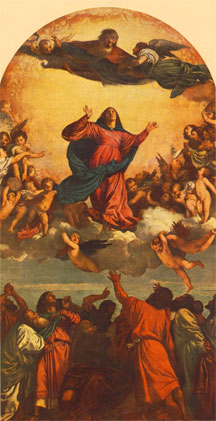
A painting by Vecellio Tiziano of the "Assumption of the Virgin" (1516-18). For centuries Catholics have believed that, after her death, Mary was taken up into heaven body and soul. In 1950 Pope Pius XII declared infallibly that the Assumption of the Blessed Virgin was Catholic dogma.
|
Though the Bible reveals Mary to be unique among all human beings, she remains a blessed person whose life points to God, the God who, in the mystery of his will, became flesh in her womb. Thus I think it's unlikely that growing Protestant interest in Mary will lead, as David Van Biema believes, to substantial changes in Protestant worship or piety. The TIME article cites with apparent affirmation the idea of Lutheran theologian Carl Braaten, that "Marianism" will eventually impact Protestant denominational worship. While this may be true to some extent among Protestants who do not have a high view of biblical authority, the rest of us won't have much place for Mary in our worship, other than as an outstanding reminder of God's grace (John Buchanan's sermon), a preeminent example of faith in God, and, of course, the one whom we "drag out" for our Christmas pageants. Even though Mary might indeed be the most blessed and special person in all of history, Christian worship never focuses – or should never focus – on any person, no matter how wonderful, but on God, the source of all wonder, including the marvel of the incarnation of the Word of God in the womb of Mary, the blessed virgin.
I have experienced this sort of focus in worship, not only in Protestant settings, but also in Roman Catholic settings as well. Allow me to share an ironic illustration.
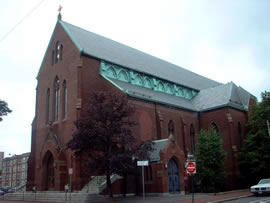 |
When I was in graduate school, I found it increasingly difficult to do my daily devotions in my apartment. I was restless and distracted, always reminded of how much unfinished studying I had to do. So I resolved to find a church in which I might have time alone for prayer and Bible reading. Of course the Protestant churches in my Cambridge, Massachusetts neighborhood weren't open during the week, but I found a Roman Catholic church only a few blocks away that opened each day for noon mass. I decided to join the next day's mass at this church, which, ironically enough, was called St. Mary's of the Annunciation. |
St. Mary's of the Annunciation in Cambridge, Massachusetts. |
|
I felt very awkward at my first mass because I was so unfamiliar with the liturgy. Yet I sensed a genuine worshipfulness in the small congregation. I sat way in the back of the humble chapel at St. Mary's, trying to appear inconspicuous, which was a little hard given that I was the only worshiper under 60, and that I was the only one who did not come forward to receive communion. Nevertheless, I felt welcomed, and found the quietness of the chapel conducive to prayer. After the mass I was free to remain for as long as I wished to pray and read Scripture.
For the next several months I attended noon mass a couple of times a week. Each time I heard the priest offer a short homily on one of the day's biblical passages. And each time I marveled at how utterly Christ-centered and evangelical his messages were. If I were to preach one of his sermons today in my Presbyterian church, nobody would guess that it was once delivered by a Roman Catholic priest.
I'll never forget the "punch line" of his All Saints' Day message. Here is my paraphrase: |
|
| |
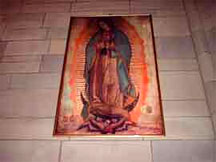
A painting of the Virgin of Guadalupe from the inside of St. Mary's church. |
Yes, we revere the saints because of their exemplary lives. We hold them up to be emulated. We even talk to them to ask for their help. And, at St. Mary's, of course we love the Blessed Virgin. But let us always remember that we are first and foremost a people devoted to Jesus Christ, who alone is our Savior. All the saints, and even his exalted mother, point us to Jesus Christ. So on this All Saints' Day, let's follow their example by focusing, not on them, but on Christ himself.
I'm quite sure this priest believed more about Mary than I did, and, for that matter, more about the nature of the church than I did, and more about the authority of church tradition than I did. But there was no question in my mind that we shared the same basic faith in God who has made himself know through Jesus Christ. Thus, much to my surprise, I found more common ground with this priest than I expected, even when it came to the way he talked about Mary in a church named in her honor.
I don't have sufficient experience of Roman Catholic worship, nor sufficient knowledge of contemporary Roman Catholic theology, to know if my experience at St. Mary's of the Annunciation was representative of Catholic piety and thought today. But what I do know is that what I once perceived to be a vast gulf between Protestantism and Roman Catholicism turned out, in my experience, to be a modest gap that I found surprisingly easy to cross.
This experience points to a larger story I want to pursue tomorrow. It's one of the "real stories" that David Van Biema missed in his TIME article, and that I believe deserves to be told.
The Protestant Mary: What's the Real Story? (Section A)
Part 8 of the series: "The Protestant Mary"
Posted at 9:30 p.m. on Wednesday, March 23, 2005
Early in this series I said that I agreed with David Van Biema's basic observation that there is growing openness among Protestants to take Mary seriously. The evidence he lays out in his TIME cover story supports this claim, as does my own experience as a Protestant (47 years) and a Presbyterian pastor (20 years). But, as I've made clear throughout the series, I think Van Biema's assertion of a "pro-Marian tipping point" among Protestants, one that will lead to inclusion of Mary in Protestant worship and prayer, is not supported by the evidence. In proposing this thesis it seems that Van Biema has been influenced too much by the opinions of a few Protestant scholars while overlooking the actual experience and perspective of the vast majority of Protestants.
Yet I do believe there's more to the "Protestant Mary" story than merely a greater openness among Protestants to think and talk about Mary. Beginning with today's post I'll try to sketch some of the features of this "real story." (Please note the word "sketch." Remember that I'm a blogger who has one, maybe two hours a day to work on this stuff. I don't have the time and resources of a writer for TIME. So I can't supply the texture and detail I wish I could provide.)
So what is the bigger story behind the Protestant Mary? Let me put it this way: The greater openness of Protestants to Mary is simply one sign of the greater openness among Protestants to Roman Catholicism in general. As I noted at the close of my last post, what many Protestants, including me, once perceived to be a "vast gulf between Protestantism and Roman Catholicism" has turned out to be "a modest gap" that we can easily cross. Or to put it differently, we Protestants sense a deeper unity with our Catholic brothers and sisters than we once felt, and we recognize more clearly than we once did the extent to which we share a common faith in the triune God who has been revealed most plainly in Jesus Christ, the Son of God and our Savior. Sure, there are still lots of differences in belief and practice between Protestants and Catholics, but these just don't seem to be as important as they once seemed.
There was a time, not all that long ago, actually, when Catholics and Protestants deeply mistrusted each other, or even worse. We doubted each other's salvation and vociferously denied each other's orthodoxy. This division often led to painful choices and rejections. One of my dissertation advisors, for example, was a Roman Catholic priest. He once shared with me that his family was half Catholic (by his mother) and half Presbyterian (by his father). When he decided to become a Jesuit priest, the Presbyterian side of his family disowned him and had no more to do with him. This painful experience happened around 1960.
At about this same time, during the 1960 Presidential election John Kennedy's Catholicism was a major issue, with many Protestants opposing him on religious grounds, fearing that his allegiance to Catholicism in general and the Pope in particular would hurt our country.
Much has happened since then. On the Catholic side, the Second Vatican Council (known as Vatican II) led to a greater openness from Catholics toward Protestants. This groundbreaking perspective can be found, for example, in the Vatican II document known as Lumen Gentium (light of the nations). Though reaffirming that the one church of Jesus Christ "subsists in the Catholic Church, which is governed by the successor of Peter and by the Bishops," the Vatican counsel went on to note that "many elements of sanctification and of truth are found outside of its visible structure. These elements, as gifts belonging to the Church of Christ, are forces impelling toward catholic unity." In other words, the Roman Catholic church officially acknowledged that "many elements of sanctification and of truth" can be found in Protestantism.
Scholars and church leaders might explain today's greater unity between Catholics and Protestants as a result of organized ecumenical efforts, and these may well have had some impact. But I'm convinced that the mending of the breach between these two major branches of Christianity comes from several other sources as well. Some of these have occurred to me through my own reflection and study; others have been mentioned by my readers, either in my Guestbook or in e-mail correspondence. I'm going to begin to summarize these factors today.
Some Reasons for the Mending of the Divide Between Catholics and Protestants in America
Kennedy's Patriotism.
Americans did in fact elect John F. Kennedy as President in 1960, and, though his tenure was a short one, it was obvious that his Catholicism did not keep him from putting America's interests first in his presidency. John F. Kennedy didn't sell out the U.S to the Pope. Even though Kennedy had a papal audience while he was President, his actions as President quelled Protestant fears and increased toleration for Catholics in general. |
|
|
I saw The Passion Recut today. As you may know, it's a slightly-less violent version of The Passion of the Christ, which Mel Gibson made to appeal to folks who would be put off the extreme violence of the original film. The good news is that The Passion Recut is, in my opinion, a even better film than the original – and I was a big supporter of the first movie. By subtracting some of the most graphic violence and adding a few scenes that emphasize more relational elements, for example, the response of the crowd (including Jesus's mother Mary) to his flogging, The Passion Recut grips the heart without some of the repulsiveness of the original film. Moreover, taking away some of the flogging scene actually gives more attention to the crucifixion scene, which, in my opinion, is an improvement..
I had heard that Mel Gibson was hoping for a PG-13 rating for The Passion Recut. Frankly, this rather surprises me, because I would still give the film an R+ rating for extreme violence and gore. This isn't a criticism, mind you, because you just can't make a realistic movie about Christ's death that is anything less than terribly violent.
On The Passion of the Christ trivia side of things, I heard something in this film that I missed the first two times. When Pilate first begins to question Jesus, Pilate speaks to him in Aramaic. Jesus answer in Latin, which seems to make an impression on Pilate. From then on they discourse in Latin. I wonder what Gibson thinks of this. (In fact I think it's unlikely that they spoke together in either Aramaic or Latin. If they did not have an interpreter, I'd wager that Jesus and Pilate spoke in Greek. If you're interested in this argument, you can check out my series on the language(s) of Jesus.)
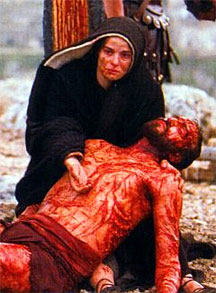
Finally, given this blogging series, I was exceptionally attentive to the portrayal of Mary in The Passion of the Christ. Once again I found this to be a gripping and believable presentation. Mary is an exceptionally genuine, human character. Her suffering is portrayed as truly horrible, but it's not overdone. This time around I was more impressed than before with Mary's incredible strength and her implicit faith in necessity and purposefulness of her son's death.
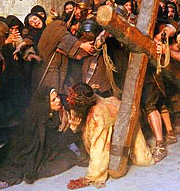
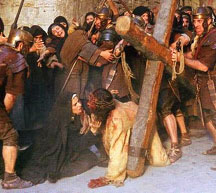
Once again I was deeply moved by the scene in which Mary runs to comfort Jesus after he falls under the weight of the cross, much as she once did when he was a boy. Her reaction made such sense to me as a parent. Yet what touched me was not only Mary's reaching out to Jesus, but his response to her love. Turning to face her, he says, "Mother, look, I am making all things new!" And then with renewed strength he stands to continue his long walk to his death. The irony in this scene is thick, of course. But it's also a marvelous portrayal of how Mary and her love don't turn attention to her, but rather they highlight and support the ministry of Jesus. |
The Charismatic Movement.
The so-called "Charismatic Movement" led to greater unity among certain groups of Christians, a unity that crossed "party lines," as it were. In the 1960s a movement (participants would see it as a movement of the Holy Spirit) began sweeping through several denominations of the Christian church. This Charismatic Movement emphasized more direct experience of God through the "baptism of the Holy Spirit."
| Charismatic worship featured emotional singing and praying, a precursor to today's contemporary Christian music in worship. Charismatic piety often emphasized speaking in tongues as a part of private prayer and corporate worship. In many settings Charismatic Protestants and Charismatic Catholics discovered a profound unity in faith and experience, a concord that was sometimes increased by the rejection they experienced in their own churches. During this time Catholic Charismatics and Protestant Charismatics often experienced greater unity with each other than with others from their own denominations. |
|
| |
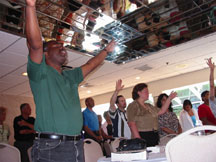
A typical view of a Charismatic worship service. |
|
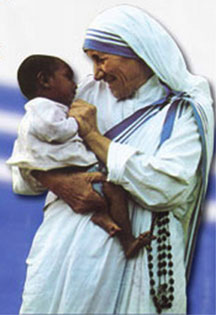
Mother Teresa of Calcutta.
Mother Teresa was beloved by Christians across the denominational spectrum. In the last two decades of the twentieth century, no Christian in the world was held in higher esteem than Mother Teresa, the tiny sister from Calcutta who led a movement to care for the poor and dying. When she won the Nobel Peace Prize in 1979, this was a moment for all Christians to celebrate. Mother Teresa became the compassionate, humble, faithful "face" of Christianity in general, not just Roman Catholic Christianity.
Tomorrow I'll look further at reasons why the breach between Catholics and Protestants is being mended. |
The Protestant Mary: What's the "Real" Story? (Section B)
Part 9 of the series: "The Protestant Mary"
Posted at 9:30 p.m. on Thursday, March 24, 2005
Yesterday I began to explore what I believe is the "real" story behind greater Protestant openness to the Virgin Mary. Here is that story in a nutshell:
The greater openness of Protestants to Mary is simply one sign of the greater openness among Protestants to Roman Catholicism in general. We Protestants sense a deeper unity with our Catholic brothers and sisters than we once felt, and we recognize more clearly than we once did the extent to which we share a common faith in the triune God who has been revealed most plainly in Jesus Christ, the Son of God and our Savior.
In my past post I began to summarize some of the factors that have contributed to the mending of the breach in Protestant and Catholic relations in addition to the impact of Vatican II. These were:
Kennedy's Patriotism
The Charismatic Movement
Mother Teresa of Calcutta
Today I'll add to this list additional reasons that have helped Protestants be more open to Catholicism in general.
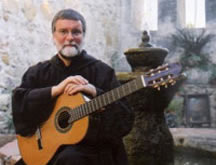
John Michael Talbot's Music
| The number one Catholic recording artist in album sales became popular with many Protestants beginning in the late 70s. John Michael Talbot, who once performed with the secular folk-rock group, Mason Proffit, became a Christian in the context of conservative evangelicalism, but then converted to Roman Catholicism, even becoming a Franciscan monk. Talbot's albums, mostly of quiet worship music, have sold over four million copies, with vast numbers of these purchased by Protestants. In the early 80s, for example, I became a fan of Talbot's, listening for hours to his music. I was unaware, at first, that many of his early lyrics were taken directly from the Catholic Mass. Thus Talbot built a bridge into many Protestant communities, including quite conservative evangelical ones. |
|
| |
To listen to a clip of John Michael Talbot's music, click here (.mov file 254 K). The lyrics are from the "Gloria" in the Catholic Mass: "Lamb of God, you take away the sin of the word, have mercy on us." To order the album from which this song comes, click here. |
Henri Nouwen's Writings
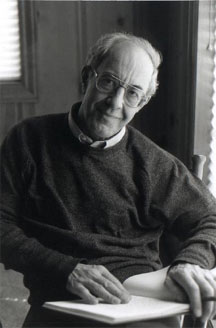 |
Nouwen's writings continue to touch the hearts and stretch the minds of Protestants and Catholics. Over two million books written by the Catholic priest Henri Nouwen have been sold, according to the website of the Henri Nouwen society. I became aware of the writings of this Dutch priest in the early 80's. Like thousands of Protestants, especially church leaders, I found his hunger for God to be engaging and contagious. Nouwen's Christian spirituality transcended his Catholic expressions, and his love for people built bridges across the Christian community. (Twice I had the opportunity to meet with Henri Nouwen, whom I found to be one of the kindest and wisest men I've ever known. One of my earthly treasures is a copy of his book, The Return of the Prodigal Son, which Henri signed and gave to me. His advice to Protestant pastors like me, by the way: "Lead people to Jesus.")
If you're interested in Nouwen's writings, I would recommend his classic The Wounded Healer or The Return of the Prodigal Son. |
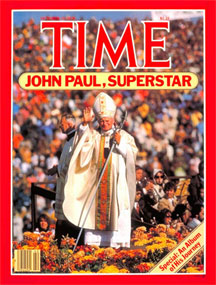
John Paul II's Christ-Centeredness.
The Christ-centered message of Pope John Paul II strengthened the unity between Catholic and Protestant Christians. I'll never forget the rainy evening of October 1, 1979. As a graduate student in religion at Harvard, I was eager to follow the visit of Pope John Paul II to America. It began with a mass across the Charles River in Boston. I headed to a local bar to watch the mass because I didn't own a television. (Yes, this is what was playing at inner city Cambridge bar!) I sat transfixed as I heard a message which, if not coming from a Catholic Pope with a strong Polish accent, could well have been preached in just about any evangelical church in America. In the conclusion of his homily, the Pope exhorted us to "Follow Christ!" Specially addressing married people, the unmarried, young and old, the Pope repeated his call to follow Christ, five times in all. His final line was, "For this I have come to America, and for this I am in Boston this evening: in order to call you to Christ, in order to call all and everyone of you to live in his love, today and always. Amen!" (A transcript of this message is available online, but only in Italian translation.)
Later that evening I was distressed by the news accounts of the Pope's sermon. You would have thought that his entire point was to oppose abortion. Admittedly, a small bit of the homily made a pro-life statement. But this was a minor theme in a Christ-centered evangelistic message. The evening of October 1, 1979 was the first time I realized that the secular media has its own agenda when reporting on religious matters, and has a difficult time comprehending what Christians actually think, feel, and do. I didn't believe that the reporters were intentionally twisting the story. They were simply hearing and reporting things in light of their expectations and convictions about what was important.
Pope John Paul II's evangelical passion for Christ has done much to bring Catholics and Protestants together. I must mention, however, that his passionate devotion to the Virgin Mary has been a bit of a stumbling block. On the one hand, such an emphasis makes it impossible for Protestants to give a blanket "Amen!" to the Pope. Yet, on the other hand, it also makes it hard for us to dismiss Marian piety as something for uneducated or theologically naïve folk. Few people in the world can match Karol Wojtyla's intellect. He's not easily dismissed, which makes his devotion to Mary both intriguing and troubling for those of us who don't share it. |
|
| |
Given the Pope's poor health today, it's easy to forget just how vigorous and charistmatic he was 25 years ago.
|
Tomorrow I'll continue to examine factors that have led to a greater sense of unity between Protestants and Catholics.
The Protestant Mary: What's the "Real" Story? (Section C)
Part 10 of the series: "The Protestant Mary"
Posted at 9:30 p.m. on Friday, March 25, 2005
In the last couple of days I have begun to lay out what I believe is the "real" story behind greater Protestant openness to the Virgin Mary. Here is that story in a nutshell:
The greater openness of Protestants to Mary is simply one sign of the greater openness among Protestants to Roman Catholicism in general. We Protestants sense a deeper unity with our Catholic brothers and sisters than we once felt, and we recognize more clearly than we once did the extent to which we share a common faith in the triune God who has been revealed most plainly in Jesus Christ, the Son of God and our Savior.
In my past two posts I started to summarize some of the factors that have contributed to the mending of the breach in Protestant and Catholic relations in addition to the impact of Vatican II. These were:
Kennedy's Patriotism
The Charismatic Movement
Mother Teresa of Calcutta
John Michael Talbot's Music
Henri Nouwen's Writings
John Paul II's Christ-Centeredness
Today I'll add to four other factors to this list of reasons why Protestants have become more open to Catholicism.
Protestant Rediscovery of Catholic Spirituality.
In the last twenty years Protestant Christians have rediscovered spiritual disciplines that were associated with Roman Catholic spirituality (though many are broadly shared among Christians of various traditions). Silence, meditative reading of Scripture (lectio divina), spiritual retreats, spiritual direction, and other disciplines have enriched the spirituality of millions of Protestants. The writings of Henri Nouwen and Richard Foster (The Celebration of Discipline) contributed to the popularity of such traditional forms of discipleship.
Catholic retreat centers, unlike the typical Protestant variety, tend to have minimal recreational options and maximal opportunities for quiet, worship, and prayer. They are also well-equipped for individual retreats, rather than just group events. |
|
| |
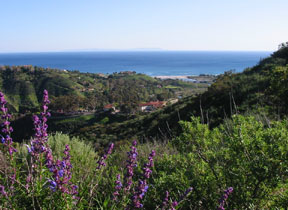
The red-roofed buildings in the center of this picture are the Serra Retreat Center, a Catholic facility in Malibu, California, where I have spent many retreats, both in private and in groups (of Protestants). Ironically, this center is literally a stone's throw from Mel Gibson's house.
|
Ancient-Future Worship and Perspective
In the last twenty years many Protestant, and even conservative evangelical and/or charismatic churches, have looked to the ancient church for worship resources. We've adopted practices that we once would have identified as "Roman Catholic" – passing of the peace, Ash Wednesday services, the use of visual images in worship, etc. This has given Protestants a greater appreciation for Catholic traditions and made it easier for us to "cross over" in our worship.
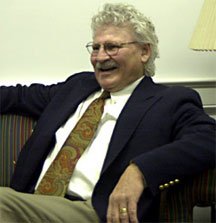 |
Protestant author Robert Webber coined the phrase "ancient-future" to describe the renewal of Protestant worship that draws from the past while at the same time making future-oriented innovations. Webber has authored a series of books with this theme, looking at ancient-future evangelism, faith, time, etc. Webber, who also has a regular "Ancient-Future Worship" column in Worship Leader magazine, is possibly the most influential Protestant in America when it comes to worship, since he has had a vast impact in diverse streams of Protestantism through his writings and conferences. He edited The Complete Library of Christian Worship, which I consider to be the greatest resource for worship leaders (apart from Scripture itself!). This series of eight volumes draws upon various traditions of Christian worship, including Roman Catholic, though the Library is intended primarily for Protestant readers. (Remember, when you use pre-Reformation worship materials, the Catholic/Protestant distinction makes little sense.) |
The "ancient-future" Robert Webber
|
|
The Changing Polarizations of Our World.
Fifty years ago the world was divided between Eastern Bloc communism and Western democracy. In our everyday experience, however, we Americans didn't run into Communists. Just about everybody we knew was more or less Christian. Within this "more or less Christian world" we made distinctions among ourselves. It mattered quite a bit what kind of Christian you were: Methodist, Baptist, Presbyterian, or Catholic. The differences between a Presbyterian and a Catholic loomed large. Many Protestants, in fact, doubted that Catholics were real Christians, and many Catholics returned the favor. I remember asking my freshman roommate in college if he was a Christian. "I'm not a Christian," he answered. "I am Catholic." This reflected the kind of polarization he had experienced in the South, where "Christian" meant "Baptist" or "Methodist" but not "Roman Catholic."
Today our world is no longer divided neatly into communist and democratic segments. The major divisions fall differently. On the one hand we have a division between secularism and religion (Christianity, in particular). On the other hand we feel the division between the Muslim East and the Judeo-Christian-Secular West. If we envision the world as divided in these ways, (secular vs. spiritual; Muslim vs. Western), then Catholics and Protestants end up on the same side of both divides. No matter what our theological differences, we are surely neither secular nor Muslim. Thus the changing polarization of our world has helped to bring Christians together, no matter what our denominational ties might be.
There's another division that's worth mentioning here, the one between theologically conservative and theologically liberal Christians. Without going into detail, on the conservative side are people who "conserve" the basic faith as it has been handed down for centuries. On the liberal side (or "progressive," as they might prefer) are people who feel greater freedom to reinterpret or even to reject traditional Christian teaching. So, for example, liberal Protestants might deny the binding authority of Scripture or even the deity of Christ. Liberal Catholics would follow suit, feeling free to reject even the supreme authority of the Pope. All of this leads to a fascinating situation, in which conservative Protestants often have more in common with conservative Catholics than with liberal Protestants. Likewise with liberal Protestants and liberal Catholics. This has contributed to a greater unity among Protestants and Catholics, ironically uniting folk on both the conservative and the liberal flanks.
The Abortion Debate.
Perhaps the most tangible evidence of how secularism and the liberal/conservative divide have helped to unite Protestants and Catholics is the abortion debate. I'll focus on the conservative side where the unity is more pronounced. The majority of theologically conservative Protestants and theologically conservative Catholics are pro-life. This means the very Christians who might be more inclined to resist any ecumenical union between Protestants and Catholics on the grounds of theological differences now find themselves on the same side of the abortion argument, if not the same side of actual pro-life protests. This forges, not only common intellectual agreement, but also real friendships between real Catholics and real Protestants who often discover that what divides them is less important than what unites them.
| When I asked my Protestant blog readers to weigh in on what has made them more open to thinking about the Virgin Mary, many mentioned the abortion issue. I would expect that the connectionalism between conservative Protestants and conservative Catholics will only be strengthened by the growing debate over gay marriage. The divisions we face today in our wolrd encourage unity among Christians who can say the Nicene Creed without crossing their fingers and who embrace the dignity of all human life. |
|
My next post will focus on Easter. I'll get back to this series in Sunday night's post.
The Protestant Mary: What's the "Real" Story? (Section D)
Part 11 of the series: "The Protestant Mary"
Posted at 9:50 p.m. on Easter Sunday, March 27, 2005
In the last few posts in this series I started to summarize what I believe is the "real" story behind greater Protestant openness to the Virgin Mary. Here is that story in a nutshell:
The greater openness of Protestants to Mary is simply one sign of the greater openness among Protestants to Roman Catholicism in general. We Protestants sense a deeper unity with our Catholic brothers and sisters than we once felt, and we recognize more clearly than we once did the extent to which we share a common faith in the triune God who has been revealed most plainly in Jesus Christ, the Son of God and our Savior.
In my past thee posts in this series I mentioned some of the factors that have contributed to the mending of the breach in Protestant and Catholic relations in addition to the impact of Vatican II. These were:
Kennedy's Patriotism
The Charismatic Movement
Mother Teresa of Calcutta
John Michael Talbot's Music
Henri Nouwen's Writings
John Paul II's Christ-Centeredness
Protestant Rediscovery of Catholic Spirituality
Ancient-Future Worship and Perspective
The Changing Polarizations of Our World
The Abortion Debate
Today I'll add what I believe to be a major factor in the growing openness of Protestants to Catholics, one that relates very directly to Protestant feelings for the Virgin Mary.
The Passion of the Christ.
In his cover story on Mary, TIME writer David Van Biema observes,
[A Baptist who venerates Mary] was drawn by what may be the most meaningful Marian lure: access to a central Christian image of love, at birth and through death, that Protestantism never officially repudiated but from which it has been estranged almost from the start. The hunger for this is illustrated by the evangelical reception of Mel Gibson's The Passion of the Christ. Conservative pastors interviewed by Christianity Today particularly lauded its treatment of Mary, which featured scenes not found in Scripture: Mary witnessing her son's scourging, sopping up his blood, kissing his bloody face—and her flashback, as Christ stumbles in carrying the Cross, to a moment in his boyhood when he fell and cried and she could cradle him in her arms.
I think Van Biema was correct to draw The Passion of the Christ into his conversation, though I believe he understated its significance. (And I'm not sure he understands why evangelicals were so positive about the film's treatment of Mary. More on this later.) It's not only that The Passion of the Christ impacted Protestant feelings for Mary. Even more significant is the impact of this film on the relationship between Protestant Christians and Catholics, especially among conservatives in both traditions.
| A few weeks before The Passion of the Christ was released, Rick Warren, of The Purpose Driven Life fame, invited a few thousand Protestant leaders to Saddleback Church for a screening of Gibson's film. Mel Gibson came to the screening and spoke to the pastors about making the movie and about his Christian faith. What a momentous occasion! Think of it. The leading Southern Baptist minister in the world (at least in terms of impact) and, according to a TIME magazine article written by David Van Biema himself , the country's leading evangelical, invited a dyed-in-the-wool, conservative, Rosary-praying Roman Catholic to speak in his church. Both men implicitly affirmed the genuine Christian faith of the other. Neither tried to convert the other to his form of Christian piety. Neither felt any need to criticize the other's denominational affilication. This was a watershed moment in American church history. |
|
Millions upon millions of Protestants, including conservative evangelicals, viewed and were deeply moved by The Passion of the Christ. I don't know of any survey that asked about their views of Mel Gibson's faith, but I would expect that 99% of the Protestants who saw the film would agree that Mel Gibson is a real Christian (even if they wouldn't be happy with some of his Catholic beliefs). Moreover, the vast majority of Protestants who saw the film were moved by Gibson's portrayal of Mary the mother of Jesus, even though almost everything in the film came either from Roman Catholic tradition or from Gibson's own imagination.
So I think Van Biema values far too lightly the impact of The Passion of the Christ, both on Protestant-Catholic relations and on Protestant regard for Mary. The TIME article spends many paragraphs summarizing the ideas of a few pro-Marian Protestant theologians. Even though these academics have some valid insights, and even though their books will be bought by a few thousand readers, their impact is miniscule compared to that of Mel Gibson. By now his movie has been viewed by well-over 50,000,000 Americans. Surely the vast majority of these were Protestant. Numerically speaking, then, Gibson's impact on Protestant America is probably more than 2,000 times that of the seminary professors who wrote and articles books on Mary. Sure, there may be some sort of "trickle-down effect" from seminary professors through pastors to the average people in the pew. But if you wanted to impact a huge number of Protestants, would you write a theological text or make a movie that would be viewed by 50,000,000 people? (Remember, I'm saying this as a part-time seminary professor who actually believes that what I do in this context really matters. There's another story here, by the way, and that's the impact of pop culture on religious faith and practice. This will have to wait until later, however.)
I'm making three main points about The Passion of the Christ.
1. It was a major sign of the growing rapprochement between Protestants and Catholics.
2. It was a major step forward in the growing rapprochement between Protestants and Catholics.
3. It's moving portrayal of Mary had a major impact on the way millions of faithful Protestants think and feel about the Blessed Virgin.
I'm going to wait until tomorrow to develop this third point.
The Impact of The Passion of the Christ on Protestant Feeling for the Virgin Mary
Part 12 of the series "The Protestant Mary: Reflections on the TIME Cover Story"
Posted at 9:50 p.m. on Monday, March 28, 2005
In my last post I talked in general terms about how Mel Gibson's film The Passion of the Christ made a significant difference in the way many Protestants feel about Roman Catholics. I concluded with three points about the movie and its impact:
1. It was a major sign of the growing rapprochement between Protestants and Catholics.
2. It was a major step forward in the growing rapprochement between Protestants and Catholics.
3. Its moving portrayal of Mary had a major impact on the way millions of faithful Protestants think and feel about the Blessed Virgin.
I'd even go out on a limb and say that nothing in church history has had a more significant impact on Protestant feeling for Mary than The Passion of the Christ. (Of course I'm not a church historian, so I might certainly have overlooked something here.) Notice, however, that I said Protestant feeling. I am not arguing that Protestant Christians will now consider changing their theology or worship because of the portrayal of Mary in the film. Rather, I believe Protestants now feel more affection and respect for Mary, and more empathy for her suffering in the death of her son.
Earlier in this series I asked my blog readers the following question: "If you are a Protestant and if you saw The Passion of the Christ, did the portrayal of Mary have an impact on you? How would you describe that impact?" I received dozens of answers, both in my Guestbook and by e-mail. Let me cite some of the answers in my Guestbook (because these were intended to be read by many people): |
|
| |
Above: In this moving scene, Mary runs to comfort Jesus when he falls, while remembering a time when she ran to him when he fell as a young boy.
|
Carl Orr: Mary's prominence in the movie helped the audience feel Jesus' suffering and see the humanity of both Jesus and Mary.
Mike Severson: I would say that I absolutely came away with a different perspective of the mother of Jesus. I was reminded of Mary being first and foremost a mother who loved her son deeply. She was a human being with profound feelings in spectacular and terrible circumstances. The film put the words I've read in better perspective and now allows me to connect with Mary on a level other than the "Christmas Story."Jim Tweedie: I must say, however, that I never before pictured her on her knees mopping up Jesus' blood after his scourging. Although symbolic of her desire to somehow forestall her son's impending death, that particular scene did not present her in a way that I am comfortable with either personally or biblically.
Gina: Gibson's portrayal of Mary helped to humanize her. The dominant image of her has been so colored by those who would deify her, that it was nice to see a portrayal of her showing very human responses.
Becki: I liked the portrayal of Mary in "The Passion"; and that's all everyone in our church was talking about after many of us saw it together.
Dave Sather: The portrayal of Mary in The Passion gave me a perspective on the story that hadn't occurred to me before. I have kids, but I never thought of the pain that she must have gone through to watch her son go through all of that torture. The thought of my own son going through half of that is beyond imagining for me. |
|
|
Above: Mary holds the body of her dead son, in a scene reminiscent of Christian art through the centuries. Compare Gibson's image with the Pieta of Carracci (1599-1600)(below).
|
|
These comments are representative of what was communicated to me in private e-mails as well.
Of course my little survey wasn't scientific, but I do believe speaks for vast numbers of Protestants who saw The Passion of the Christ. For many, this was the first time they gave much thought to Mary's presence at the cross, and the first time they actually felt deep empathy for her.
It is also striking to me that so many Protestants speak of The Passion of the Christ as humanizing Mary. They don't mean that they had thought of Mary as a divine character before seeing the film. Rather, they mean that they thought very little about her beforehand. Yet through the movie Mary came alive for them as a real human being, and not just a name on the pages of Scripture.
In his TIME story, Van Biema recounts the efforts of pro-Marian evangelical scholars to revive use of the title theotokos (god-bearer or mother of God) for Mary. "They also hope that calling Mary Mother of God reminds people that Jesus was God, refuting the modern tendency to see him simply as a wise man or teacher." Historically and theologically, it is true that raising Mary to the rank of Mother of God was in fact a way to exalt her Son even higher. (Protestants often misunderstand that fundamental truth of Catholic theology.) So more attention given to Mary and her specialness can lead, theologically, to seeing Jesus more clearly as God.
Yet I think Van Biema and those who have influenced him miss the practical point, the point made by those who wrote me about Mary's role in The Passion of the Christ. For those of us in the Protestant tradition who may have a tendency to emphasize Jesus's deity to the exclusion of his humanity, Mary actually serves as a powerful reminder that Jesus was truly and fully human. He had a real mother who gave birth to him in Bethlehem, who loved him as he grew up, and who grieved wrenchingly when he died. This doesn't minimize Jesus's divine nature. But it fills in the blanks often left open by Protestant Christians.
Finally, I think the portrayal of Mary in The Passion of the Christ increased Protestant devotion to . . . Jesus. And not just devotion, but deep love. Let me explain what I mean. If we tend to think of Jesus as more divine than human, then it's easy for us to minimize his sacrifice on the cross. I've actually heard people say things like, "Surely it wasn't that big a deal. A few hours of suffering for the salvation of the world? That's not so bad." Part of what lies behind this idea is a failure to grasp what it meant for God the Son to bear the sin of the world. But this minimizing of Jesus's sacrifice also reflects a failure to grasp the full humanity of Jesus, his real suffering as a real human being. When we see the death of Jesus through the eyes of Mary, however, we feel the pain and horror of his suffering in a whole new way. We realize more deeply how much he suffered, both as a man and as the God-man, on the cross. By putting ourselves in the place of Mary, we feel a mother-like love for him, in addition to the love we feels as those who have been saved through his death. Thus we are drawn to greater gratitude, greater adoration, greater praise. By paying more attention to Mary, we end up not just honoring her more, but, more importantly, adoring her son more.
During the last week I've received e-mails and Guestbook notes from many Catholics. A Guestbook entry from George Meyer represents what I've heard from many blog readers:
What us Catholics take for granted is her place and role in the family of Christians. Mary's purpose is to lead everyone to her Divine Son. That's it. We accept her exalted position as mother of God and embrace it. . . . The 'Hail Mary' is a simple prayer of intercession to a special Mommy. She leads us to Jesus.
It would seem, therefore, that Mary's impact on both Protestants and Catholics can be quite similar: she points to her son and leads us to a deeper devotion to Him. Of course some of us might get not follow Mary's lead, and may end up focusing more on her than on Jesus. But this is neither necessary nor theologically appropriate.
The Passion of the Christ has had a profound effect on Protestant feelings for the Virgin Mary. Yet there is something else that has opened the hearts of many Protestants to Mary. This "something else" I'll address in my next post.
The Mysterious "Something Else" That Has Impacted Protestant Appreciation of Mary
Part 13 of the series "The Protestant Mary: Reflection on the TIME Cover Story"
Posted at 9:50 p.m. on Tuesday, March 29, 2005
I concluded my first post of this series with this challenge:
Van Biema rightly points out the influence of The Passion of the Christ on Protestant (including evangelical) reflection on Mary. Besides this movie, what else in the last two decades do you think has had a major impact on Protestant views of or feelings about Mary? I think Van Biema missed something quite significant. Can you guess what I'm thinking of? You can e-mail me your ideas, or, better yet, put them in the guestbook.
I received lots of fine guesses, but only three hit the nail on the head, at least as far as I'm concerned. (Way to go, Guestbook signer Lawrence Whalley, plus two confidential e-mails.) Before I divulge that "something else" that has had such a major impact on Protestant feeling for Mary, I want to tell a story to set this revelation in context.
| Two years ago my wife and I were at the Gospel Music Association summer gathering in Estes Park, Colorado, where I was doing some teaching with Worship Leader magazine. In the evenings we'd go to the "Long House" for concerts from some of the leading contemporary Christian artists, folks like Amy Grant, Michael W. Smith, MercyMe, etc. One evening we were introduced to a Christian comedian named Mark Lowry. He was one of the funniest men I'd ever heard. Without using one obscenity or insulting politicians or talking about sex, Lowry was utterly hilarious. He had a clever way of talking about ordinary life, especially life in Christian churches, that cracked up the whole audience. (Lowry, by the way, takes his shtick on tour. If you have a chance to see him, do it. He also has a silly audio-blog, though it's way out of date. He's the only audio-blogger I know.) |
|
| |
This may not be Lowry's favorite picture, but it gets his delightful personality just right. |
As his performance was drawing to a close, Lowry said something like this (my paraphrase):
Almost twenty ago my church asked me to write a Christmas play, so I jotted down some lines of poem. These sat around for a while until my friend Buddy Greene put them to music. Michael English recorded first recorded the song, and since then it's become pretty popular. I'd like to sing it for you tonight.
Most of the crowd, knowing exactly what Mark Lowry was talking about, went wild with anticipation. Then slowly, simply, he began to sing:
Mary did you know that your baby boy would one day walk on water?
Mary did you know that your baby boy would save our sons and daughters?
Did you know that your baby boy has come to make you new?
This child that you've delivered will soon deliver you.
Mary did you know that your baby boy will give sight to a blind man?
Mary did you know that your baby boy will calm the storm with His hand?
Did you know that your baby boy has walked where angels trod?
When you kiss your little baby you kiss the face of God.
Oh Mary did you know?
The blind will see; the deaf will hear the dead will live again.
The lame will leap; the dumb will speak the praises of The Lamb.
Mary did you know that your baby boy is Lord of all creation?
Mary did you know that you baby boy would one day rule the nations?
Did you know that your baby boy is Heaven's perfect Lamb?
This sleeping child you're holding is the great I AM.
If you'd like to hear Mark Lowry sing a portion of this song, click here (.mov 268K). To purchase his Christmas album, which includes this song, click here.
What Lowry did not mention was that this song has become one of the most popular Christmas songs of all time. It has been recorded by more than thirty artists, including such singers as Kathy Mattea, Kenny Rogers, Wynonna Judd, Natalie Cole, and Michael Crawford. (To hear a clip from Natalie Cole's recording, click here [.mov 176K]. To order her album, click here. To hear a clip of Michael Crawford singing "Mary, Did You Know?" click here [.mov 244K]. To buy the album, click here. This one sounds really strange if you know Michael Crawford only from his exquisite performance as the Phantom in Andrew Lloyd Webber's Phantom on the Opera. Just for fun, to hear the Phantom sing "Mary, Did You Know?" click here [.mov 476K]).
In my opinion, the popularity of "Mary, Did You Know?" has had a major impact on Protestant feeling for Mary. The song, after all, focuses on Mary and her experience of the birth of Jesus. She's not an incidental character in the song, but the central persona. Lowry's lyrics help us to get inside Mary's skin, to wonder what she's thinking as she holds her baby. Thus we relate to Mary as a person, as a mother, and as a human being who realizes she's holding a divine miracle in her arms, but probably doesn't yet understand the full scope of that miracle.
Part of what makes this song so effective is its use of irony: "This child that you've delivered, will soon deliver you." Now there's a brilliant line, using two different senses of the verb "to deliver." Two lines give ironic expression to the mystery of the Incarnation:
Mary did you know . . . when you kiss your little baby, you kiss the face of God?
Mary did you know . . . this sleeping child you're holding, is the great I AM?
| "Mary, Did You Know?" is so powerful because it connects us to the motherly heart of Mary without being maudlin. Plus it puts us in touch with the mystery of God's becoming human. Take these factors, add in Buddy Greene's haunting melody, and you have a humongous hit. Because of this song, millions upon millions of Protestants, perhaps for the first time, have begun to pay real attention to Mary, her thoughts and feelings. To use one of David Van Biema's favorite phrases, if your church sings "Mary, Did You Know?" at Christmas time, then it's unlikely that you just "dragged her out" for the holiday. |
|
| |
Perhaps the closest I've come to feeling things from Mary's side was when my wife, my daughter, and I played the Holy Family in our church Christmas pageant. |
Of course, as we've seen before in other cases, "Mary, Did You Know?" does not focus on solely on Mary. Rather, in this song she becomes a human connection point through which we touch Jesus. He is, after all, "Heaven's perfect Lamb," who will one day give his life to deliver us. He is, in the unfathomable mystery of the Incarnation, "the great I AM," who alone is worthy of our worship and adoration.
Is There a Basis for Catholic-Protestant Unity?
Part 14 of the series: "The Protestant Mary: Reflections on the TIME Cover Story"
Posted at 9:45 p.m. on Wednesday, March 30, 2005
This series on the Protestant Mary has certainly stirred the pot! I've received well over a hundred e-mails in response to this series from a broad range of blog readers, including a Southern Baptist minister in Georgia, a Roman Catholic monk in France, and just about everything in between. I've had a few Protestants chew me out for ignoring the theological differences between Catholicism and Protestantism. And I've had a few Catholics cheer me on in what they perceive to be my faith journey to Rome. I've heard from several former Protestants who have become Catholic, and from several former Catholics who have become Protestant. Many e-mailers have shared their personal experience of finding lots of common ground with people on the other side of the Catholic-Protestant divide. But a few have written quite painfully of their experience of a substantial barrier between Catholics and Protestants. I think it's safe to say that for any true generalities about this issue, there will always be lots of counter examples.
No doubt you've noticed that I have written this series from a Protestant point of view. I have done this intentionally, partly because I can speak as a Protestant, but not as a Catholic. Also, it's much harder for me make generalizations about Catholic beliefs or attitudes since I don't live in the extraordinarily complex world of Roman Catholicism. In my personal experience, I've almost always found acceptance as a genuine Christian (and even a Christian minister) from Roman Catholics whom I've met. But I would not suggest that my experience is necessarily representative. For better and for worse, ecclesiastical things tend to be rather "loosey-goosey" out here in California.
| But I've also written this series from a Protestant point of view because I am a Protestant, not only by life history, but also by my conscious choice. In many key matters of theology I find myself to be thoroughly Protestant. These would include: the nature and function of grace; the nature and function of faith, the role and authority of Scripture, the role and authority of tradition, the nature of the church, and certain details concerning Mary, like her immaculate conception or her assumption to heaven. No doubt some of you will notice the classic Protestant "alones" in this list: sola scriptura (scripture alone), sola gratia (grace alone), sola fide (faith alone). These are central to my faith and practice. So, though I have found much more common ground with Catholics than I once expected, I do not mean to minimize the genuine theological differences between us. At the same time, I have found that I have much to learn from my Catholic brothers and sisters, and that we can join together in genuine, God-honoring Trinitarian worship, and that none of this requires me to reject my Protestant distinctives, though it may encourage me to examine these from a new perspective. |
|
| |
"The Adoration of the Trinity" by Albrecht Dürer (1511). Dürer was the first great Protestant painter. In this picture the Virgin Mary appears on the left, leading a group of female worshipers.
|
Yet, it seems to me that too often we Christians focus so much on our differences that we neglect or minimize our agreements. I received an e-mail from a man who wondered where I saw unity between Protestants and Catholics because he just couldn't see it, given Catholic beliefs about Mary, the Pope, etc. My answer to this man: Our unity is the Nicene Creed. This confessional statement, which most Protestants and all faithful Catholics recognize as the orthodox core of Christian doctrine, is affirmed by Mass-attending Catholics every week. (Protestants tend to use The Apostles' Creed, a scaled-down version of the Nicene statement.) In case you're not familiar with the Nicene Creed, which hails from the fourth-century A.D., here it is (in one English translation):
I would contend that I share a profound unity of faith with any person, Catholic, Protestant, or whatever, who affirms this statement. (Note: Eastern Orthodox Christians do not include the phrase "and the son" in reference to the origin of the Holy Spirit. This theological disagreement is central to the division between Eastern and Western churches. But, even granting this theological difference, what we affirm together is both profound and vast, especially when you look at this in light of world religions and the growing "religion" of secularism.
As I argued earlier in this series, I think the changing nature of our world has helped Christians to see our fundamental unity in Christ more clearly and our differences, though genuine, as less essential. Even though Catholics and Protestants differ over our understanding of how God's grace functions in our lives and how we are to respond to that grace – no small matter – we are still unified in our core belief in a triune God whose grace has been revealed most perfectly in Jesus Christ, the one who is both "true God" and "truly human," and who alone is the Savior of the world. This unity is nothing to sneeze at.
In my next post I'm going to finish up this conversation about the "Nicene unity" of the church as a final post in this series on the Protestant Mary.
Celebrating Our Nicene Core as Christians
Part 15 of the series: "The Protestant Mary: Reflections on the TIME Cover Story"
Posted at 10:15 p.m. on Thursday, March 31, 2005
In my last post I suggested that we Christians, whether Catholic, Protestant, Orthodox, or whatever, ought to find our unity in the theology that is summarized in the classic Nicene Creed. Though we differ over many matters of faith and practice, all orthodox (with a small 'o', meaning right-believing) Christians are unified in our confession of one triune God who was preeminently revealed in Jesus Christ, the one who is both "true God" and "truly human," according to the Nicene Creed. (To read this creed, see my last post.)
As we look at the diverse collection of Christians throughout the world today, we can see both fundamental unity and vast diversity. It's up to us which of these realities we'll consider to be more important. Historically, we Protestants have tended to emphasize our theological differences from other Christians rather than highlighting our unity in Christ. This seems to be especially true of American Christians, and evangelicals in particular. (I say this as an American evangelical Protestant). How often have I seen a group break off from some church over a relatively inconsequential matter of theology or strategy and start their own church. Then, before long, a group from within that new church breaks off over some other relatively small issue. And so it goes. Our laudable efforts to achieve theological integrity too often lead to the unlaudable disintegration of the body of Christ.
I fear that we Protestants have forgotten just how much our beloved Bible teaches us to value Christian unity (for example: Ephesians 4, 1 Corinthians 1-4; 11-14). Moreover, we evangelicals who care so much about the centrality of Christ and the priority of evangelism might do well to remember how Jesus himself prayed for us just before his death:
“I ask not only on behalf of [my disciples], but also on behalf of those who will believe in me through their word, that they may all be one. As you, Father, are in me and I am in you, may they also be in us, so that the world may believe that you have sent me. The glory that you have given me I have given them, so that they may be one, as we are one, I in them and you in me, that they may become completely one, so that the world may know that you have sent me and have loved them even as you have loved me." (John 17:20-23).
It seems to me sadly ironic that those of us who have battled so faithfully for the oneness of the Father and the Son too often forget the Son's desire that we Christians be one in a similar way. Far too often we allow significant distinctions among us to become schismatic divisions. We're so committed to "rightly dividing the word of truth" that we end up wrongly dividing the church of Christ.
Now I don't mean to suggest that Protestants alone are to blame for the disunity among Christians. Both Catholics and Protestants have contributed substantially to this situation. For example, it didn't help matters when, as recently as 2000, the Vatican published a statement entitled Dominus Iesus, in which the legitimacy of Protestant churches was doubted, if not denied.
Nevertheless, I'll go on record as saying that what unites believing Catholics, believing Protestants, and Orthodox believers, our Nicene core, if you will, outweighs what divides us. As our world becomes increasingly secular and even hostile to genuine faith of all kinds, we who are believing Christians will come to value our common faith more and more. Along the way there will be signposts of unity, such as growing Protestant appreciation of Mary. But these signposts should not be over-interpreted, as if they signaled a major theological or liturgical change in Protestantism.
More widespread Protestant openness to Mary does indeed suggest that the dividing wall of hostility between Catholics and Protestants has come down a bit, but it does not mean that we Protestants are becoming more Catholic (with a capital 'C'), or that the differences between us have been overcome. Rather it indicates that we Protestants are embracing more freely the truly catholic (with a small 'c', meaning "universal" or "worldwide") character of Christian faith. Part of this catholic faith involves recognizing the unique and venerable role of the Virgin Mary, a role that is revealed in Scripture.
It's truly remarkable that Mary, a human being, appears in a central article of Christian faith as expressed in the Nicene Creed: "[Christ] was incarnate of the Holy Spirit and the Virgin Mary." The only other human being mentioned in this creed, apart from Christ himself, is Pontius Pilate, who balances Mary's honor with his supreme dishonor as the one who ordered the crucifixion of Jesus. Thus Mary plays a truly unique and exalted role both in salvation history and in Christian theology. Nobody else comes close to her in this regard. |
|
| |
"Holy Family and Trinity" by the Dutch painter Jacob de Wit (1726). De Wit, a Catholic, tried to capture the divine and human natures of Jesus, who belongs both to the horizontal human family and to the vertical divine Trinity. |
The Nicene Creed makes it clear, however, that Mary's role is primarily to direct our attention, not to herself, but to her son. After all, he is:
the only Son of God,
eternally begotten of the Father,
God from God, Light from Light,
true God from true God.
Moreover, he is the only human being who should be "worshiped and glorified" in the "one holy catholic and apostolic Church." As Mary finds her rightful place, both in Protestant and in Catholic churches, the sure result will be that Jesus Christ will receive even more glory. The Protestant Mary, along with her Roman Catholic persona, glorifies, not herself, but her son.
Thus we Christians can find in our Nicene core both grounds for our unity and guidance for how to think about the Virgin Mary. In the end, both of these come together in Jesus Christ. Thus as we celebrate our Nicene core, we rejoice in the triune God who has been preeminently revealed in Jesus Christ "for us and for our salvation."
Epilogue: Prayer for the Roman Catholic Church
Part 16 of the series: "The Protestant Mary: Reflections on the TIME Cover Story"
Posted at 11:30 p.m. on Friday, April 1, 2005
I hadn't expected to continue this series today, but I also hadn't expected that Pope John Paul II would be on his deathbed today. It would seem odd if I were to jump into some new topic given the theme of my recent posts (Protestant-Catholic unity) and what's happening right now in the Vatican.
All around the world tonight people are praying for the Pope. Among Roman Catholics this reflects their deep love for this particular Pontiff, whose energy, faithfulness, and worldwide travel (well over 100 countries) have made him extraordinarily popular. Those of us who are not Catholic can surely offer prayers of thanks for this man and his worthy accomplishments, among which I would number: his brilliant writings on many topics, his fervent opposition to communism and secularism, his persistent defense of Christian sexual morality, his efforts to bring reconciliation between Catholics and Jews, his powerful example of forgiveness (of the man who shot him in an attempt to kill him), and his regular proclamation of Jesus Christ.
Throughout the world today leading Catholic cardinals are heading to the Vatican in anticipation of the Pope's imminent death. They will be present for an official period of mourning and numerous masses that accompany such a traumatic event within the Catholic Church. Though it's easy for outsiders to see all of this as official church business, I expect that the cardinals will experience deep personal sadness as well. Even though this Pope's centralization of power has distressed some church officials, they still feel a personal love for John Paul II. Of course the majority of these men were appointed by this Pope, who appointed more cardinals than any other Pope in history (well over 200). In this way he has shaped both the present and the future of the Roman Catholic Church, including the character of his successor.
It might seem odd to begin now to pray for the process by which the next Pope will chosen, but I think now would be a good time to start doing so. I'll bet, in fact, that this has been central to the prayers of John Paul II in recent days, since he has had a major hand in shaping the process by which his successor will be chosen, not to mention the constituency of the electors.
The Pope, as you may know, is elected by an elite group of Cardinals, who meet in a Conclave about two weeks after the death of the former Pope. After being sworn to secrecy, they begin an election procedure in the Sistine Chapel (after it has been carefully swept for electronic bugging devices!). Through a series of votes, they finally elect a new Pope, usually by a 2/3's majority, though John Paul II has instituted a new rule whereby a deadlocked Conclave could eventually elect a Pope by a simple majority. (I wonder what this rule change tells us about John Paul's perception of the next papal election, if anything.) During the election, which can last for many days, the world knows very little. Smoke signals (literally) from the Vatican indicate only that a vote has been unsuccessful (black smoke) or successful (white smoke). (For a more detailed discussion of the procedure for electing a Pope, see this Encarta article or this piece from catholic-pages.com.)
I am beginning now to pray for God to be with the cardinals who will soon make what may turn out to be one of the most important decisions in the first part of the 21st century. No matter what you think of the Catholic Church or the Pope, you must acknowledge that his position is one of the most influential in the world. As I pray for the cardinals, I'm asking: |
|
| |
The interior of the Sistine Chapel, with Michaelangelo's Last Judgment on the front wall behind the altar. It seems fitting that the election of a Pope should take place in a room filled with such incredible art that depicts the great events in biblical history. Voting under the watchful eye of Christ the Judge would certainly help one to be humble and discerning in one's vote! |
First, that God comfort them in their grief over the loss of their leader, pastor, and brother;
Second, that God prepare them spiritually for the crucial task of electing a new Pope;
Third, that God guide their deliberations and their voting so that the next Pope will be, like King David, a man after God's own heart, and therefore a force for God's kingdom in the world;
Fourth, that this next Pope will help to unify all Christians in Christ and in our core confession of faith even through our theological and institutional differences will remain.
As you may know, part of what is intriguing about the election of the next Pope is the possibility that this person might come from the Southern Hemisphere, either Latin America (where 40% of the world's Catholics live) or Africa (which has a large and growing Catholic population). Personally, I think it would be amazing and wonderful to see new leadership emerge from one of these continents. But geography, however intriguing, is not the main thing. The main thing, I believe, is godly, Christ-centered, Spirit-led, and biblically informed leadership. I pray that the cardinals will choose this sort of person to lead the Catholic Church into this new century.
Appendix: Mary in the Bible -- The Biblical Passages
| Old Testament |
| God promised that the offspring of woman will "strike the head" of the serpent, a passage taken by some to be a messianic prediction that includes Mary. |
Genesis 3:15 |
| The classically disputed prophecy in Isaiah that reads, "Look, the young woman [or virgin] is with child and shall bear a son, and shall name him Immanuel." This text is controversial because the translation of the Hebrew term 'almah can be "virgin" or "young woman." |
Isaiah 7:14 |
| A prophetic text that speaks of a ruler to be born in Bethlehem. It refers to the time "when she who is in labor has brought forth." For Christians, this points to Mary as the mother of the one who "shall stand and feed his flock in the strength of the LORD" (v. 3) |
Micah 5:2-5 |
| New Testament: Gospels |
| Engaged to Joseph |
Luke 1:27 |
| Visited by an angel, who greets her: "Greetings, favored one! The Lord is with you." Perplexed by angel's greeting |
Luke 1:28-29 |
| Angel reveals her conception and the coming birth of son, who will be the messianic king. She question the angel: "How can this be, since I am a virgin?" Angel explains conception by Holy Spirit. She responds to angel: "Here I am, the servant of the Lord; let it be with me according to your word." |
Luke 1:33-38; (similar to Matt 1:18-20) |
| Visits her relative Elizabeth, who exclaims: "Blessed are you among woman, and blessed is the fruit of your womb." |
Luke 1:39-42 |
| Elizabeth adds, "And blessed is she who believed that there would be a fulfillment of what was spoken to her by the Lord." |
Luke 1:45 |
| Mary speaks a marvelous prophetic poem that begins, "My soul magnifies the Lord . . . ." In Latin it begins with, magnificat, so the poem is known as the Magnificat. The themes include God's favor, mercy, strength, judgment, and faithfulness. |
Luke 1:46-55 |
| Stays with Elizabeth for three months before returning home. |
Luke 1:56 |
| Travels to Bethlehem with Joseph while she is pregnant. |
Luke 2:4-5 |
| Gives birth to Jesus in Bethlehem, wrapping him in cloth and placing him in a food trough for animals. |
Luke 2:7 |
| Along with her baby, Mary is found by shepherds; she treasures and ponders their words |
Luke 2:16-19 |
| Goes to Jerusalem for ritual purification, where in temple Simeon praises God for Jesus, blesses his parents, and predicts of Mary: "and a sword will pierce your own soul too." |
Luke 2:25-35 |
| Did not have marital relations with Joseph until after the birth of Jesus. A disputed text because it implies that Mary and Joseph had ordinary sexual relations after the birth of Jesus, though without stating this directly. |
Matt 1:25 |
| Present for visit of Magi |
Matt 2:11 |
| Taken, along with Jesus, to Egypt by Joseph |
Matt 2:14 |
| Taken, along with Jesus, to Nazareth by Joseph |
Matt 2:21-23 |
| Goes on yearly Passover journey to Jerusalem with Joseph and Jesus when Jesus was twelve. Jesus remains in temple, distressing and astonishing his parents. Jesus responds about being in his Father's house, but they don't understand him. Mary treasures these things in her heart. |
Luke 2:41-51 |
| Comes, along with Jesus's brothers, to speak with Jesus. But Jesus says, "Who is my mother, and who are my brothers? . . . For whoever does the will of my Father in heaven is my brother and sister and mother." |
Matt 12:46-50; Mark 3:31-35; Luke 8:19-21 |
| Referred to as the mother of Jesus |
Matt 13:55; Mark 6:3; John 6:42 |
| Motivates Jesus to turn water into wine at Cana, his first miracle in the Gospel of John. Jesus speaks oddly to her: "Woman, what concern is that to you and to me? My hour has not yet come." |
John 2:1-11 |
| Stays with Jesus in Capernaum |
John 2:12 |
| Standing near the cross of Jesus, along with "the disciple whom Jesus loved." Note: John clearly puts Mary the mother of Jesus at the cross. This is the only place where this is mentioned. |
John 19:25 |
| Jesus addresses her from the cross: "Woman, here is your son." To beloved disciple Jesus says, "Here is your mother." From this time the disciple "took her into his own home." |
John 19:26-27 |
| New Testament: Besides the Gospels |
| Is praying with the disciples of Jesus in the upper room after his resurrection before Pentecost. By implication, she is present when the Spirit is poured out at Pentecost |
Acts 1:14 |
| Paul writes that "God sent his Son, born of a woman, born under the law." |
Gal 4:4 |
| Some interpreters see Mary in Revelation 12:1-6, a vision of "a woman clothed with the sun, with the moon under her feet, and on her head a crown of twelve stars" (v. 1). She gives birth to a son "who is to rule all the nations with a rod of iron" (v. 5). When her child is snatched away, she flees to the wilderness (vv. 5-6). That this text should be applied to Mary is not at all certain. It is generally applied to Mary by Roman Catholics, who derive from it the proof that she is the "Queen of Heaven." |
Rev 12:1-6 |
Home
|