End of the Presbyterian Church USA; End of the PCUSA; PCUSA Controversies; PCUSA and Homosexuality
The End of the
Presbyterian Church USA?
Revisited
by Rev. Dr. Mark D. Roberts
Copyright © 2008 by Mark D. Roberts
Note: You may download this resource at no cost, for personal use or for use in a Christian ministry, as long as you are not publishing it for sale. All I ask is that you give credit where credit is due. For all other uses, please contact me at mark@markdroberts.com. Thank you.
Related series: Why Not Just Leave the PC(USA)?
Related series: Presbyterian Exegesis Exam Changed
The End of the PCUSA? Revisited
Part 1 of series: The End of the Presbyterian Church USA? Revisited
Permalink for this post / Permalink for this series
Two years ago I wrote a blog series in which I asked: Has the Presbyterian Church USA (my own denomination) come to an end? My answer was: "Well, maybe. It doesn't look good."
Today I want to begin to revisit the question of whether the PCUSA is in its own end times, so to speak. Let me explain why I'm raising this tired topic yet again.
2006: The End of the PCUSA?
In 2006, following the General Assembly of the Presbyterian Church USA, I wrote a blog series entitled The End of the Presbyterian Church USA? In that series, I described recent actions of that General Assembly with respect to the issue that Presbyterians have debated for over thirty years . . . human sexuality. That Assembly reaffirmed the section of the Book of Order (the PCUSA guidebook for the church) that requires candidates for ordination to practice "fidelity within the covenant of marriage between a man and a woman or chastity in singleness" (G-6.0106b). But then, in a move that perplexed and distressed many Presbyterians, including me, the Assembly approved a report (the so-called PUP Report, for "Peace, Unity, and Purity"), that allowed the governing bodies that ordain church officers to decide for themselves whether a candidate for ordination needed to obey the stated rule or not. No longer would a candidate be required, according to this new guidance, to practice fidelity in marriage or chastity in singleness. Any governing body was free to determine its own conclusion in the matter, thus opening up the door to the ordination of people who were sexually active outside of marriage, whether in straight or gay relationships.
In my 2006 blog series, I spoke of how the action of the Assembly broke trust with those of us who have been committed to the PCUSA. I considered whether or not this was adequate reason to leave the PCUSA, given biblical teaching on the nature of Christian community. My conclusion was tentative. I was not prepared to leave the PCUSA, but was not ruling out the possibility. It did seem to me that the actions of the 2006 General Assembly hastened the end of the PCUSA as we knew it.
Today: The End of the PCUSA? Revisited
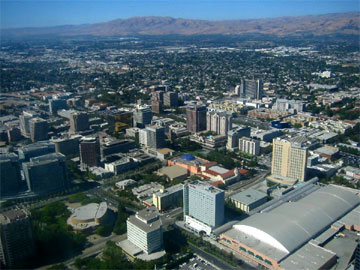 The 2008 General Assembly, held in San Jose, California, recently wrapped up. Much of what happened at the Assembly and many of the votes taken were find and dandy. But several actions of the 2008 Assembly make what happened in 2006 look like the minor leagues. We PCUSA types are now in the big leagues of church crises. (Photo: San Jose, California) The 2008 General Assembly, held in San Jose, California, recently wrapped up. Much of what happened at the Assembly and many of the votes taken were find and dandy. But several actions of the 2008 Assembly make what happened in 2006 look like the minor leagues. We PCUSA types are now in the big leagues of church crises. (Photo: San Jose, California)
This would be true even if the General Assembly had done nothing controversial, by the way. Shortly before the Assembly convened, the denomination released its statistics for 2007. Overall, the PCUSA lost 57,572 members, or 2.6% of its total membership. At this rate, the membership of the PCUSA will hit zero in less than forty years. I suppose the issue of gay ordination will be finally and definitively settled by the last person standing in 2046.
But I doubt the PCUSA will make it to 2046 intact. What happened in the last General Assembly has caused an unprecedented crisis in the denomination. I knew we were in trouble when, during my recent trip to San Jose to speak at a breakfast associated with the Assembly, I ran into a good friend who has been for many years one of the most enthusiastic supporters of the PCUSA, even though he has solid evangelical credentials. Even before the Assembly convened, my friend was deeply concerned. He spoke more negatively about the denomination than I had ever heard before. Something monumentally bad was about to happen, or so it seemed as I listened to him.
In the aftermath of the General Assembly, the comments of dyed-in-the-wool Presbyterians confirmed my friend's prediction of doom and gloom. Here is an assortment of comments by biblically-committed and highly-respected leaders in the PCUSA:
The actions of the 218th General Assembly have made it clear that the PC(USA)'s compromise of the Gospel of Jesus Christ has reached an unprecedented level. It is clear that the PC(USA)'s confession of the Lordship of Jesus Christ and commitment to our Reformed confessions has weakened to the point that we can no longer assume a common framework of conversation.
- Presbyterians for Renewal
I am shocked and dismayed. . . . [T]he General Assembly of the PCUSA has taken a number of actions which are at odds with Scripture and threaten to unravel any vestige of purity, peace, and unity that may still exist within the denomination. . . . [T]he PCUSA is clearly on a path of self-destruction in cutting herself off from the larger, global church. These actions are the product of bad theology. Bad theology always hurts people. The word “heresy” means “to choose.” With the actions of this General Assembly, the PCUSA has chosen to walk a different path than the path God has revealed to the Church in His Word.
- Ronald W. Scates, pastor of Highland Park
Presbyterian Church, one of the largest and
most influential churches in the PCUSA
With the most recent General Assembly in San Jose, the smoke seems at last to have cleared, and the steaming debris of the PC(USA) has settled into place.
It’s not a pretty sight. One thing for sure: this Humpty won’t be getting back together again for a long time, if ever.
- Vic Pentz, pastor of Peachtree Presbyterian
Church, the largest church in the PCUSA
Today the Presbyterian Church (U.S.A.) lies gravely wounded, by the hand of its own General Assembly. This Assembly has struck multiple blows, threatening to sever the sinews that hold us together as a Christian body and as a part of the larger body of Christ. This is a day for grieving. . . . We grieve for the Assembly's terrible loss of faith. We grieve for the thousands of churches in our denomination who receive this news with shock and dismay. And we grieve for all those who are encouraged by this action to engage in sinful behaviors that God does not bless.
- Presbyterian Renewal Network, a group of
biblically-committed PCUSA organizations
Of course not all Presbyterians were upset by the actions of the Assembly. Consider, for example, the following comments:
This is an amazing moment in history. I give thanks to God for all of you who have been praying, believing and working for the Presbyterian Church (USA) to end discrimination against its own lesbian, gay, bisexual and transgender daughters and sons, sisters and brothers in Christ. . . . There is clearly a sea-change in our Church, society and world as more people are letting go of the old beliefs and prejudice about homosexuality, same-gender loving persons and embracing what it means to recognize Christ and the divine image within all of God children. . . . For this moment, on this day, we rejoice in the fact that this Assembly has provided a way forward for our beloved Church. Together we are building a Church for all God's people!
- Michael Adee, Executive Director of
More Light Presbyterians
We give thanks for the decision of the 218th General Assembly to send to the presbyteries a thoughtful revision of the standards for ordination. The Authoritative Interpretation that was also approved immediately removes the specific references that have proved most hurtful to GLBT persons who are otherwise called and prepared to serve the church. This is a day that has been thirty years in coming and we give thanks for the hope that it offers to so many in the church who have been and still are excluded from ordained office. . . .
- Leaders of the Covenant Network
With gratitude to God, the board, staff, and community of That All May Freely Serve rejoice in the vote by the 218th General Assembly of the Presbyterian Church (USA) to open the door to the gifts and callings of lesbian, gay, bisexual, transgender, and queer members by removing its institutional barriers to ordination.
- That All My Freely Serve
What an astounding diversity of responses to the General Assembly actions! If nothing else, these various statements illustrate the extraordinary lack of visionary and theological unity in the PCUSA. What some people folks see as heresy and tragedy, others receive as liberation and hope. What some see as cause for grief and repentance, others experience as a reason for thanks and celebration. It's hard to imagine a Christian group less unified than the PCUSA at this time. We're pretty much tied with the Anglicans, as far as I can tell.
If you haven't been following this story closely, you may wonder what the General Assembly did to elicit such passionate and contradictory responses from its leaders. I'll explain the Assembly's actions in my next post.
What Did the General Assembly Do to Endanger the Existence of the PCUSA?
Part 2 of series: The End of the Presbyterian Church USA? Revisited
Permalink for this post / Permalink for this series
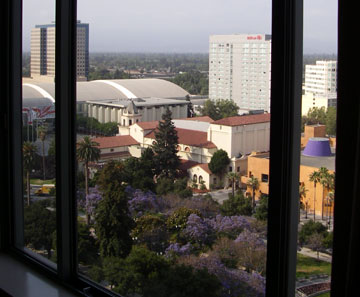 As I explained in my last post, the Presbyterian Church USA is on the ropes, at best, perhaps even down for the count, or even fully knocked out, at worst. Though my denomination has been on a downward course for decades, what happened in our latest General Assembly meeting in San Jose, California, has brought the PCUSA ever closer to its demise. (Photo: The San Jose Convention Center, where the General Assembly convened, from my hotel room. The Convention Center is the large building with the curved roof in the upper center of the photo.) As I explained in my last post, the Presbyterian Church USA is on the ropes, at best, perhaps even down for the count, or even fully knocked out, at worst. Though my denomination has been on a downward course for decades, what happened in our latest General Assembly meeting in San Jose, California, has brought the PCUSA ever closer to its demise. (Photo: The San Jose Convention Center, where the General Assembly convened, from my hotel room. The Convention Center is the large building with the curved roof in the upper center of the photo.)
Much of what happened in the General Assembly was quite positive. The Assembly reaffirmed the traditional definition of marriage as between one man and one woman, rather than giving in to the cultural pressure to endorse same-sex marriage. The Assembly also approved a statement that called upon Presbyterians to "Grow God’s Church Deep and Wide."
But several actions of the General Assembly have stirred up a storm of concern among many Presbyterians, as I demonstrated in my last post. Not all of them have to do with ordination and sexuality, but these are clearly the most incendiary. In order to explain these controversial actions fairly, I will quote from a letter sent by denominational leaders to churches and pastors. These leaders, who support the actions of the Assembly and who are positive about the future of the denomination, describe the contentious items in this way:
Perhaps the subject that will make the most headlines has to do with the ordination standards of our church. It is a subject with which Presbyterians are familiar and one that tends to evoke great debates and deep emotions. With that in mind, we want you to know what the assembly did—in the actual wording—in regard to ordination standards, and what will happen next.
- By a 54% to 46% margin, the assembly voted to propose an amendment to our Book of Order to change one of our current ordination standards. The change is to replace the current language that says officers of the church must live by “fidelity within the covenant of marriage between a man and a woman or chastity in singleness” (G-6.0106b) to this new language: Those who are called to ordained service in the church, by their assent to the constitutional questions for ordination and installation (W-4.4003), pledge themselves to live lives obedient to Jesus Christ the Head of the Church, striving to follow where he leads through the witness of the Scriptures, and to understand the Scriptures through the instruction of the Confessions. In so doing, they declare their fidelity to the standards of the Church. Each governing body charged with examination for ordination and/or installation (G-14.0240 and G-14.0450) establishes the candidate’s sincere efforts to adhere to these standards.
- By a 53% to 47% vote, the assembly adopted a new Authoritative Interpretation (AI) on G-6.0106b: Interpretive statements concerning ordained service of homosexual church members by the 190th General Assembly (1978) of the United Presbyterian Church in the United States of America, and the 119th General Assembly (1979) of the Presbyterian Church in the United States and all subsequent affirmations thereof, have no further force or effect.
- By a 54% to 46% vote, the assembly adopted a new AI on G-6.0108 which restores the intent of the Theological Task Force on Peace, Unity, and Purity of the Church report (2006) to allow someone who is being considered for ordination or installation as a deacon, elder, or minister to register a conscientious objection to the standards or beliefs of the church and ask the ordaining body to enter into a conversation with them to determine the seriousness of the departure.
- The assembly left unchanged the definition of marriage found in the Directory for Worship (W-4.9000)—“a civil contract between a woman and a man.”
By its actions, the assembly has initiated a new opportunity to focus ordination on primary allegiance and obedience to Jesus Christ, as well as to Scripture and the church’s confessions. The assembly places the responsibility onto sessions and presbyteries for discerning a candidate’s fitness for ordination.
If you're unfamiliar with the way Presbyterians do business, let me add a couple of words of explanation and commentary:
1. Out of context, the new language proposed for the Book of Order would be unobjectionable, even laudable. How wonderful that candidates for ordination "pledge themselves to live lives obedient to Jesus Christ the Head of the Church, striving to follow where he leads through the witness of the Scriptures, and to understand the Scriptures through the instruction of the Confessions." Yet by removing the call for candidates to pledge to live by "fidelity within the covenant of marriage between a man and a woman or chastity in singleness," this amendment clearly and intentionally implies that one can fulfill the standards for ordination while being sexually active outside of marriage. This would be true for both gay and straight candidates, by the way.
2. The proposed change to the Book of Order is not in force until it is approved by a majority of the presbyteries (regional governing bodies) of the church. Twice before, in 1997-98 and 2001-2, the General Assembly voted to remove the fidelity and chastity clause, but this was rejected by the presbyteries. This could very well happen again. But that's why my next point is so significant.
3. Perhaps the actions of greatest concern are the most confusing of all. The Assembly adopted two new Authoritative Interpretations of the Book of Order. One of these revoked a 30-year understanding that homosexual behavior is sinful. The other gave candidates for ordination the opportunity "to register a conscientious objection to the standards or beliefs of the church and ask the ordaining body to enter into a conversation with them to determine the seriousness of the departure." By clear implication, this is meant to give the governing body the freedom to decide that the departure is not serious enough to preclude ordination. In others words, even though the Book of Order currently requires a candidate to live by fidelity and chastity, a local governing body is free to decide that this isn't required, or that "fidelity" could mean "faithful within a homosexual relationship" or something similar. (Prof. Robert Gagnon believes that the new Authoritative Interpretation actually doesn't give such freedom to a governing body. Though I hope he's right, I don't share his confidence. And even if he is right, logically speaking, I sincerely doubt governing bodies and judicial commissions in the PCUSA will think as clearly as Gagnon about the matter.)
4. As a leader, I understand the need to put a happy face on a sad situation. Generally we call this spin. I must confess that I find the statement that "the assembly has initiated a new opportunity to focus ordination on primary allegiance and obedience to Jesus Christ, as well as to Scripture and the church's confessions" to be a good example of such spin. The letter is more forthright when it says, a couple of paragraphs later: "We know the assembly actions may do little to ease the anxiety that seems to permeate our life together as a denomination. The debate isn’t new and the future holds difficult challenges." Once again, however, spin is crouching at the door. The actions of the General Assembly didn't just "do little to ease the anxiety." Rather, they greatly added to that anxiety, and, in fact pushed the PCUSA into a new level of crisis.
5. Given the General Assembly's actions to allow for gay and lesbian people to be ordained, presumably because the majority of the Assembly believed that physical intimacy between members of the same sex can be okay, I find the Assembly's failure to redefine marriage to be particularly odd. If one believes that gay sex is right in some context, then the only context in which this could be possible, from a theological point of view, would be a marriage relationship between same-sex partners. Though I don't believe the Bible gives support to the idea of same-sex marriage, I do believe that the only defensible position by those who allow for gay ordination would be in the case of same-sex marriage. By allowing for the rightness of same-sex intimacy, but not approving of same-sex marriage, the General Assembly has implicitly ordained sex outside of marriage. I expect the Assembly believed, rightly so, that though consistency required the approval of same-sex marriage, a vote to do this would have euthanized the PCUSA immediately.
If you're watching all of this from the bleachers, you may wonder why some of us PCUSA types are so upset by what happened at the General Assembly. Then again, you may wonder why any of us are sticking around in a denomination that has strayed so far from biblical teaching. In order to understand what has happened and why we have responded as we have, you need a bit of history concerning the PCUSA and homosexuality. I'll supply this bit in my next post.
A Brief Account of the Not-So-Brief History of the PCUSA and Homosexuality, Section 1
Part 3 of series: The End of the Presbyterian Church USA? Revisited
Permalink for this post / Permalink for this series
In order to understand the significance of the actions of the recent PCUSA General Assembly with respect to homosexuality, a bit of history is necessary. This issue has been roiling in my denomination for over 30 years, as you'll see. In this history I will include only the main points having to do with General Assembly actions. In fact, there have been dozens of other incidents involving church courts cases and other ecclesiastical matters. If these were included in the history, you'd see an even more confused and uneven process than what I'll outline below.
1978: General Assembly Offers Definitive Guidance
In response to requests for "definitive guidance" with regard to the ordination of practicing homosexuals, the General Assembly approves a policy statement that offers "authoritative interpretation" of the church's stance. This includes the line: "That unrepentant homosexual practice does not accord with the requirements for ordinationset forth in Form of Government, Chapter VII, Section 3 (37.03)." Beyond the issue of ordination, the General Assembly calls for the end of "homophobia" and advocates legal changes to give homosexuals more civil rights.
A personal aside:
In 1977-78, while I was in college, a friend and relative of mine, Don Williams, who was at that time a Presbyterian pastor, served on the task force that brought recommendations to the 1978 General Assembly. That task force was "stacked" from the beginning to ensure a pro-gay conclusion. The majority report, predictably enough, recommended the ordination of sexually-active homosexuals. But the Assembly took the recommendations of the minority report, establishing the "definitive guidance" that homosexual activity was sinful, and therefore active gays and lesbians should not be ordained. The Assembly called for an end to "homophobia" and defended civil rights for gay and lesbian people.
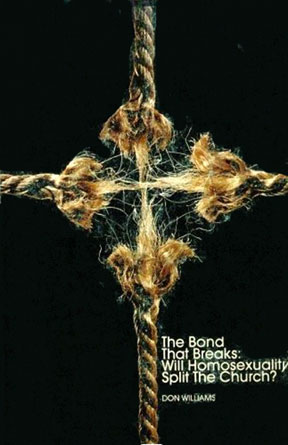 As a result of his work on the task force, Don Williams wrote a book about homosexuality: The Bond that Breaks: Will Homosexuality Split the Church? An ironic title, don't you think, given subsequent history? I edited the book for Don. In the process, I studied in depth the biblical passages concerning homosexual behavior. This was in 1978, when I was quite liberal politically and therefore greatly inclined to favor gay liberation. But I also wanted to discover what the Bible actually said about sexuality and homosexuality. My study led me to the conclusion that there is no credible biblical argument supportive of homosexual activity. In the end, I contributed several paragraphs to The Bond that Breaks, my first published writing. Since that time, I've spent several hundred hours studying these same passages in a wide range of contexts: as a Ph.D. student in New Testament at Harvard, as a pastor, as a seminary professor, etc. I could certainly be wrong in my understanding of God's will for our sexual behavior, but it isn't for a lack of serious effort in trying to understand the biblical text. As a result of his work on the task force, Don Williams wrote a book about homosexuality: The Bond that Breaks: Will Homosexuality Split the Church? An ironic title, don't you think, given subsequent history? I edited the book for Don. In the process, I studied in depth the biblical passages concerning homosexual behavior. This was in 1978, when I was quite liberal politically and therefore greatly inclined to favor gay liberation. But I also wanted to discover what the Bible actually said about sexuality and homosexuality. My study led me to the conclusion that there is no credible biblical argument supportive of homosexual activity. In the end, I contributed several paragraphs to The Bond that Breaks, my first published writing. Since that time, I've spent several hundred hours studying these same passages in a wide range of contexts: as a Ph.D. student in New Testament at Harvard, as a pastor, as a seminary professor, etc. I could certainly be wrong in my understanding of God's will for our sexual behavior, but it isn't for a lack of serious effort in trying to understand the biblical text.
1993: General Assembly Reaffirms the Authoritative Interpretation
The General Assembly reaffirmed the Authoritative Interpretation of 1978, concluding that "current constitutional law in the Presbyterian Church (U.S.A.) is that self-affirming, practicing homosexual persons may not be ordained as ministers of the Word and Sacrament, elders, or deacons."
1996: General Assembly Approves Amendment B, "The Fidelity and Chastity Amendment"
The Assembly, acting on a report from the church's Human Sexuality and Ordination Committee, approved the following addition to the Book of Order:
Those who are called to office in the church are to lead a life in obedience to Scripture and in conformity to the historic confessional standards of the church. Among these standards is the requirement to live either in fidelity within the covenant of marriage between a man and a woman, or chastity in singleness. Persons refusing to repent of any self-acknowledged practice which the confessions call sin shall not be ordained and/or installed as deacons, elders, or ministers of the Word and Sacrament. (G-6.0106.b).
Even though the Assembly voted for Amendment B by a vote of 57% to 42%, according to Presbyterian polity, it would not be added to the Book of Order unless a majority of presbyteries voted to approve it. Thus began a titanic battle in the whole church over whether or not to approve Amendment B. In the end, the majority of presbyteries (55%) voted to add Amendment B to the Book of Order, thus making fidelity in marriage and chastity in singleness official church policy.
If you're an outsider to this process, you might think that the addition of the "fidelity and chastity" clause to the Book of Order settled the matter once and for all. But what happened in 1996 was just the beginning of more strife and confusion, as I'll explain in my next post.
A Brief Account of the Not-So-Brief History of the PCUSA and Homosexuality, Section 2
Part 4 of series: The End of the Presbyterian Church USA? Revisited
Permalink for this post / Permalink for this series
In my last post I began to chronicle the history of the PCUSA and homsexuality. In a nutshell:
1978: The General Assembly votes to provide Definitive Guidance, making it clear that homosexual activity is sinful, and therefore active homosexual people should not be ordained.
1993: The General Assembly reaffirmed this Definitive Guidance, offering an Authoritative Interpretation to back it up.
1996: The General Assembly passes the "fidelity and chastity" clause, which is added to the Book of Order when passed by the presbyteries in 1997. It specifies that all church officers are required "to live either in fidelity within the covernant of marriage between a man and a woman, or chastity in singlenss."
But even before the dust settled after the 1996 General Assembly vote, members of the PCUSA were hard at work to get the fidelity and chastity clause removed from the Book of Order.
1997: General Assembly Approves Amendment A, "The Fidelity and Integrity" Amendment
The 1997 General Assembly reversed ground, approving a replacement amendment to Amendment B of 1996. The new amendment, which, in a most unhelpful manner was called Amendment A, read as follows:
Those who are called to office in the church are to lead a life in obedience to Jesus Christ, under the authority of Scripture and instructed by the historic confessional standards of the church. Among these standards is the requirement to demonstrate fidelity and integrity in marriage or singleness, and in all relationships of life. Candidates for ordained office shall acknowledge their own sinfulness, their need for repentance, and their reliance on the grace and mercy of God to fulfill the duties of their office.
This amendment, especially as a replacement to Amendment B of 1996, was seen as opening the door to the ordination of actively homosexual people (as well as people engaging in heterosexual activity outside of marriage). It passed in the General Assembly by a 60% to 40% margin, and was then referred to the presbyteries. It wouldn't become part of the Book of Order unless a majority of presbyteries approved. After a monumental battle in the whole denomination, Amendment A was voted down by the presbyteries, with 66% rejecting the amendment. This was an increase of about 10% over the last vote of presbyteries supporting fidelity and chastity. Though the pro-homosexual side won in the General Assembly, it lost more soundly in the presbyteries.
A personal aside:
Around this time, I had two experiences that shaped my understanding of what was going on in the PCUSA when it came to homosexuality. The first happened when I was asked to speak at a Presbyterian church where the leadership favored homosexual ordination. I was invited to represent "the other side" in the debate. I didn't exactly relish this assignment, but the pastor was a friend and I appreciated his effort to be fair. I spent about an hour explaining in depth why I believed that the Bible does not endorse homosexual behavior, even though it calls us to love homosexual people. At the end of my presentation, I fielded questions and comments. Almost nobody wanted to talk about the Bible. Virtually every comment said something like this: "I understand what you're saying about the Bible, and that's probably true. But I have a friend whose son is gay, and I just can't imagine causing more pain for my friend and her son. So we need to approve of him and affirm him. I just can't go with what the Bible says." I realized for the first time that the question of what the Bible actually teaches about homosexuality was becoming moot for many Presbyterians. Out of their feelings of compassion they were not going to follow biblical teaching.
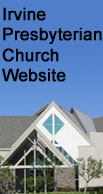
 My second experience happend in the context of a presbytery meeting in which we were voting on Amendment A. The debate was fairly predictable, as was the vote. My presbytery leaned in a conservative direction by about two-thirds to one-third. After the meeting, I was walking out behind a man who had spoken strongly in favor of a biblical understanding of homosexuality. A man I did not know came up to him and said, loudly, "You're a bigot," and then stormed off. Apparently one could not be a person of conscience and deny ordination to gays and lesbians. Since that time, I've heard this sort of thing again and again and again from the pro-gay side. It has eroded our fellowship in Christ, even as has the unloving treatment of homosexuals by persons on the conservative side. (Photo: The patio entrance of Irvine Presbyterian Church, where I was serving in the 1990s.) My second experience happend in the context of a presbytery meeting in which we were voting on Amendment A. The debate was fairly predictable, as was the vote. My presbytery leaned in a conservative direction by about two-thirds to one-third. After the meeting, I was walking out behind a man who had spoken strongly in favor of a biblical understanding of homosexuality. A man I did not know came up to him and said, loudly, "You're a bigot," and then stormed off. Apparently one could not be a person of conscience and deny ordination to gays and lesbians. Since that time, I've heard this sort of thing again and again and again from the pro-gay side. It has eroded our fellowship in Christ, even as has the unloving treatment of homosexuals by persons on the conservative side. (Photo: The patio entrance of Irvine Presbyterian Church, where I was serving in the 1990s.)
1999 General Assembly Rejects Committee Recommendation to Delete "Fidelity and Chastity"
A General Assembly committee voted thumbs up for a revision of the Book of Order that removed the "fidelity and chastity" clause, replacing it with" "the Presbyterian Church (U.S.A.) commits itself not to exclude anyone categorically in considering those called to ordained service in the church, but to consider the lives and behaviors of candidates as individuals." The General Assembly rejected the committee recommendation.
2001 General Assembly Votes to Delete the "Fidelity and Chastity" Clause
By a vote of 60% to 40%, the General Assembly voted to delete the "fidelity and chastity" clause, replacing it with a statement that church officers' "suitability to hold office is determined by the governing body where the examination for ordination or installation takes place, guided by scriptural and constitutional standards, under the authority and Lordship of Jesus Christ." In other words, every individual governing body (church session, presbytery) is free to determine for itself whether people must live in fidelity and chastity or not. Once again, however, this proposed change to the Book of Order required approval of the presbyteries. And, once again, a major battle was waged throughout the denomination. And, once again, the "fidelity and chastity" clause was upheld, this time by 57% of the presbyteries.
Summing Up
The recent history of the PCUSA shows a deeply divided denomination when it comes to the issue of homosexuality. It also demonstrates that the General Assembly is often more pro-gay in its votes than the presbyteries. To review:
1997-1998: "Fidelity and Chastity" added to Book of Order; GA vote = 57% to 42%; presbyteries vote 55% to 45%
1998=1999: GA votes to remove "Fidelity and Chastity" 60% to 40%; presbyteries reject GA vote, maintaining "Fidelity and Chastity" by 66% to 33%
2001-2002: GA votes to remove "Fidelity and Chastity" 60% to 40%; presbyteries reject GA vote, maintaining "Fidelity and Chastity" by 57% to 43%
One cannot read this history without noting that the PCUSA has spent an inordinate amount of time, energy, and money debating homosexuality. And I haven't even begun to include the many church court cases, plus the running dispute over same-sex marriage. There is no consensus in the PCUSA, nor does one seem likely, even if one side is able to prevail in the Book of Order. As long as the PCUSA maintains its current structure and population, increasingly strident debates about homosexuality will continue indefinitely, unless Christ returns to free us from our confusion.
No doubt some of my readers are wondering why this fight has to keep on going and going. "Can't you folks declare a truce?" you might wonder. Or if you're in the PCUSA, you might want to ask, "Can we all get along?" I'll address this question in my next post.
Can We, Can We All Get Along? Section 1
Part 5 of series: The End of the Presbyterian Church USA? Revisited
Permalink for this post / Permalink for this series
On March 3, 1991, in Lake View Terrace, California, only about seven miles where I lived at the time, an African-American motorist named Rodney King was pulled over by Los Angeles police officers. What exactly happened in the next moments is disputed, but, before long, the officers were savagely beating King. The bulk of this beating was caught on video by a spectator, and his footage was subsequently shown endlessly on television.
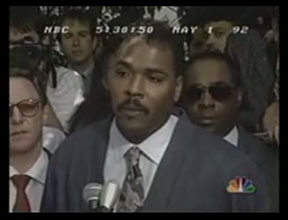 On April 29, 1992, when three of the four officers who beat Rodney King were acquitted by a jury that included no African-Americans, catastrophic riots broke out in Los Angeles. By the end of the riots, 55 people had been killed and there were over $1 billion in property damages. In the midst of the riots, Rodney King himself made a televised plea for peace. "Can we, can we all get along?" he asked, plaintively. "Can we, can we get along?" (Photo: Rodney King makes his plea.) On April 29, 1992, when three of the four officers who beat Rodney King were acquitted by a jury that included no African-Americans, catastrophic riots broke out in Los Angeles. By the end of the riots, 55 people had been killed and there were over $1 billion in property damages. In the midst of the riots, Rodney King himself made a televised plea for peace. "Can we, can we all get along?" he asked, plaintively. "Can we, can we get along?" (Photo: Rodney King makes his plea.)
If you're a faithful member of a PCUSA church, but one who hasn't been active in the thirty-year PCUSA fight over homosexuality, you may want to ask, "Can we, can we all get along? Why not simply admit our differences and get on with our mission? Why do we have to keep on fighting? Why can't we just live and let live? Why can't those who have been fighting for gay ordination just drop it? Or, conversely, why can't those who have been resisting gay ordination let individuals, churches, and presbyteries make up their own minds about the matter. Why must we keep fighting for a uniform Presbyterian standard on the ordination of homosexuals? Can we, can we all get along?"
These questions gain force when you consider the sad history of the PCUSA since we started arguing about homosexuality. That debate began in 1978, when the churches that would soon merge to form the PCUSA (UPCUSA and PCUS) had well over 3,000,000 members. Thirty years later, total membership in the PCUSA has declined by a net of over 30%. Though we've gained new members along the way, our losses have been staggering, and are increasing.*
I'm not claiming that our membership loss is related only to our endless argument about homosexuality. But when you consider how this debate has looked to potential PCUSA members, and when you consider the vast resources we have poured into it, and when you think of those who have left the denomination because of our various and confusing positions and homosexuality, surely this debate has contributed to our numerical decline. Though our argument about homosexuality hasn't come with the billion dollar price tag of the L.A. riots, I'm quite sure it has cost the PCUSA millions of dollars in salaries, informational material, travel to meetings, and so forth, not to mention lost revenue. And when you consider the time we Presbyterians have devoted to this issue for the past three decades, the loss for actual ministry is staggering.
So, then, can we, can we all get along?
Yes. And no. There is no simple answer to this question. It all depends on what you mean by "get along." We can get along when we worship and pray together. We can get along when we participate in common mission, building a house with Habitat for Humanity, or reaching out to victims of a natural disaster. We can get along in our common confession of Jesus Christ as Lord and Savior, and in the fellowship of his table. We can learn from each other and share our victories and struggles together. In these ways and many more we who support the ordination of homosexuals and we who oppose it can get along.
But what I've just described is exactly the kind of getting along that Presbyterians enjoy with Episcopalians, Lutherans, and Methodists. It's the getting along that bridges denominational barriers. Yet we who believe in the presbyterian form of church government (rule by elders) would not be able to be in the same denomination as Episcopalians, Lutherans, and Methodists, who affirm an episcopal form of church government (rule by bishops). Though we share a fundamental oneness in our faith, and though we share much in common from a missional point of view, our differences are substantial enough to keep us in separate denominations.
I have come to believe that, in the end, Presbyterians who support the ordination of gays and lesbians, and Presbyterians who oppose is, will not be able to get along in the sense of being in the same denomination, unless that denomination has very loose ties. The only compromise I can possibly imagine would involve a massive reorganization of the PCUSA into governing bodies divided according to their views and practices in a number of areas, including homosexuality. But this sort of union would be very little union at all, and, in all likelihood, would be at most a temporary measure.
Okay, okay, let me acknowledge one other genuine compromise, which really would be no compromise at all. It's always possible that the Spirit of God could sweep through the PCUSA in such a way that minds and hearts were changed, with the result being genuine unity on many theological issues by the vast majority of Presbyterians, including the moral character of homosexual activity. You'll notice that I haven't prejudged which way the Spirit might blow, though I'd surely expect this to be in a biblical direction, away from gay ordination, given my beliefs about homosexual activity. Folks on the other side would expect the Spirit to blow in the opposite direction. I do believe that such major renewal of the PCUSA is possible, but only because I believe in the God of the impossible. The past thirty years of PCUSA infighting, as well as my understanding of the issues, do not suggest that God is engaged in such spiritual renewal in the PCUSA. History suggests that we PCUSA folk will never get along as members of the same denomination when it comes to the issue of gay ordination.
If you're not close to this debate, what I've just said about the unlikelihood of compromise may seem unduly negative. Surely there must be some way to get us together. Of course if you look at the history of the PCUSA for the last thirty years, you'd have to admit that I'm just being realistic. But let me explain further why I believe ultimate compromise on this issue is unlikely. It has to do with what the folks on either side believe about it, and the strength of these beliefs.
Can We, Can We All Get Along? Section 2
Part 6 of series: The End of the Presbyterian Church USA? Revisited
Permalink for this post / Permalink for this series
In my last post I continued my reflections on the crisis in the Presbyterian Church USA. Given our disagreements and divisions over many things, centrally, the ordination of active gays and lesbians, is it possible for members of the PCUSA to compromise, to find away to move forward without major reorganization or separation. In the classic question of Rodney King, "Can we, can we all get along?"
I answered this question with a clear yes . . . and no. Yes, we can get along in many ways, the ways we Presbyterians get along with folk in other denominations. But the division in the PCUSA over the issue of gay ordination is so deep, and the convictions associate with it so strong, that I have come to believe we can't get along as a united denomination, at least not in the forms of our past.
This conclusion is one I have arrived at slowly. It has come, substantially, from my having listened for years to folks on both sides of the issue. As you might well expect, I have found it easier to listen to those with whom I agree. But I have also spent many, many hours listening to those with whom I disagree, hearing their concerns, their pains, their hopes. I have heard their resolve, their passion, their commitment to their side of this issue. This has led me to conclude that neither side in this debate is apt to be persuaded to change its mind, and that neither side is apt to give up the matter as inconsequential.
I will try to explain this as best I can, beginning with the side that affirms gay ordination. If you've been reading my blog for a while, you know that this is not my side. I will try to be fair, nevertheless. I do have quite a few friends on "the other side," as it were. And, though I disagree with them, I have respect for them and their convictions.
For Supporters of Gay Ordination: A Matter of Justice
Those who support gay ordination see it as a matter of fundamental justice. They believe that the PCUSA has been oppressing gays and lesbians, denying them their basic rights as Christians and as members of the PCUSA. Folks on the pro-gay side believe that it is not always sinful for people to engage in homosexual activity, and therefore it is wrong to preclude the ordination of all active gays and lesbians. In fact, supporters of gay ordination differ widely on the conditions required for same-sex intimacy to be okay. A few would argue that it's acceptable only if two people have a lifelong, monogamous commitment to each other, a gay marriage, if you will. Most on the pro-gay side do not limit acceptable sexual expression only to such a relationship. They see sex between two mature, loving people (gay or straight) as potentially blessed by God even when there is no religious or civil union.
When people believe that the ordination of homosexuals is a matter of basic justice, then they're not going to drop it, even if they continue to lose the votes in General Assembly or the presbyteries. They will continue to fight for what they believe in, even if the fight goes on indefinitely. They feel justified in their cause. They are convinced that God is on their side, or, that they are on God's side, the side of justice.
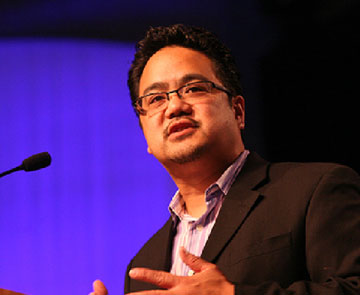 One who appears to take the justice side in this debate is the new moderator of the PCUSA, Bruce Reyes-Chow. Here's what he writes on his blog about homosexuality and justice: One who appears to take the justice side in this debate is the new moderator of the PCUSA, Bruce Reyes-Chow. Here's what he writes on his blog about homosexuality and justice:
The fundamental dilemma . . . is where one places homosexuality itself. At the core of the debate is whether or not one considered homosexuality a sin or a natural God-created trait. I obviously hold the latter way of thinking. Much like race - and this is a huge debate in the brown community - I see sexual orientation as the same created gift as gender and race. I think as long as it is still seen as a SIN, the "love the sinner, hate the sin" is simply a friendly gesture to maintain some facade of civility. Yes, you are not screaming for outright violence, but there is still a message of division that is shared. On the other hand, if one does NOT think homosexuality is a sin, then one engages differently and focuses on what I would consider more shared human areas of brokenness: poverty, oppression, violence, etc. (Photo: Bruce Reyes-Chow running for moderator)
It's easy for me to understand why those who support gay ordination, as people who are committed to justice, believe that they're acting in accord with God's will. The Bible is filled with the call to justice, especially on behalf of those who are marginalized or oppressed. Thus, many Christians have seen advocacy for gay and lesbian people as a part of their faithfulness to God, even to the Scripture that calls us to do justice. The PCUSA, in their view, has marginalized and oppressed gay people by not ordaining them. Divine justice requires a change in ordination policy, and they will fight for this change.
From their point of view, those who deny ordination to gays and lesbians are perpetrators of injustice. Thus supporters of gay ordination can't sit back and "get along" with the other side as long as it prevails. They must fight for justice until they win. So, when the PCUSA votes to deny ordination to gays and lesbians, they don't stop fighting, but press on to seek what they believe to be divine justice.
For many on this side of the issue, they believe they're not only on the side of justice, but also on the side of love. They often have close relationships with gay and lesbian Presbyterians who have been hurt by the church's ordination stance. Thus, compassion for those who have been excluded seems to demand a change in Presbyterian polity, in addition to a call to justice.
When people believe they are on the side of God's justice, and when their hearts are moved by compassion, they are apt to be steadfast and immovable in their convictions and in their efforts to foster institutional change. This is exactly what we have seen in the last thirty years in the PCUSA.
But then there's the other side. In my next post I'll explain how those who oppose gay ordination see the issue.
Can We, Can We All Get Along? Section 3
Part 7 of series: The End of the Presbyterian Church USA? Revisited
Permalink for this post / Permalink for this series
In my last post I tried to explain the ideological and emotional motivation of those who support the ordination of gays and lesbians. They believe it's a matter of justice, even divine justice.
For Opponents of Gay Ordination: A Matter of Righteousness
Those who oppose gay ordination see it as a matter of fundamental righteousness. It has to do with right and wrong, with right relationships and wrong relationships. Opponents of gay ordination base their moral judgments on their interpretation of the Bible's teaching about sexuality in general and homosexuality in particular. For them, Scripture is abundantly clear about "fidelity and chastity." Sex can be right only in the context of a monogamous marriage between a man and a woman. Sex outside of this relationship, whether it be homosexual or heterosexual, is sinful.
Those who regard all homosexual activity is sinful do not insist that persons with homosexual feelings cannot be ordained. They ask such people to live in chastity, just as they ask those who are heterosexual but unmarried. Moreover, opponents of gay ordination do not deny that homosexual Christians can be gifted for ministry. They do believe, however, that such people should live according to biblical righteousness. And this, in the view of gay ordination opponents, makes no room for homosexuality activity.
Even if you disagree with folks who oppose the ordination of active homosexuals, you must at least recognize that they aren't necessarily crazy or bigoted or homophobic. The vast majority of Christians throughout history have believed that homosexual behavior is wrong. And the vast majority of Christians throughout the world today still believe this. Some of these people may have been motivated by ignorance or meanness. But many have come to their conclusion prayerfully and with genuine compassion for gay and lesbian people. I know many parents who deeply love their gay or lesbian adult children, and who continue to have positive relationships with them even though they believe that their children are making wrong choices with regard to their sexual expression. Many of these parents would love to be able to affirm their children's choices completely, but their commitment to Scripture precludes this option.
Christians who consider Scripture as their primary source for divine guidance usually conclude that homosexual behavior is always wrong. This isn't a case of irresponsibly reading one's own views willy-nilly into the text (even if it's an incorrect reading of Scripture). Consider some basic evidence: Not one passage in the Bible speaks positively of homosexual behavior or gay relationships. Not one passage in the Bible provides a positive example of an active homosexual in leadership. Wherever Scripture speaks directly about homosexual behavior, it judges it to be wrong. Some gay advocates claim that the Bible doesn't condemn sexual intimacy between loving, mature, committed persons of the same sex. But even if they're correct, which I doubt, this leaves gay advocates who seek to base their position on Scripture with, at most, an argument from silence combined with many explicit counter-examples. That's why most supporters of gay ordination do not base their position upon the Bible alone. It's seems clear to me that those who see homosexual behavior as sinful are in line with the plain and consistent teaching of Scripture, even if, in the end, they're wrong to regard all homosexual activity as sinful. (Of course those of us who hold this position don't believe we are wrong.)
So, if the PCUSA were to ordain people who are engaging in homosexual behavior and who intend to keep on doing so (as opposed to repenting of it), then folks on the pro-righteousness side believe that the PCUSA would be endorsing sin. It would be a contradiction of biblical righteousness. It would be just as if the PCUSA allowed avowed racists to be ordained on the ground that racism is not always wrong. One cannot be committed to the PCUSA and to the belief that homosexual behavior is sinful and simply let the PCUSA approve of sin. Live and let live just won't work here. Folks who oppose gay ordination are compelled by their commitment to the PCUSA and by their biblically-shaped moral convictions to fight against any allowance for gay ordination. Their perception of biblical righteousness requires it. Their sense of faithfulness to God demands it.
In my next post I'll draw some conclusions about our "getting along" as a denomination in light of what I've explained in this and the last post.
Can We, Can We All Get Along? Section 4
Part 8 of series: The End of the Presbyterian Church USA? Revisited
Permalink for this post / Permalink for this series
No, We Can't All Get Along as a Unified Denomination
Of course we Presbyterians haven't been getting along very well for a long time. We've been fighting over homosexuality for thirty years. This isn't just a matter of intransigence or a quest for power. I've shown that those who support gay ordination see it as a matter of fundamental justice, while those who oppose it see it as a matter of fundamental righteousness. If I'm anywhere close to correct in this analysis, then it's obvious why the PCUSA is so divided today, has been so divided in the past, and will continue to be so divided in the future. We're not dealing with relatively insignificant matters of church practice or theological issues about which we can agree to disagree, but with fundamental biblical realities and convictions. We're talking here about justice and righteousness, and ultimately about sin and love. It doesn't get much bigger than this.
So, though we who disagree on this issue can get along in a wide variety of contexts, we clearly cannot get along when it comes to the question of who should and should not be ordained. And this is one of the essential functions of a denomination. Thus we can't just agree to live and let live when it comes to homosexuality and ordination. If one group of Presbyterians ordains someone and another group of Presbyterians cannot recognize that ordination, then those groups are profoundly divided. Such a division makes denominational connectionalism extremely difficult if not impossible to maintain. It also cripples many efforts at unified mission. And it greatly complicates the ministry of individual churches.
It seems that the new moderator of the General Assembly, Bruce Reyes-Chow, agrees with me about this, though we come down on opposite sides of the gay ordination issue. Here's an excerpt from one of his blogs:
For some issues I think this [agreeing to disagree] is entirely possible. For me I can live with agreeing to disagree on things such as . . .
How do we engage in evangelism and mission
What language we use for God
Our voice/action in regards to the Middle East
Positions on a myriad of social issues;
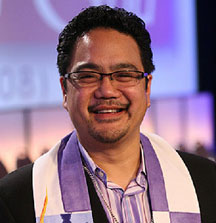 But when it comes to homosexuality, regardless on which side of the aisle you live on, how long can one be engaged in a community where the position is held in the contrary? Could we agree to disagree about the ordination of women? Could we agree to disagree about interracial marriage? I don't think we could, but yet for some reason we believe we can in this case. But when it comes to homosexuality, regardless on which side of the aisle you live on, how long can one be engaged in a community where the position is held in the contrary? Could we agree to disagree about the ordination of women? Could we agree to disagree about interracial marriage? I don't think we could, but yet for some reason we believe we can in this case.
This is not a call for folks who disagree either way to get the heck out of dodge, but it is a little nudge out there to see what folks are thinking. If in the end, it looks like we are headed in a particular direction or if we are already there, would our efforts be better spent in grace-filled disengagement that allows for new life? Do we keep passionately engaged in the discourse trying to reach some kind of resolution? Do we sit in the middle with a posture of "wait and see" and/or "don't ask, don't tell"? (Photo: Bruce Reyes-Chow as moderator)
I'm grateful for Bruce's willingness to raise this issue and to speak so openly. Even though he and I disagree on several things, I find his candor to be a breath of fresh air. And I would be quite glad to team up with him in a variety of ministries, even though I'm not sure it would be productive for us to serve in the same denomination indefinitely. Along with Bruce, I wonder if our efforts as Presbyterians would "be better spent in grace-filled disengagement that allows for new life?"
For thirty years members of the PCUSA have battled over the ordination of active homosexuals, with one side fighting for justice and the other side fighting for righteousness. Most votes, whether in General Assemblies or in presbyteries, have been relatively close. Whether one side or the other is on top for the moment, the denomination is deeply divided. And this division will continue because, whatever you might think of PCUSA folk, or if you are one, whatever you might think of the other side in this debate, both sides operate with integrity and conviction and persistence given their beliefs about homosexuality. Neither side will surrender its integrity or give up its conviction, even if it's currently losing the battle. In the end, either one side will win definitively, and the other side will leave the PCUSA, or both sides will keep on fighting until there is no more PCUSA to fight for. If current trends continue, the end of the PCUSA, one way or another, is both inevitable and imminent.
Why, If We Share the Same Bible, Do Presbyterians Differ So Widely on the Issue of Gay Ordination? Section 1
Part 9 of series: The End of the Presbyterian Church USA? Revisited
Permalink for this post / Permalink for this series
As I pick up my blog series on the PCUSA, I want to consider the question of why we Presbyterians, given that we share the same Bible, differ so widely on the issue of gay ordination. I realize that some of my readers want me to stop analyzing the issue and start proposing solutions (or dissolutions!). I will get to the "What are we going to do about this?" question soon enough. But I believe that it's essential for us to understand not only what Presbyterians believe but also why we believe as we do. Clarity about these matters will help us make wise choices when it comes to tangible actions. It will also help us speak truly and respectfully of those with whom we disagree. Too often in this debate folks on both sides have misrepresented the other side.
 A word of caution: I will be painting with a broad brush here as I try to capture major differences among Presbyterians. The reality is more complex than my analysis. But I think I'm getting the main brush strokes in the right place. A word of caution: I will be painting with a broad brush here as I try to capture major differences among Presbyterians. The reality is more complex than my analysis. But I think I'm getting the main brush strokes in the right place.
The fact that Presbyterians disagree widely on gay ordination is beyond question. In my recent posts I have tried to show what's underneath this disagreement. Supporters of gay ordination see their cause as a matter of biblical justice. Opponents of gay ordination see their cause as a matter of biblical righteousness. This means something rotten is the state of Presbyterianism, because God's justice would never actually be in conflict with God's righteousness! Somewhere along the line somebody has missed God's will in the matter.
A Question of Biblical Authority and Interpretation
Opponents of gay ordination often explain why proponents believe as they do by saying something like: "We follow what the Bible teaches. They do not. We uphold the authority of the Bible. They do not. This whole debate isn't really about homosexuality. It's about the authority of the Bible." Supporters of gay ordination sometimes object to this explanation: "That's not true. We also uphold the authority of the Bible. We just interpret it differently. This isn't a matter of the biblical authority. It's about the interpretation of the Bible."
In my opinion, both sides are partly right. That means both sides are partly wrong as well. In fact, what leads Presbyterians to such different conclusions with respect to homosexuality is a matter both of biblical authority and of biblical interpretation. In the end, these are interlocking issues that can't be completely distinguished.
Almost all Presbyterians agree that the Bible is authoritative in some sense. Almost all Presbyterians agree that biblical truth comes to us embedded in culture (or cultures, to be more precise). And almost all Presbyterians agree that the Bible is both divine and human. We differ, however in our estimation of just how much of Scripture is divine, and therefore just how much of it is authoritative.
In general, opponents of gay ordination believe that all of the Bible is divinely-inspired and therefore authoritative. The timeless truth of God, because it comes in a cultural package, needs to be carefully discerned, so as to clarify that which is authoritative for us. So, for example, those who believe that the whole Bible is inspired do not argue, on the basis of 1 Corinthians 11, that women in today's church should be veiled. But they don't dismiss 1 Corinthians 11 as something that was relevant for first-century Corinth at best, or simply wrongheaded at worst. They believe that Paul's discussion of veiling contains and reflects timeless truth that is authoritative for us today, and that needs to be unpacked so we can implement it. This truth would include such things as the authority of women to pray and prophesy in church, the essential male/female character of creation and church, and the need for doing in church that which is edifying.
In general, proponents of gay ordination believe that the Bible contains divinely-inspired portions, but also portions that are merely human, and therefore not authoritative for us today. Paul's claim that women should be veiled, therefore, is seen as culturally-bound, or even as simply wrong. One must look elsewhere for the timeless truth of Scripture, which is found, for example, in Jesus's instruction to love, or in the consistent call of the Bible to seek justice for the oppressed. The interpreter of Scripture has the responsibility of sifting out the timeless from the time-bound, so that God’s Word might be properly understood and applied today.
When we come to the issue of gay ordination, therefore, opponents of gay ordination believe that the Bible clearly reveals the sinfulness of homosexual activity because such teaching is found in several biblical passages. Proponents of gay ordination deny this. Some argue that the Bible never addresses the case of loving, mature, committed homosexual lovers. But proponents tend to believe that even if the Bible condemned all homosexual activity, this would not reflect God's inspiration, but rather human enculturation and limitation. As they interpret the Bible, they believe they have the freedom and the responsibility to sort out what is inspired and authoritative and what is neither inspired nor authoritative. The Bible’s consistently negative teaching on homosexuality falls in the neither inspired nor authoritative category.
In my next post in this series I'll continue this conversation.
Why, If We Share the Same Bible, Do Presbyterians Differ So Widely on the Issue of Gay Ordination? Section 2
Part 10 of series: The End of the Presbyterian Church USA? Revisited
Permalink for this post / Permalink for this series
In my last post I suggested that the gap between Presbyterians who endorse gay ordination and Presbyterians who oppose it has much to do with their views on the authority and interpretation of Scripture. Opponents tend to affirm the inspiration and authority of the whole Bible, while proponents tend to limit biblical inspiration and authority to certain transcendent passages.
Consider, for example, two New Testament passages that address homosexual behavior. Romans 1:18-32 and 1 Corinthians 6:9-11 both speak of homosexual behavior in a way that, at least on the surface, appears to censure it. Here are the passages in the NRSV translation:
For the wrath of God is revealed from heaven against all ungodliness and wickedness of those who by their wickedness suppress the truth . . . . Therefore God gave them up in the lusts of their hearts to impurity, to the degrading of their bodies among themselves, because they exchanged the truth about God for a lie and worshiped and served the creature rather than the Creator, who is blessed forever! Amen! ¶ For this reason God gave them up to degrading passions. Their women exchanged natural intercourse for unnatural, and in the same way also the men, giving up natural intercourse with women, were consumed with passion for one another. Men committed shameless acts with men and received in their own persons the due penalty for their error. ¶ And since they did not see fit to acknowledge God, God gave them up to a debased mind and to things that should not be done. They were filled with every kind of wickedness, evil, covetousness, malice. Full of envy, murder, strife, deceit, craftiness, they are gossips, slanderers, God-haters, insolent, haughty, boastful, inventors of evil, rebellious toward parents, foolish, faithless, heartless, ruthless. They know God’s decree, that those who practice such things deserve to die—yet they not only do them but even applaud others who practice them. (Rom 1:18, 24-32)
Do you not know that wrongdoers will not inherit the kingdom of God? Do not be deceived! Fornicators, idolaters, adulterers, male prostitutes [malakoi], sodomites [arsenokoitai], thieves, the greedy, drunkards, revilers, robbers—none of these will inherit the kingdom of God. (1 Cor 6:9-10)
I don't want to get into the exegetical issues right now, but rather to make another observation. In my experience, those who oppose gay ordination would say about these passages, "If, after careful study, they can be shown to condemn all homosexual activity, then such activity is always sinful." Those who favor gay ordination disagree. They tend to say, "If, after careful study, Romans 1:18-32 and 1 Corinthians 6:9-11 can be shown to condemn all homosexual activity, then these passages are incorrect." For example, while teaching at San Francisco Theological Seminary, a Presbyterian seminary with an extension program in Southern California, I had a brilliant Christian student who was also a lesbian. She wrote an exegesis paper on Romans 1:18-32. She concluded that this passage cannot be used to support the cause of gay ordination because it condemns all homosexual behavior. Yet she did not believe that gay ordination was wrong because, in her view, Paul was wrong in his views.
For more than thirty years, I have been involved in discussions of homosexuality and ordination. In the early years of this conversation, there was lots of debate about the meaning of biblical texts that deal with homosexual behavior. There seemed to be a common assumption among the debaters that biblical teaching, if rightly understood, should be binding on the church. But, in the last decade, as folks who oppose gay ordination have kept talking about specific biblical texts, those on the other side have mostly stopped this conversation. I haven't heard one proponent of gay ordination say: "If it can be shown that the Bible truly regards all homosexual behavior as sinful, then I will change my mind and oppose it." Rather, I have heard many say, in effect, "Whatever the Bible might teach about homosexuality, I am convinced that homosexuality is not always wrong. So, given this conviction, the biblical call to love and justice means that I will support gay ordination, no matter what the Bible might actually say about homosexuality." Notice that this position is still based, to an extent, on Scripture and its authority. But the individual interpreter assumes the freedom to decide which portions of the Bible are inspired and which are not.
This view of biblical authority is relatively new in the Presbyterian church, and is certainly inconsistent with our Reformed heritage. You can't exactly imagine John Calvin saying, "Well, the Bible shows that homosexual activity is sinful, but I think it’s just fine." What has led so many Presbyterians to endorse a view of biblical authority and interpretation that is far removed from our theological roots?
I can think of several factors, though surely there are more. For one thing, the view that the Bible is not fully inspired, but contains culture-bound errors, is held by many if not the majority of professors in PCUSA seminaries. For decades, pastors in training have been taught this view, which they in turn have passed on to their churches.
Second, there are many portions of the Bible that are troubling for Christians, passages in the Old Testament, for example, that call for the killing of Israel's opponents, or Old Testament laws that contradict our sense of decency. Some people have dealt with this problem by concluding that these offensive passages are simply not inspired. Once they have rejected the authority of some passages, it's easy for them to do the same with others, passages such as Romans 1 and 1 Corinthians 6
Tomorrow I’ll suggest two more reasons why, in my opinion, many Presbyterians have begun to think of the Bible as authoritative in parts, but not in other parts.
Why, If We Share the Same Bible, Do Presbyterians Differ So Widely on the Issue of Gay Ordination? Section 3
Part 11 of series: The End of the Presbyterian Church USA? Revisited
Permalink for this post / Permalink for this series
I closed yesterday’s post by suggesting two reasons why many Presbyterians no longer regard the whole of Scripture as authoritative. These were:
1. The fact that this view is held by many seminary professors in PCUSA seminaries.
2. The fact that some passages in the Bible are troubling has led many to reject their authority.
Today I’ll suggest two more reasons.
Third, the rejection of the full authority of the Bible reflects our postmodern and relativistic culture. In general, people today don't accept established traditions and authorities. They claim the right to pick and choose what to believe and obey, especially in matters of religion. People who affirm the full authority of Scripture and who live in obedience to Scripture are a counter-cultural minority.
Fourth, and perhaps most importantly, many Presbyterians have come to know faithful Christians who are gay and lesbian, people who have truly confessed Jesus as Savior and Lord. Often they have tried to live by biblical teaching about sexuality, but have found this burden to be unbearable. In the end, they have come to believe that their homosexual orientation is not a result of the fallenness of the world, but rather a gift from God. They believe that God blesses their same-sex intimacy just as he does heterosexual intimacy. And some of these people also believe that they are called by God into ministry, and they deeply desire to be ordained. Many good-hearted Presbyterians, paying close attention to the experiences of gay and lesbian believers, and feeling empathy for them in their painful struggle for denominational approval, have chosen to give more authority to the experience and feelings of gay and lesbian Christians than to Scripture. For these Presbyterians, if Scripture teaches that homosexual behavior is always wrong, then Scripture itself simply has to be wrong in this teaching.
I can understand why some of my Presbyterian brothers and sisters have gone this direction. Throughout my life and ministry, I have had several close personal or pastoral relationships with gay and lesbian Christians. As I have walked with them on the tortuous road of their discipleship, I have wished that I could simply bless their homosexual feelings and behavior. No matter how hard I've tried to be kind and compassionate, I haven't been able to tell folks what they have wanted to hear from me. Usually, this has led to brokenness in our relationships, as people have felt personally misunderstood and judged by me. I must confess that if I had only a tad less confidence in the inspiration and authority of the whole Bible, I'd be on the other side of this issue. But my convictions about biblical authority and interpretation, combined with my conclusions about what the Bible actually teaches, leave me no choice but to conclude that homosexual activity is not okay in any situation. I am not able to say, "Well, I guess Paul was wrong here," even though his teaching contradicts the experiences of well-intentioned Christians I have known.
Because so many proponents of gay ordination do not affirm the full authority of Scripture, arguments by opponents that continually point to biblical texts have fallen on deaf ears. A substantial number of Presbyterians today simply don’t care what Romans 1 actually teaches about the morality of homosexual activity. Similarly, claims by proponents that depend primarily on the experiences gay and lesbian people and not on Scripture have little impact on opponents. We are simply talking past each other because we no longer share a common understanding of how God makes his will known to us.
Thus, every time Presbyterians form groups of people with diverse views on the gay ordination issue, charging these groups to understand and to love each other, hoping that such a process might lead to some sort of compromise on the ordination issue, the results are the same. People with diverse perspectives do come to understand and love each other. They often develop close relationships in the context of mutual respect. Yet they almost never change their minds on the matter of gay ordination. No compromise is produced. No matter what the Bible says, those who favored gay ordination going in continue to favor it. And no matter how many testimonies by gay and lesbian people are heard, those who opposed their ordination going in continue to oppose it going out. In the end, both sides do their favoring and opposing with more love and mutual respect, which is surely a good thing. But it fails to resolve our denominational impasse. The idea that we can somehow sit down and come up with a loving compromise about this issue, one that maintains our denominational unity in practice, is naïve and unsupported by years of valiant efforts.
But Won't Presbyterians Ultimately Change Their Position on Gay Ordination, Just Like They Did on the Ordination of Women?
Part 12 of series: The End of the Presbyterian Church USA? Revisited
Permalink for this post / Permalink for this series
One of the most common arguments you'll hear these days from proponents of gay ordination goes something like this:
Presbyterians used to oppose the ordination of women on the basis of the Bible. But in spite of biblical teaching to the contrary, we now ordain women. So it will be with the ordination of gays and lesbians. In time, we'll realize that they should be ordained. It's inevitable.
On the surface, this argument from analogy seems to be convincing. It's true that Presbyterians once opposed the ordination of women, but now we ordain them. (To be precise, some Presbyterian denominations, such as the PCUSA or the EPC, allow the ordination of women, while others, such as the PCA or the OPC, do not.) And when we see how our culture is moving rapidly in the direction of normalizing homosexuality, it seems reasonable that many Presbyterians will follow suit. In fact, I am convinced that within relatively few years there will be either a Presbyterian denomination or a large grouping within an existing Presbyterian denomination that does, in fact, ordain gay and lesbian people.
But the analogy between the ordination of women and the ordination of active homosexuals is a flawed one. It is quite logical for someone to endorse the ordination of women while opposing the ordination of active homosexuals. For one thing, the "women's issue" has to do with including or excluding people on the basis of their identity. Women were precluded from ordained ministry, not because of anything they had done or not done, but simply because of their gender. The "gay issue," on the contrary, is primarily about behavior, not identity. In the Presbyterian Church USA, a person with a homosexual orientation is not prevented from being ordained if that person pledges to live a chaste life. It's only a person's intention to be involved in homosexual behavior that prohibits his or her ordination.
Secondly, a perhaps more importantly, the analogy between women's ordination and gay ordination is flawed because it implies that biblical teaching about women in ministry is more or less similar to biblical teaching about gay people in ministry. But this implication ignores the huge differences between biblical teaching on women and biblical teaching on homosexuals. Let me explain.
 The biblical case against the ordination of women depends primarily on three New Testament texts: 1 Corinthians 11:2-16 (veiling of women); 1 Corinthians 14:34-35 (silence of women); 1 Timothy 2:11-15 (silence of women). Opponents of women's ordination will often point to Ephesians 5:21-33 (submission of wives to husbands) and Genesis 2 (secondary creation of women) to buttress their position, as well as to Jesus's choice of twelve males as his most intimate disciples. Now I happen to believe that all of these biblical passages, when rightly understood, actually support the ordination of women. But I will grant that, on the surface, 1 Corinthians 12, 1 Corinthians 14, and 1 Timothy 2 appear to oppose this practice. (Photo: A woman praying with a veil on her head. A third-century A.D. painting found in the Catacombs of Priscilla, in Rome. This photo can be found at the excellent website: EIKON – Image Database for Biblical Studies.) The biblical case against the ordination of women depends primarily on three New Testament texts: 1 Corinthians 11:2-16 (veiling of women); 1 Corinthians 14:34-35 (silence of women); 1 Timothy 2:11-15 (silence of women). Opponents of women's ordination will often point to Ephesians 5:21-33 (submission of wives to husbands) and Genesis 2 (secondary creation of women) to buttress their position, as well as to Jesus's choice of twelve males as his most intimate disciples. Now I happen to believe that all of these biblical passages, when rightly understood, actually support the ordination of women. But I will grant that, on the surface, 1 Corinthians 12, 1 Corinthians 14, and 1 Timothy 2 appear to oppose this practice. (Photo: A woman praying with a veil on her head. A third-century A.D. painting found in the Catacombs of Priscilla, in Rome. This photo can be found at the excellent website: EIKON – Image Database for Biblical Studies.)
Yet the passages I have just mentioned are not all the Bible has to say about women in positions of authority in God's kingdom. In fact, there are many, many passages that either portray women in positions of authority or provide theological support for this perspective. Let me mention some of the main passages:
Genesis 1:26-28 - Man and woman created in God's image; Man and woman given the command to fill the earth and subdue it.
Genesis 2:18 - Woman is created as a "helper" for the man. Ezer, the Hebrew word for "helper," almost always refers to a stronger person, and, in the Old Testament, usually to God.
Judges 4-5 - Deborah was a prophetess and judge of Israel, with obvious and divinely endorsed authority over Israelite men.
Luke 8:1-3 - Jesus had many women among his entourage of disciples.
John 20 - The resurrected Jesus chose a woman to be the first "evangelist" who bore witness to his resurrection.
Acts 2:17-18 - In fulfillment of Joel's prophecy, the Holy Spirit is poured out on men and women, and it is stated that women will prophesy.
Romans 16:1-2 - Phoebe is a minister (Gk. diakonos) and someone whose authority should be respected by the Roman church.
Romans 16:7 - Junia is named as a prominent apostle.
1 Corinthians 7:4 - A wife has authority over her husband's body, even as he has authority over hers.
1 Corinthians 11:5 - Women pray and prophesy in church.
Philippians 4:2-3 - Euodia and Syntyche are leaders in the Philippian church and Paul's co-workers.
Titus 2:3 - Older women are "to teach what is good."
Revelation 2:18-29 - The church in Thyatira accepts a woman as a prophet and a teacher. This acceptance is never criticized, only the content of her teaching.
Of course I could point to many other passages that, in my opinion, support the ministry of women, and therefore their ordination. And, of course, I realize that those who oppose the ordination of women have their own ways of interpreting the passages I have just mentioned. But even the staunchest opponents of women's ordination would have to admit that some of these passages, at least on the surface, suggest that God can use women in positions of authority in his ministry, even in positions of authority over men.
When it comes to homosexuality, do we find a similar division of the house when it comes to biblical teaching? No, not at all. Here are some basic facts:
Every time the Bible speaks directly about homosexual activity, it regards it as sinful.
When the Bible speaks positively about human sexuality, it always does so only in the context of heterosexual relationships.
Two passages in the New Testament (Romans 1 and 1 Corinthians 6) appear to regard all homosexual behavior as sinful. Several leading biblical scholars show that this appearance is in fact what the biblical passages actually intended (Richard Hays, N.T. Wright, Robert Gagnon, etc.).
Nowhere in Scripture is a homosexual person portrayed positively as a leader in God's kingdom.
So, whereas proponents of women's ordination have many biblical passages to call as witnesses for their position, proponents of gay ordination have no specific biblical passages on their side. Thus you'll find proponents building their case upon arguments from silence, such as: "Jesus never condemned homosexual behavior." That's true. But he also didn't condemn rape or child molestation or fouling the environment or racism. So we'd better be wary of arguments from silence, especially when everything we know about Scripture and everything we know about Jesus's culture points in the direction of his not approving of homosexual behavior.
The fact that the Bible offers nothing specific to help proponents of gay ordination explains, to a great extent, whey they have stopped trying to interpret the Scripture to their advantage. They just can’t get any traction for their argument. The only way to get the Bible to support homosexuality is to point to passages that commend love or justice, and then to argue that it is loving and just to approve of the ordination of active homosexuals. But this exposition of love and justice flies in the face of Scriptural teaching. It is neither loving nor just to approve of that which the Bible reveals to be sin.
Although I don't claim to be a prophet of a soothsayer, I think it's highly unlikely that Presbyterians who confess the full authority of Scripture will ever endorse the ordination of active gay and lesbian people, even though they endorse the ordination of women. From a social and cultural perspective, these two ordination issues might look similar. But from a biblical perspective, they are radically different.
Is the PCUSA My Church?
Part 13 of series: The End of the Presbyterian Church USA? Revisited
Permalink for this post / Permalink for this series
The recent focus of this blog series has been the biblical and theological issues associated with the ordination of sexually-active gays and lesbians. I have tried to explain what Presbyterians believe and why, and why our divisions over this issue are deep and intractable. Apart from some dramatic work of the Spirit, I do not expect the PCUSA ever to come to a place of agreement on the question of gay ordination (unless one side splits from the denomination, leaving only those who agree on the issue). Moreover, I do not expect folks on the different sides of the debate to give up the fight. The issue of gay ordination will continue to plague our denomination, to drag us down, to debilitate us, and to divide us until we come to some sort of institutional change that allows us to stop fighting . . . or until we kill off the PCUSA. Who was it that said something about a kingdom divided against itself . . . ?
For some, the scenario I have just sketched immediately suggests that individual churches should leave the PCUSA. For others, the solution involves a more coordinated and complicated division within the denomination. For others, the only answer will be a mass exodus by likeminded churches. And for others, we should remain “as is” institutionally, and keep on fighting as we have done for the last thirty years.
I am going to weigh in on these options. Some of my readers will be disappointed to learn that I will not advocate immediate departure from the PCUSA of churches, pastors, and individuals who disagree with recent pro-gay General Assembly actions. My commenters who have accused me inaction will, no doubt, have a field day once again. Others who have feared that my line of argumentation will lead me to advocate leaving the PCUSA will be relieved, perhaps. And those who, like me, are still seeking God’s direction in the matter, will find a fellow seeker. I hope I’ll offer something more than the blind leading the blind.
Those of us who oppose gay ordination as unbiblical face a variety of possible actions. As we evaluate our options, we must continue to let Scripture guide us. It would be sadly ironic if, after fighting for biblical truth concerning homosexuality, we abandoned biblical truth in our response to PCUSA practicalities. Some on my side of the issue, for example, seem to have forgotten the biblical call to speak the truth in love. It’s hard to find speaking the truth with bitterness and meanness is Scripture, even though some of my fellows do this very thing.
Moreover, before we decide how we’re going to relate to our denomination, we need to become clear on the theological character of denominations. If you listen to the rhetoric in this debate, you’ll often hear people on the conservative side say something like this:
“I am an evangelical, and proud of it. But I don’t want to be in a denomination of people who think just like I do. I need to be stretched and challenged by others who see things differently. I need to have [name of valued liberal Presbyterian] in my church!”
As an evangelical who attended Harvard Divinity School and who has taught at San Francisco Theological Seminary (a PCUSA seminary with plenty of liberal Christians in addition to evangelicals), I agree completely about the value of being challenged by Christians whose theology is different from my own. In some cases, I have things to learn from these folks. In other cases, respectful interaction with them helps me clarify my own views. So I agree with those who say “I need to have [name of valued liberal Presbyterian] in my church!”
But I don’t agree with what their statements implies. Their language suggests that the PCUSA is “my church.” It virtually equates our denomination with the church of Jesus Christ. And this, I’d suggest, is a biblical and theological mistake. As I read the Bible, it’s hard to find any support for the idea that a denomination is a church, much less the Church of Jesus Christ. It is either a collection of churches or a part of the one Church. But a denomination is not a church.
At least that’s true for Protestants. Roman Catholics and Eastern Orthodox folk, though they eschew the denominational label, could at least defend the equation of their church with the Church. I don’t agree with this, obviously enough. But I respect it. I’m often amazed by how some Presbyterians argue for remaining in the PCUSA, without realizing that their arguments actually point to reunion with Rome.
 So, if I were to decide at some point to leave the PCUSA, I would still have [name of valued liberal Presbyterian] in my church. Just like I have millions of Lutherans, Episcopalians, Catholics, Pentecostals, and Independents in “my church.” My church, after all, isn’t mine. It’s the church of Jesus Christ, in which all who confess him as Lord and Savior are members. So, if I were to decide at some point to leave the PCUSA, I would still have [name of valued liberal Presbyterian] in my church. Just like I have millions of Lutherans, Episcopalians, Catholics, Pentecostals, and Independents in “my church.” My church, after all, isn’t mine. It’s the church of Jesus Christ, in which all who confess him as Lord and Savior are members.
The PCUSA is not my church. It is my denomination. It’s been my denomination for forty years, ever since I joined the First Presbyterian Church of Hollywood in 1968. In the last twenty years I’ve been a member of three presbyteries in the PCUSA: Pacific, Los Ranchos, and Mission. I have received many gifts from my denomination, and I hope I have contributed to it as well. (Photo: PCUSA logo)
In many ways, the PCUSA is more like my extended family than it is like my church. I'm thinking of my relatives, some of whom I dearly love, some of whom I rarely see, some of whom see life as I see it, and some of whom see and live their lives in very different ways from me. I’d hate to imagine what it would be like if my extended family and I tried to get together in some common cause. Our values are so diverse that I doubt we could focus on some common mission. My denomination, on the contrary, should find mission as a central aspect of its communion. I’ll have more to say about this in my next post.
What's Good About Denominations? Revisited
Part 14 of series: The End of the Presbyterian Church USA? Revisited
Permalink for this post / Permalink for this series
Two years ago, in the aftermath of the debacle of the 2006 General Assembly of the Presbyterian Church USA, I wrote a blog series on the topic: What’s Good About Denominations? In this series I listed several benefits of denominations, including:
• Denominations establish hospitals and schools.
• Denominations plant churches.
• Denominations provide accountability for churches and church leaders.
• Denominations provide guidance for congregational worship.
• Denominations provide a context for submission.
 Since I wrote this series, I experienced some of the rich benefits of being part of denomination. It came as I was considering a new call to Laity Lodge, and then as I made my transition from being Senior Pastor of Irvine Presbyterian Church to Senior Director of Laity Lodge. The benefits to which I’m referring came in the form of personal wisdom and support from members of Los Ranchos Presbytery in Southern California. I was in a covenant group with several other pastors from this presbytery, and they were a great help to me as I wrestled with God’s will for my life. Moreover, Steve Yamaguchi, the Executive Presbyter of Los Ranchos helped me as I sought to discern God’s call, and then offered valuable wisdom as I finished up my tenure at Irvine Presbyterian. Steve helped me avoid many of the traps that snare pastors on their way out of a church, even as he helped me do many things to ensure that my leaving the church would be a positive experience both for me and for the church. Since I wrote this series, I experienced some of the rich benefits of being part of denomination. It came as I was considering a new call to Laity Lodge, and then as I made my transition from being Senior Pastor of Irvine Presbyterian Church to Senior Director of Laity Lodge. The benefits to which I’m referring came in the form of personal wisdom and support from members of Los Ranchos Presbytery in Southern California. I was in a covenant group with several other pastors from this presbytery, and they were a great help to me as I wrestled with God’s will for my life. Moreover, Steve Yamaguchi, the Executive Presbyter of Los Ranchos helped me as I sought to discern God’s call, and then offered valuable wisdom as I finished up my tenure at Irvine Presbyterian. Steve helped me avoid many of the traps that snare pastors on their way out of a church, even as he helped me do many things to ensure that my leaving the church would be a positive experience both for me and for the church.
The fact that Irvine Presbyterian Church is part of a denomination has also helped that church thrive after my departure. The presbytery helped the church secure the services of an outstanding interim pastor. It has also encouraged the church in its extensive mission study, a precursor to calling a new pastor. The corporate wisdom offered by the presbytery can be a tremendous help to a church in transition. This sort of thing would not be as readily available to an independent church.
So, one of the things that’s good about denominations is that they help churches, or at least that should be the case. In my experience, sometimes denominations and denominational officials get it backwards. They see the work of the denomination as primary, with churches providing support for the denominational mission. To be sure, there are certain denominational efforts that are worthy of help from individual churches. But denominations and denominational bodies (presbyteries, synods, judicatories, assemblies, councils, etc.) exist primarily to help churches. Mostly, they exist to help churches do their mission more effectively and faithfully.
Los Ranchos Presbytery got this right. The presbytery saw its primary purpose as supporting churches in their mission. Everything else was secondary. Here are the Vision and Mission statements of the Presbytery:
Presbytery of Los Ranchos VISION Statement
Responding to a rapidly changing and complex cultural environment, the Presbytery will empower our congregations:
• To experience spiritual renewal,
• To grow in their passion for Jesus Christ,
• To become missional churches within their local communities, and
• To join in Christ's mission throughout the world.
Presbytery of Los Ranchos MISSION Statement:
The Presbytery works in partnership with local congregations, the primary agents of ministry and evangelism, empowering them to fulfill the mission of Jesus Christ by:
• Encouraging congregations to make disciples who are sent,
• Nurturing reconciliation, communication, cooperation and connectionalism,
• Supporting congregations in development, revitalization and mission as together, we prayerfully receive empowerment from the Holy Spirit, instruction from the Scriptures and guidance from the Book of Confessions and the Book of Order.
Notice in the Vision Statement that the Presbytery “empowers” congregations. Congregational health and mission is the point. Similarly, in the Mission Statement, the presbytery “works in partnership with local congregations, the primary agents of ministry and evangelism, empower them to fulfill the mission of Jesus Christ.” There you have it. The churches are primary; the Presbytery is secondary. Its mission is to support the primary mission of the churches.
If the main value of a denomination is to support and encourage the mission of individual churches, then this gives us a way to evaluate a denomination’s job performance: Is the denomination actually helping its churches to do their mission better? How? Such things should be demonstrable, even measurable. Moreover, if a denomination exists primarily to undergird the mission of its churches, then this would allow individual churches to evaluate the usefulness of their denominational connection. Every denominational church might ask: Is our involvement in our denomination supporting and strengthening our mission? If I had been asked this question when I was Pastor of Irvine Presbyterian Church, my answer would have been: “Yes, through our partnership with our Presbytery.” What we received from our denomination as a whole, apart from our Book of Confessions and Book of Order, was rather minimal. But we were richly blessed to be part of Los Ranchos Presbytery.
Of course one might object that I haven’t really offered a rationale for denominations so much as for regional bodies of churches united in faith and mission. That’s true, to an extent. If the Presbytery of Los Ranchos were to separate from the PCUSA, the Presbytery would still be able to do its basic mission. Yet, the Presbytery draws wisdom and guidance from the larger denomination of which it is a part, especially through the creeds, confessions, and established church order. And there are some denominational missions that exceed the scope of a regional body (such as starting seminaries). Still, I sometimes wonder if national (or international) denominations will, before too long, be eclipsed by smaller, local bodies.
What does all of this mean for the PCUSA? I’ll offer a few thoughts in my next post in this series.
Where Do We Go From Here? Section 1
Part 14 of series: The End of the Presbyterian Church USA? Revisited
Permalink for this post / Permalink for this series
So far in this series on The End of the Presbyterian Church USA? Revisited I have argued that we members of the PCUSA cannot get along as a unified denomination because of our deep theological divisions about many issues, most pointedly the issue of gay ordination. I have also argued that a denomination is not “the church” or even “a church,” but rather an organization of churches that share enough in common to be committed to each other. This “in common” part should surely include core theology and sense of mission. If my two main arguments are true, then it’s not out of bounds for Presbyterian individuals and churches who are at odds with the PCUSA’s affirmations and practices to consider leaving the PCUSA. Every option is on the table as far as I’m concerned.
So, then: Where do we go from here?
Before I begin to answer this question, I want to make a couple of preliminary comments. First, I direct your attention to an outstanding discussion of this very question that appears on the Presbyterians for Renewal website. This newly-revamped website is full of helpful material for Presbyterians. I highly recommend it in general. But, specifically, I want to point you to Part One of a three-part series entitled: What Way Ahead? It is written by Michael Walker, Theologian-in-Residence at Highland Park Presbyterian Church, and former Executive Director of PFR. Michael’s approach to this issue is outstanding: thoughtful, careful, fair, measured. In fact, I had considered simply copying his piece and putting it up on my site. It’s a must read. (While I’m recommending websites, let me once again draw your attention to Presbyweb, which is by far the best place to keep up with what’s going on in the PCUSA, as well as in the religious world in general.)
Second, I want to define “we” in the question “Where do we go from here?” For me, “we” means “members of the PCUSA who are deeply concerned about and in disagreement with many of the recent actions of the 2008 General Assembly, including but not limited votes related to gay ordination.” For the most part, “we” includes evangelical Presbyterians who are committed to the full authority of Scripture. (There are a few in this category who are not opposed to the GA actions, however.) So, I am not asking “Where should the PCUSA go from here?” as if I were a part of the national denominational leadership. I’m speaking from my own perspective within the denomination.
So, then: Where do we go from here?
Wherever we go, I believe there’s no need to rush. Or, I might better say, we should not rush. It’s not as if the PCUSA suddenly, as if out of nowhere, voted to ordain gays and lesbians. This issue, and a host of related theological issues, have been with us for a long time. Haste is neither required nor wise because, as Michael Walker explained after the 2006 General Assembly, we are still “free to be faithful.” At this very moment, nobody is telling me I have to affirm something I don’t believe or do something I think is wrong. If this were to happen, I would promptly leave the PCUSA rather than deny my conscience before the Lord. But at this time I am free to believe and act according to my sense of biblical righteousness and truth. (I'm aware that this time might be coming to an end in the PCUSA, however.)
Moreover, there’s no need to rush because the issues of grave concern are still filled with uncertainty. Yes, the GA voted to change the Book of Order to allow for the ordination of gays and lesbians. But this has happened before, and so far the presbyteries have voted to reject such GA votes. It’s quite possible that the presbyteries will do this again in 2009, leaving the Book of Order intact. Furthermore, though the intention of the 2008 GA was to install a new “Authoritative Interpretation” that allows local governing bodies to act contrary to the Book of Order’s current prohibition of gay ordination, it’s questionable whether this GA vote was consistent with the PCUSA Constitution. It may well be thrown out by church courts. Therefore, it’s quite possible that, in spite of the actions of the 2008 GA, the PCUSA will not end up approving of the ordinations of active gay and lesbian people. If, at the end of next year, the presbyteries have voted to allow gay ordination and the PCUSA courts have agreed, there will still be strong arguments made by some evangelicals for staying in the denomination, but many will be unconvinced by them, I think.
I should qualify my view that there’s no need to rush, however. I’m aware that some Presbyterian churches find themselves in presbyteries that are both liberal and hostile. I have heard stories about how some evangelical churches have been harassed and hampered by their presbyteries. Such churches are not “free to be faithful.” Thus, for these churches, it may well be the right time to leave the denomination. Yet, even for these, I would recommend against rushing. A careful, thoughtful, prayerful process is always best, and rarely happens quickly.
As an aside, I want to note, once again, that the real substance of a denominational connection is not the relationship of members and churches to the national body, but rather the relationship to the local body, which in the case of the PCUSA is the presbytery. The local, tangible, face-to-face relationships are what really matter in practice. Larger denominational connections are mostly irrelevant to most churches most of the time.
Yet, even if at the end of 2009 the PCUSA, by votes of presbyteries and church courts, has upheld our longstanding prohibition of gay ordination, it would be naïve to think that we’re back to business as usual. The last GA has revealed just how divided our denomination is, and not just about homosexuality. We differ on many matters of basic theology, including the authority of Scripture, how to interpret Scripture, how to relate to the culture, and even the substance of the good news. Evangelical PCUSA must not put our heads in the sand and assume that we can go on just as we have in the past. Pay attention to these wise words from Michael Walker:
Though the technical implications of the Assembly’s decisions on sexuality remain unclear, the number and consistent character of those decisions speak with a clear voice. When the misguided statement on interfaith relations is added to the mix, not to mention the embarrassing lack of attention to Christian faith exhibited in the discussions leading up to these decisions, this GA has successfully pulled back the veil, so to speak, enabling us to see more clearly the situation we’ve been facing for quite some time.
And what is this situation? Here's how Michael describes it:
What we experienced at this last GA was an advancement of a trajectory that shows no sign of abating. It’s not about the “liberal groups,” whose true effectiveness is, honestly, unknown. Rather, the actions of the San Jose Assembly reflect the power of western culture generally to shape the ethos of a denomination that does not have a clear sense of its mission to the culture. Unchecked and unchallenged, the “default” pattern of the PC(USA) will be to continue moving along with the prevailing spirituality of western culture (“moralistic therapeutic deism,” as it has been dubbed recently), and with its embrace of the culture’s obsession with variant forms of sexual expression.
 I have described certain aspects of this "default" pattern in some detail in this series, pointing to the way it has divided our denomination. The PCUSA is profoundly divided on many things, centrally the issue of gay ordination. These divisions mean that we simply can’t get along peacefully as a denomination, not to mention engage in common mission. We can stay together institutionally. But we will continue to fight over many things, not only the ordination issues. We will use our dwindling resources as a denomination in internal squabbles, proving that Jesus was right all along when he said that a “house divided against itself will not stand” (Matt 12:25). If the PCUSA stays together with the same structures that are currently in place, we will look like a boxing match between Rocky Balboa and Apollo Creed. One boxer might end up winning the match, but both boxers will pummel each other nearly to death. That might make for good drama in a film, but it cripples the mission of the PCUSA churches, and therefore of the PCUSA as a whole. I have described certain aspects of this "default" pattern in some detail in this series, pointing to the way it has divided our denomination. The PCUSA is profoundly divided on many things, centrally the issue of gay ordination. These divisions mean that we simply can’t get along peacefully as a denomination, not to mention engage in common mission. We can stay together institutionally. But we will continue to fight over many things, not only the ordination issues. We will use our dwindling resources as a denomination in internal squabbles, proving that Jesus was right all along when he said that a “house divided against itself will not stand” (Matt 12:25). If the PCUSA stays together with the same structures that are currently in place, we will look like a boxing match between Rocky Balboa and Apollo Creed. One boxer might end up winning the match, but both boxers will pummel each other nearly to death. That might make for good drama in a film, but it cripples the mission of the PCUSA churches, and therefore of the PCUSA as a whole.
I believe that the health and mission of the churches of the PCUSA require us to rethink the nature of our relationship so that we might alter that relationship in a way that is theologically-sound, practically-wise, and, perhaps, even God-honoring. If this is going to happen, several things are needed. I’ll spell these out in my next post in this series.
Note: This series is continued in two related series:
Related series: Why Not Just Leave the PC(USA)?
Related series: Presbyterian Exegesis Exam Changed
|