|
Presbyterian Church (U.S.A.) and Church Property; Who Owns PC(USA) Church Property?
The PC(USA) and Church Property
by Rev. Dr. Mark D. Roberts
Copyright © 2008 by Mark D. Roberts
Note: You may download this resource at no cost, for personal use or for use in a Christian ministry, as long as you are not publishing it for sale. All I ask is that you give credit where credit is due. For all other uses, please contact me at mark@markdroberts.com. Thank you.
The PC(USA) and Church Property, Part 1
Part 1 of series: The PC(USA) and Church Property
Permalink for this post / Permalink for this series
This post is Part 6 of the series Why Not Just Leave the PC(USA)? It is also Part 1 of a new series called The PC(USA) and Church Property.
In my last series I gave five reasons why I am not currently planning to leave the PC(USA). Today I want to explore one of the stronger reasons for not leaving the PC(USA), a reason that is fraught with complication and controversy.
If you are committed to your local Presbyterian church, whether as the church’s pastor or a member, then you’d tend not to want to leave the PC(USA) unless your church leaves with you. But, in many cases, it’s a very difficult and painful thing for a church to leave the PC(USA). There are two main reasons for this.
First, when churches vote to leave the PC(USA), they rarely do by a vote of 100% for leaving and 0% for staying. (In June of this year, Lancaster Presbyterian Church in New York did vote 243-0 to leave the denomination, but this sort of unanimity is unusual.) This means that when a congregation votes to leave the PC(USA), it is also voting to split itself into two different congregations. People who have worshipped together, prayed together, and served together will now be in separate churches. Friends may very well end up on different sides of the vote and therefore in different churches. From a relational and emotional perspective, therefore, it’s hard for a church to leave the denomination.
Second, when a church votes to leave the PC(USA), it is not entitled to keep its property. Unlike the Evangelical Presbyterian Church, which allows congregations to leave the denomination with its property if two-thirds of the members vote to leave, the PC(USA) claims to own the church property even if 100% of the members vote to leave. This claim is ensconced in the PC(USA) Book of Order, which reads:
G-8.0201 Property Is Held in Trust
All property held by or for a particular church, a presbytery, a synod, the General Assembly, or the Presbyterian Church (U.S.A.), whether legal title is lodged in a corporation, a trustee or trustees, or an unincorporated association, and whether the property is used in programs of a particular church or of a more inclusive governing body or retained for the production of income, is held in trust nevertheless for the use and benefit of the Presbyterian Church (U.S.A.).
This means, in effect, that a particular church does not really own its own property. If it leaves the denomination, it leaves its property, or at least it surrenders the right to keep its property. This is true, in principle, even if, as is almost always the case, the property was purchased and developed by the members of the church, with relatively little assistance from denominational bodies.
The Book of Order does not address directly a situation when a church votes 100% to leave the PC(USA). It does speak of what should happen when a congregation has a split vote to leave.
G-8.0601 Property of Church in Schism
The relationship to the Presbyterian Church (U.S.A.) of a particular church can be severed only by constitutional action on the part of the presbytery. (G-11.0103i) If there is a schism within the membership of a particular church and the presbytery is unable to effect a reconciliation or a division into separate churches within the Presbyterian Church (U.S.A.), the presbytery shall determine if one of the factions is entitled to the property because it is identified by the presbytery as the true church within the Presbyterian Church (U.S.A.). This determination does not depend upon which faction received the majority vote within the particular church at the time of the schism.
What this means is that, in theory, the presbytery of which a church is a member has the right to dismiss that church to another denomination. (I say “in theory” because presbyteries that have voted to let churches leave with their property are being challenged by their synods. It seems the the "higher ups" in the denomination don't trust the presbyteries in this case.) In most cases, however, the presbytery will decide that the faction that has voted to remain in the PC(USA) is “the true church” within the PC(USA), and therefore entitled to the property. This has nothing to do with the percentage of the vote. Even if 95% of a church voted to leave the denomination, the presbytery could decide that the “true church” was the remaining 5%.
In fact, as more and more churches are voting to leave the PC(USA), presbyteries are responding quite diversely. Some have allowed churches to leave with their property without any payment. Other presbyteries have required churches to pay some relatively small amount of money to keep their property. Other presbyteries have required departing congregations to leave without their property. When congregations have refused, these presbyteries have taken them to court. So you end up with a situation where a presbytery and a former congregation of that presbytery are suing each other in civil court.
In my next post I’ll have a few things to say about this regrettable situation. For now I simply want to note, by way of summary, that it is not an easy thing for a church to leave the PC(USA). I’m not suggesting, by the way, that it should be easy. But sometimes you’ll hear people recommend that evangelical churches leave the denomination as if it was a simple and painless thing to do. In fact, it is neither simple nor painful.
The PC(USA) and Church Property, Part 2
Part 2 of series: The PC(USA) and Church Property
Permalink for this post / Permalink for this series
In my last post in this series, I offered some reasons why it is hard for a church, and therefore church members and pastors, to leave the Presbyterian Church (USA). One of the main problems for churches that might want to leave is that, according to PC(USA) polity, the particular church doesn’t actually have the rights to the property. Every bit of church property “is held in trust . . . for the use and benefit of the Presbyterian Church (U.S.A.)” (Book of Order, G-8.0201). This means that if a church votes to leave the PC(USA), it might very well lose all of its property, unless the local presbytery allows the congregation to keep it. Sometimes presbyteries do; sometimes they don’t. And in some recent cases, when the presbytery does this, it gets in trouble with higher governing bodies. Most of the time, the PC(USA) wants to keep its property.
The legality of the “property held in trust for the denomination” clause is being challenged in a variety of state courts, as churches sue presbyteries to keep their property and presbyteries sue churches to evict them. Most recently, Kirk of the Hills, a large, formerly PC(USA) church in Oklahoma that is now an EPC congregation, lost its two-year legal battle to maintain its property. But the church will appeal the decision to the Oklahoma Supreme Court, so who knows how it will end? At any rate, the Presbytery of Eastern Oklahoma has been victorious, so far, in its effort to oust the 2400 members of Kirk of the Hills, who, incidentally, paid the considerable expense of developing the property. But, as an attorney for the presbytery said:
"When a local church participates in, prospers from and enjoys the benefits afforded by the parent church, as has been the case here for more than 40 years, it cannot then disclaim affiliation when it disagrees with the parent body, so as to shield church property from the equitable or contractual interests of the parent church.”
No, I have no reason to believe that this attorney was being ironic.
As I begin to discuss the issue of church property ownership, I must lay my cards on the table. I feel a deep sadness concerning situations like this one. It might be because I was a pastor of a local church for sixteen years, a church that labored with great effort and faithfulness to build two buildings so that we might faithfully pursue our mission in Irvine, California. So I may very well be biased in this matter. But, whatever the reason, when I read about what has happened with Kirk of the Hills, my heart feels very heavy, with a good bit of anger mixed in. It seems incredible to me that we in the PC(USA), who also happen to be brothers and sisters in the body of Christ, would actually be fighting over property in this way. I just can’t imagine how it advances the cause of the kingdom of God for presbyteries to prohibit congregations from continuing to use the buildings they have, in most cases, worked so hard to build and maintain for ministry. Will the kingdom of God be better off if Kirk of the Hills is evicted? In most cases, it’s not as if presbyteries have thriving churches ready to use the vacated buildings. Moreover, I can’t believe that we Presbyterians think it’s edifying to the PC(USA) or helpful to our mission, not to mention the mission of God’s kingdom, to conduct our property fights in secular courts.
In conversations with Presbyterian leaders from various theological persuasions, I have sometimes said, “Why don’t we make it possible for churches to leave with their property if two-thirds of the members believe this is what’s right for their church? I don’t care if it’s a liberal church leaving a conservative presbytery, or a conservative church leaving a liberal presbytery, or some other situation. Why won’t we just let churches leave so they can continue their ministries?”
In my experience, most younger church leaders can envision the benefit of letting churches leave the denomination with their property. But most mature church leaders don’t think we should do this. Some point to our covenant connectionalism and shared ministry. Others say something like, “You can’t leave your family just because you want to.” Others point to the Book of Order as if it offered God’s Final Word on such matters. But other leaders have been more practical, responding with something like: “If we open up the door for churches to leave, hundreds will do so. This will devastate our denomination. Presbyteries won’t have the funding to continue operating, since many of the departing churches would be the larger, wealthier ones. Denominational finances would be in shambles. We’d have to lay off tons of presbytery and GA staff, and lots of missionaries. It would be terrible for the PC(USA).”
I don’t know if this fear is valid or not, though I think it probably is. If the PC(USA) changed the Book of Order to allow churches to leave with their property, I do expect that many (but certainly not all!) theologically conservative churches would leave. I wouldn’t be surprised if a few of the liberal churches in conservative presbyteries might follow suit, perhaps joining the United Church of Christ where they’d be free to pursue the mission they believe is right. And, yes, I expect that all of this would be very difficult for the PC(USA) in terms of denominational income.
But if this is true, what are we saying about our unity as a denomination? We can talk all we want about covenant communion and the missional benefit of unity, but it seems that, for tens of thousands of Presbyterians, what holds us together isn’t theology or shared mission or even a desire to be together, but property and money. Is mammon the glue that holds the PC(USA) together? Lord help us!
In my next post in this series I’ll explore further the implications of the PC(USA)’s claim to “own” all congregational property.
The PC(USA) and Church Property, Part 3
Part 3 of series: The PC(USA) and Church Property
Permalink for this post / Permalink for this series
In my last post in this series I began to consider the implications of the PC(USA)’s claim to “own” all congregational property. One implication is the possibility that what holds the PC(USA) together as a denomination isn’t so much theological conviction or covenant communion as property and money. This seems to be implied when people fear that letting churches leave with their property would lead to hundreds of departing congregations.
I realize that what I’ve just said doesn’t reflect well upon the PC(USA). I’m quite sure that there are hundreds of churches that are joyfully part of the PC(USA) and would never consider leaving. For them, the church property issue is moot. But as I try to understand what’s going on in this church property issue, I read things that deeply trouble me about the health of the PC(USA). Let me start at the foundation, with the statement of property ownership in the Book of Order. It reads:
G-8.0201 Property Is Held in Trust
All property held by or for a particular church, a presbytery, a synod, the General Assembly, or the Presbyterian Church (U.S.A.), whether legal title is lodged in a corporation, a trustee or trustees, or an unincorporated association, and whether the property is used in programs of a particular church or of a more inclusive governing body or retained for the production of income, is held in trust nevertheless for the use and benefit of the Presbyterian Church (U.S.A.).
I understand that this language has a legal tone because it was intended to prevent churches from leaving the denomination with their property. But when I read the last clause, my theological conscience cringes. Should we say that church property “is held in trust nevertheless for the use and benefit of the Presbyterian Church (U.S.A.)”? Legally, this language may be defensible, some would say necessary. But is it theologically defensible? Is church property actually meant for the use and benefit of a denomination? Isn’t church property meant first and foremost for the use and benefit of the Lord? Shouldn’t we say this when we talk about church property? What if Christ, for his purposes and in his wisdom, actually wanted a PC(USA) church to join another denomination? What if it was actually better for some congregation to be allied with another denomination? Are we in the PC(USA) open to that possibility? Or are we certain that in every case the best thing for a congregation and for the kingdom of God is for church property to remain in the PC(USA)?
An analogy might be helpful here. When I became ordained as a Minister of Word and Sacrament in the PC(USA), I made many strong commitments to our denomination. But if I believed that God was calling me to be a pastor in a sister denomination, that wouldn’t be frowned upon or prohibited. In fact, my switch to, say, the ELCA would surely be blessed my presbytery, representing the whole PC(USA). The PC(USA) doesn’t believe it has some lasting and irrevocable claim on my services. I am not “held in trust . . . for the use and benefit of the Presbyterian Church (U.S.A.). So doesn’t it make sense that we view church property in a similar vein?
Again, I get what the Book of Order is trying to do. And, in general, I’m not one to encourage churches or individuals to leave the denomination. In fact, I’ve never done so in my life. I’ve been a member of the PC(USA) (previously, the UPCUSA) for over forty years, and an ordained PC(USA) pastor for half of that time. Whenever members of my former church in Irvine would raise the issue of leaving the PC(USA), I’d discourage this idea. Nevertheless, I am concerned that the way the Book of Order talks about property is inconsistent with the true purpose of the denomination, and even with our basic convictions about the nature of the church.
Part of what concerns me about the statement that church property is “for the use and benefit of the Presbyterian Church (U.S.A.)” is that it gets the order backwards. I have argued elsewhere that denominations exist to support, advance, and extend the ministry of individual congregations. That’s their primary purpose. Particular churches, after all, are on the front lines of ministry. At their very best, denominations help churches do their ministry faithfully and effectively. Churches do not exist to support and further denominational concerns, for the most part. Denominational interest in church property, therefore, should focus on the use and benefit of the individual congregation in its community, not the use and benefit of the denomination. If a church is considering leaving the PC(USA), what should matter most to a presbytery is the question of what is best for the particular church and its mission. The Book of Order gets things backward, in my opinion.
There may well have been a time when denominations were a primary instrument of ministry and mission. I have argued, in fact, that denominations have done many valuable things throughout the ages. (See my series: What’s Good About Denominations?) But almost everyone who studies church life today concludes that the age of denominationalism has passed. And, in my opinion, there’s no biblical argument for the necessity of denominations. Yes, churches will continue to be involved connectionally in ministry and mission. Yes, churches will gather for worship and communion. But future partnerships will be less and less rigid and institutional, and more and more flexible and organic . . . rather like the body of Christ, come to think of it.
In addition to my “getting it backwards” criticism, I have another, even more significant objection to the idea that church property exists “for the use and benefit” of the denomination. I’ll explore this in my next post.
The PC(USA) and Church Property, Part 4
Part 4 of series: The PC(USA) and Church Property
Permalink for this post / Permalink for this series
In my last post I began to lay out my objections to the notion, as stated in the PC(USA) Book of Order, that all church property is “for the use and benefit” of the denomination. I believe that denominations should exist for the sake of their particular churches, not the other way around. Church property, therefore, should, if anything, be employed “for the use and benefit” of the particular church. Moreover, if a congregation is considering leaving the PC(USA), denominational bodies should be mature enough to consider whether this will be better for the church and its ministry. It would be arrogant in the extreme for any denomination to believe that it is always the best denomination for its churches, or that church property would always be best used in that denomination only.
But I have an even more substantial problem with the statement that church property is “for the use and benefit” of the PC(USA). In fact, I would have the same objection if the Book of Order were to state that church property is “for the use and benefit” of the particular church. It seems to me that either “held in trust for the use and benefit” statement is at best in theological tension with, and at worst an outright contradiction to, the opening section of the Book of Order. Here’s how the Book of Order begins:
G-1.0100 1. The Head of the Church
Christ Is Head of the Church
a. All power in heaven and earth is given to Jesus Christ by Almighty God, who raised Christ from the dead and set him above all rule and authority, all power and dominion, and every name that is named, not only in this age but also in that which is to come. God has put all things under the Lordship of Jesus Christ and has made Christ Head of the Church, which is his body.
Christ Calls the Church Into Being
b. Christ calls the Church into being, giving it all that is necessary for its mission to the world, for its building up, and for its service to God. Christ is present with the Church in both Spirit and Word. It belongs to Christ alone to rule, to teach, to call, and to use the Church as he wills, exercising his authority by the ministry of women and men for the establishment and extension of his Kingdom.
We believe that Christ has given the Church “all that is necessary for its mission in the world,” which surely includes its property. Notice, Christ gives this to the Church with a capital ‘C.’ This is not the same thing as saying that Christ gives all that is necessary for mission to the Presbyterian Church (U.S.A.). We are simply one small facet of “the Church.”
Moreover, Christ has the authority “to call, and to use the Church as he wills” for the purpose of “the establishment and extension of his Kingdom.” If this is true, then I wonder:
Aren’t we compelled to say that all church property exists, ultimately and most truly, for the use and benefit of Jesus Christ and his kingdom?
Can we ever know with certainty that Christ would never lead a PC(USA) congregation to leave the denomination with its property?
Does our attachment to property trump our submission to Christ and to his mission?
Isn’t the most important question of all when it comes to church property this one: What does Christ want to do with his property?
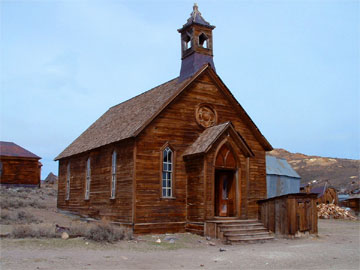 For the record, I’m not assuming that in every instance a church that votes to leave the PC(USA) has done the right thing. And I’m not assuming that every church that wants to leave should always be able to take its property. What I’m saying is that I’m deeply disturbed from a theological point of view by the way we PC(USA) folk have framed this issue. (Photo: A church building in Bodie, California, a ghost town. This was last a Methodist church.) For the record, I’m not assuming that in every instance a church that votes to leave the PC(USA) has done the right thing. And I’m not assuming that every church that wants to leave should always be able to take its property. What I’m saying is that I’m deeply disturbed from a theological point of view by the way we PC(USA) folk have framed this issue. (Photo: A church building in Bodie, California, a ghost town. This was last a Methodist church.)
As I’ve said earlier in this series, I understand that the language in the Book of Order that claims church property “for the use and benefit” of the denomination is meant to have legal clout. It’s not, on the surface, a theological statement. But in the unqualified way the Book of Order talks about church property, it is making an implicit theological statement. Moreover, this statement has encouraged members and leaders of the PC(USA) to take for granted the notion that all church property rightly belongs to the PC(USA). I have never heard someone in this debate add something like: “But, of course, we know that the real owner of the property is Christ, and what matters most is what he wants to do with his property.” (I’m sure some have said this, but I’ve never heard it myself.)
Yet Christ’s ownership of all church property is, I submit, the most important thing to say about church property. In spite of what legal documents might say, the property belongs ultimately and rightly to the Lord. It exits for his use and benefit. This fundamental fact must undergird every single conversation about church property. And it must trump every legal claim or statement in the Book of Order. The only question that really matters is: What does Jesus want to do with his property?
Sadly enough, this question seems rarely to be asked by denominational officials when congregations are wanting to leave the PC(USA) with their property. In fact, when congregations leave and try to hang onto their property, what often happens these days is that some of Jesus’ people use a lot of Jesus’ money to sue others of Jesus’ people who defend themselves with a lot of Jesus’ money over the question of who gets to use Jesus’ property. Both churches and presbyteries, communities of Jesus’ people, initiate these lawsuits. Meanwhile, Jesus’ money that could have been used for Jesus’ ministry and mission gets consumed in legal battles.
I believe that there is a way out of this sad situation. I’ll explain this way out in my next post.
The PC(USA) and Church Property, Part 5
Part 5 of series: The PC(USA) and Church Property
Permalink for this post / Permalink for this series
In my last post I offered a theological critique of the Book of Order’s statement that all church property “is held in trust . . . for the use and benefit of the Presbyterian Church (U.S.A.).” This statement is in tension with what is said elsewhere in the Book of Order about Christ and his church. In the first chapter we say that:
God has put all things under the Lordship of Jesus Christ and has made Christ Head of the Church, which is his body.
Christ calls the Church into being, giving it all that is necessary for its mission to the world . . . . . It belongs to Christ alone to rule, to teach, to call, and to use the Church as he wills . . . . (G-1.0010 a, b)
It seems to me, therefore, that any legal or ecclesiastical statement about the ownership of church property must always be qualified by the fundamental fact that all church property belongs to Christ, and that he can do with it as he wills.
This is surely implicit in the Book of Order, which may be why it isn’t included in the specific statement of church property being held in trust for the use and benefit of the PC(USA) (G-8.0201). If we were to ask those who actually wrote G-8.0201 about this, they might very well say: “Of course all property ultimately belongs to Christ, and it’s his to do with as he pleases.” At any rate, I think that’s what we in the PC(USA) should be saying today, in light of our own statements in the Book of Order about Christ’s headship, not to mention biblical statements concerning Christ’s lordship over all. After all, if our own bodies belong to the Lord and not ourselves (1 Cor 6:19-20), surely we’d have to say that land and buildings dedicated to him belong to him first and foremost. We’re just renters, in a way.
Actually, the Book of Order implicitly and explicitly allows that it could be right for a church to leave the PC(USA). In Chapter XV on “Relationships,” we state:
G-15.0203 Reception and Dismissal of Churches
a. When a particular church of another denomination requests that it be received by a presbytery of this denomination, the presbytery shall verify that the church has been regularly dismissed by the governing body of jurisdiction, and the advice of the highest governing body of that denomination dealing with relations between denominations has been received, and shall then receive the church in accord with its responsibilities and powers. (G-11.0103h.)
Dismissal of Churches
b. Similar procedures shall be followed in dismissing a particular church from this denomination to another. (G-11.0103i)
By recognizing that it’s okay for the PC(USA) to receive a particular church from another denomination into the PC(USA), we’re implicitly acknowledging that it can be right for a church to leave a denomination and join another. Our statement on the dismissal of churches makes this explicit. Though nothing in Chapter 15 mentions church property explicitly, it stands to reason that if a church can rightly leave a denomination, then it could be right for that church to leave with its property. If the PC(USA) recognizes that there are times when it’s right for a church to leave a denomination, surely we can allow such churches to leave with their property?
But could the PC(USA) ever let a church leave with its property since we state that all church property is held is “held in trust for the use and benefit of the denomination”? Yes, I think we could. I believe that the PC(USA) could, with freedom and integrity, allow churches to leave with their property. How? The argument would go something like this:
All church property in the PC(USA) is held in trust for the use and benefit of the denomination. Ordinarily, this means we strongly discourage churches from leaving the PC(USA) over minor differences of opinion. But when the differences between a particular church and the denomination are significant, when they involve central issues of theology and mission, and when these differences have led a church into a wise and godly process of discernment that has ended in super-majority vote of the congregation to leave the PC(USA), then it may very well be consistent with the “use and benefit of the PC(USA)” to allow a church to leave with its property. Why? Because the PC(USA) does not exist to advance its own cause or its own glory. It does not in fact exist for its own benefit. The PC(USA) exists to benefit Jesus Christ and to extend his kingdom. Thus hanging on the ownership of church property may not be for the benefit of the PC(USA) in all cases, given our greater commitment to Christ. Even as we confess individually that our chief end as human beings is “to glorify God and enjoy him forever,” so the chief end of all church property is God’s glory (Westminster Shorter Catechism, Question 1). We recognize that it may not always be most glorifying to God for the PC(USA) to retain ownership of all church property.
Again, the case of a pastor leaving the PC(USA) helps by way of analogy. When I became ordained as Minister of Word and Sacrament in this denomination, committed myself to the following (G-14.0405)
(5) Will you be governed by our church’s polity, and will you abide by its discipline? Will you be a friend among your colleagues in ministry, working with them, subject to the ordering of God’s Word and Spirit?
(7) Do you promise to further the peace, unity, and purity of the church?
(9) Will you be a faithful minister, proclaiming the good news in Word and Sacrament, teaching faith, and caring for people? Will you be active in government and discipline, serving in the governing bodies of the church; and in your ministry will you try to show the love and justice of Jesus Christ?
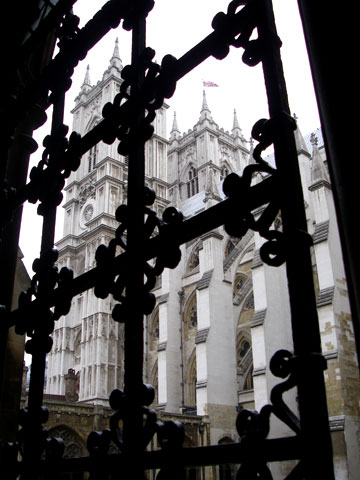 These were strong commitments, not simply to the Church of Jesus Christ, but to the PC(USA) in particular (lower case “church”). But the PC(USA) does not insist that, as a pastor in the denomination, I can never move to another denomination and maintain my ordination. Even as we recognize the ordination of pastors ordained in sister denominations when they join the PC(USA), so we can dismiss pastors to other denominations with their ordination intact. We understand that that PC(USA) is not the whole Church, but only a church within the whole Church. Perhaps this same sort of logic would give us the freedom to release congregations with their property. (Photo: From inside of Westminster Abbey, where the Westminster Shorter Catechism was considered in the 1640s.) These were strong commitments, not simply to the Church of Jesus Christ, but to the PC(USA) in particular (lower case “church”). But the PC(USA) does not insist that, as a pastor in the denomination, I can never move to another denomination and maintain my ordination. Even as we recognize the ordination of pastors ordained in sister denominations when they join the PC(USA), so we can dismiss pastors to other denominations with their ordination intact. We understand that that PC(USA) is not the whole Church, but only a church within the whole Church. Perhaps this same sort of logic would give us the freedom to release congregations with their property. (Photo: From inside of Westminster Abbey, where the Westminster Shorter Catechism was considered in the 1640s.)
Now I realize that, in fact, it often gets very messy when churches consider whether or not to leave their denominations. This is especially true when churches feel threatened by denominational bodies, as is often the case in the PC(USA), and for good reason. On many levels, the denomination has made it clear that it will evict churches that vote to leave the PC(USA), and pursue legal action against churches that seek to leave with their property. In response, churches have sometimes not involved their presbyteries in the discernment process, and have even sued their presbyteries preemptively. Surely something is terribly wrong with this picture. (Sin, for example.)
So what should happen if a church, which usually means its leaders, begins to think that it should leave the PC(USA)? I’ll sketch out the contours of what seems to me a godly, just process in my next post in this series.
The PC(USA) and Church Property, Part 6
Part 6 of series: The PC(USA) and Church Property
Permalink for this post / Permalink for this series
If a congregation in the PC(USA) begins to consider leaving the denomination, what should it do? (When I say “congregation,” I mean especially the leaders of the congregation, including elders, deacons, and pastors.)
I’m going to sketch out some contours of an ideal process. I fully recognize that what I’m describing may not work in many, many cases. It requires that church leaders and denominational leaders be mature and gracious in seeking, not their own will, but God’s will. Sometimes this happens. Often it does not. In far too many cases, the hearts of church leaders are captured by some demonic power, perhaps unrighteous anger, spite, vengeance, or Mammon.
When the issue of church property arises, Mammon gets especially busy, and often prevails, at least in the moment. I’m not simply waxing poetic here. Scripture teaches that our true battle as Christians “is not against enemies of blood and flesh, but against the rulers, against the authorities, against the cosmic powers of this present darkness, against the spiritual forces of evil in the heavenly places” (Eph 6:12). Mammon is one of these powers specifically named by Jesus himself (Matt 6:24). Church property fights are not fundamentally battles between churches and presbyteries, though they might seem so. They are, more deeply, spiritual battles that engage all sorts of cosmic powers.
I say this not simply to be theological or dramatic. It seems to me that, if a church believes God might be leading it to leave a denomination, the very first step is to take seriously the spiritual dimensions of what lies ahead. If it’s true that the church’s leaving will strengthen its mission, then you can be sure that the hosts of Hell will do what they can to derail the process. Besides, Satan and his minions rejoice when Christians sue each other, when they drain away kingdom resources in court battles, and when they look like enemies before the eyes of the world.
So what should a church do if it begins to consider leaving the PC(USA)? The starting point, given the reality of Ephesians 6:12, is to follow Ephesians 6:13-18:
Therefore take up the whole armor of God, so that you may be able to withstand on that evil day, and having done everything, to stand firm. Stand therefore, and fasten the belt of truth around your waist, and put on the breastplate of righteousness. As shoes for your feet put on whatever will make you ready to proclaim the gospel of peace. With all of these, take the shield of faith, with which you will be able to quench all the flaming arrows of the evil one. Take the helmet of salvation, and the sword of the Spirit, which is the word of God. Pray in the Spirit at all times in every prayer and supplication. To that end keep alert and always persevere in supplication for all the saints.
So, then, here is the first thing a church should do if it thinks God might be leading it to leave the PC(USA):
1. Put on the whole armor of God.
Specifically, this means a congregation should ask itself questions like:
Belt of Truth
• Are we being faithful to the whole of God’s truth, including biblical passages that make us uncomfortable?
 • Are we being truthful in all of our communications with members, with presbytery, etc.? (Photo: A mosaic of two Roman gladiators found in Kourion, Cyprus) • Are we being truthful in all of our communications with members, with presbytery, etc.? (Photo: A mosaic of two Roman gladiators found in Kourion, Cyprus)
Breastplate of Righteousness
• Are our motivations truly righteous and honoring to God?
• How much are we willing to sacrifice for the sake of God’s righteousness?
• Are we committed to treating all people rightly, even and especially those who disagree with us?
• If we are in a presbytery that may not be supportive of us, will we always do the right thing in relationship with the presbytery? Are we willing to turn the other cheek and walk the second mile?
Shoes of the Gospel of Peace
• Have we made a legitimate effort to make peace with the denomination?
• Are we committed to being peacemakers in this process?
Shield of Faith
• Will be put our trust in God first and foremost? Or will we put our trust primarily in ourselves? Or in our lawyers?
• Will we offer all that we are to the Lord, including our property?
Helmet of Salvation
• Will we rest secure in the knowledge that we belong to Christ our Savior?
Sword of the Spirit
• Will we be guided by Scripture in all of our deliberations?
• Will we allow Scripture to challenge us as well as to encourage us?
• Will we obey biblical passages that govern relationships within the church? Will we avoid gossip? Will we be quick to reconcile and forgive?
Pray at All Times for all the Saints
• Will we pray faithfully throughout our process of deliberation?
• Will we pray for wisdom for ourselves, for presbytery officials, and for all others involved in this process?
If you’re a practically-minded person, you may find what I’ve just said to be distraction from what really needs to be done. But, given biblical teaching on what is most real, I believe that the most practical thing any church can do when it begins to consider leaving the PC(USA) is to put on the armor of God in tangible ways.
In my next post in this series I’ll consider what comes next.
The PC(USA) and Church Property, Part 7
Part 7 of series: The PC(USA) and Church Property
Permalink for this post / Permalink for this series
In my last post I began to consider what a congregation should do if it begins to think that God might be leading it to leave the PC(USA). On the basis of Ephesians 6:10-20, my proposed first step is:
1. Put on the whole armor of God.
I explained in some detail what this might entail for a church. Now on to the next steps.
2. Congregation leaders should communicate with leaders from other churches that have considered leaving the PC(USA), or have left, to learn about what was good and not good in their process.
For most of us, considering leaving a denomination leads us into uncharted waters. Yet others have navigated those waters before us. Some crashed on the rocks. Others made it safely through. There is much to be learned from the experiences of other churches.
3. Congregation leaders should communicate with the presbytery.
Now I know I’m going to get some negative comments about this suggestion. I know of many evangelical PC(USA) churches that find themselves in hostile presbyteries. I’ve heard of cases where presbyteries seek to remove pastors who even allow their churches to entertain a conversation about leaving the denomination, not to mention situations where pastors are in favor of leaving. Pragmatically speaking, it may seem foolish for a church to notify its presbytery about its considerations.
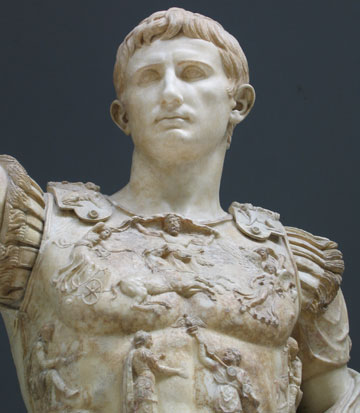 But, according to our Book of Order, presbyteries have the authority “to divide, dismiss, or dissolve churches in consultation with their members” (G-11.0103i). It is the rightful role of the presbytery to guide and support its churches, even when they’re thinking about leaving the PC(USA). Presbytery leaders should be mature enough and Christian enough to do this well, even if they strongly oppose a church’s dismissal. But even in a case when the presbytery leaders are not able to do what’s needed, I think a church should still be committed to acting rightly toward its presbytery . . . putting on the breastplate of righteousness, if you will. (Photo: The breastplate of Augustus, from the statue of Augustus found at Prima Porta.) But, according to our Book of Order, presbyteries have the authority “to divide, dismiss, or dissolve churches in consultation with their members” (G-11.0103i). It is the rightful role of the presbytery to guide and support its churches, even when they’re thinking about leaving the PC(USA). Presbytery leaders should be mature enough and Christian enough to do this well, even if they strongly oppose a church’s dismissal. But even in a case when the presbytery leaders are not able to do what’s needed, I think a church should still be committed to acting rightly toward its presbytery . . . putting on the breastplate of righteousness, if you will. (Photo: The breastplate of Augustus, from the statue of Augustus found at Prima Porta.)
I do not have direct experience of something like I’m describing, so one could accuse me of being hopelessly naïve. Naïve I may be, but surely not hopeless! Yet I have watched a pastor friend who faced an analogous situation in his church. He had on his staff a director who worked with younger people in the congregation, primarily folks in their 20s and 30s. This director’s ministry was flourishing, much to the delight of my pastor friend. But his delight disappeared when the director starting talking about breaking off the group and starting a new church, not a PC(USA) church, I might add. The pastor made it clear to the director that this was not a good thing, in his view. But he didn’t fire the director immediately and demand that he never return. The pastor tried to walk the second mile with this director and the young adult group. When, in the end, they decided to leave the church and start a new church, the pastor refused to bad-mouth them or hamper their efforts. In fact, he believed that it was his calling to continue to pray for and support his former director and the new church he was planting. This was not easy for my friend, who felt plenty of grief and anger. But he tried to be faithful to God’s call.
A couple of years later, the new church that had broken off from my friend’s church was struggling along. My friend found himself in the strange position of being a mentor and encourager to his former director. Meanwhile, my friend’s church had a new young adult ministry that was thriving, stronger than ever before. His overall attendance and membership numbers were up noticeably, contrary to what one might have expected. I am convinced that my friend’s maturity in Christ, his graciousness, and his willingness to walk the second mile had everything to do with the blessing on his church.
I know there are other stories, stories that don’t have such happy endings, stories that illustrate human sinfulness and downright meanness. I have heard some of these stories, and they grieve me. But I believe that sometimes (often?) God calls us to do what seems foolish in terms of this world. Walking the second mile is pretty foolish. So is loving one’s enemies. The greatest foolishness of all is the gospel of Christ crucified. Therefore, if a church does what’s right by communicating directly with its presbytery, I believe that God will be honored by that action, and will find ways to bless the church, even if presbytery leaders are unwilling to respond graciously.
It will be rare, of course, for a presbytery to be enthusiastic about losing one of its churches. But, even so, there will be presbytery leaders who will be able to engage in a constructive process with a church. This is surely their calling as Christian leaders who are to imitate the servanthood of Christ. Moreover, if a presbytery is involved with a church that votes to leave, the involvement of presbytery leaders may very well pave the way for a church to leave with its property. Treat me with respect and I’ll be apt to treat you in the same way. Treat me with disrespect and I’ll be apt to return the favor. That reminds me of something someone said about treating others the way you want to be treated. Hmmmm. Maybe step #3 should read, simply: Treat presbytery leaders as you would like to be treated, or perhaps even, Do unto others as you would them them do unto you.
The PC(USA) and Church Property, Part 8
Part 8 of series: The PC(USA) and Church Property
Permalink for this post / Permalink for this series
In my last few posts I’ve been suggesting a process for a congregation that thinks God might be leading it to leave the PC(USA). So far the steps are
1. Put on the whole armor of God.
2. Congregation leaders should communicate with leaders from other churches that have considered leaving the PC(USA), or have left, to learn about what was good and not good in their process.
3. Congregation leaders should communicate with the presbytery.
The next step would be:
4. The congregation should engage in a discernment process that is prayerful, biblical, humble, open, truthful, loving, respectful, fair, and timely.
I must admit that I do not have direct experience with churches leaving their denomination. I can’t offer the sort of wisdom one would receive from someone who has been down this road before. (Hence Step #2 above.) But I do have a few thoughts about what an appropriate discernment process would include.
First, it should be prayerful. Literally . . . full of prayer. The main point of a process to consider leaving a denomination is to discern God’s will. Thus a congregation should turn to the Lord and ask for his guidance. Those would believe they know that God’s answer will be in advance would do well to publicly surrender their agendas and desires to God’s gracious sovereignty.
Second, the discernment process should be biblical. I’m using the word “biblical” in two senses. On the one hand, the process should be guided by biblical principles for human relationships and for determining God’s will. On the other hand, the process should include ample study of biblical passages relevant to the issue(s) at hand. If, for example, a church is thinking about leaving the PC(USA) because of it’s view of homosexual behavior, the passages that address human sexuality should be studied by the congregation.
Third, the process should be humble. More accurately, all involved in the process should be humble before God and before each other. Such humility would include an admission by all that “I could be wrong in this.” Moreover, it would reflect the humility of Christ applied to human relationships. I’m thinking of Paul’s teaching in Philippians 2, for example:
If then there is any encouragement in Christ, any consolation from love, any sharing in the Spirit, any compassion and sympathy, make my joy complete: be of the same mind, having the same love, being in full accord and of one mind. Do nothing from selfish ambition or conceit, but in humility regard others as better than yourselves. Let each of you look not to your own interests, but to the interests of others. Let the same mind be in you that was in Christ Jesus,
who, though he was in the form of God,
did not regard equality with God
as something to be exploited,
but emptied himself,
taking the form of a slave,
being born in human likeness.
And being found in human form,
he humbled himself
and became obedient to the point of death—
even death on a cross. (Phil 2:1-8)
Fourth, the discernment process should be open. I’m thinking a various dimensions of openness. Key deliberations should not be held in closed meetings. No smoke-filled rooms here (or coffee and donut filled rooms, as the case may be). There should also be encouragement for congregation members to share openly their thoughts and feelings. Any effort to railroad a specific conclusion should be avoided, both by congregation leaders and by presbytery leaders. (See my confession below.)
Fifth, the process should be truthful. Biblical truth should be foundational. Truthful representation of various specific issues is crucial. For example, the tendency of both sides of the gay ordination debate to misrepresent the other side should be avoided.
Sixth, the discernment process should be loving. Yes, of course this is obvious, but it needs to be said . . . and done. We’re called to speak the truth in love (Eph 4:15). Now this doesn’t mean we shouldn’t disagree, or that we must pretend that we can all get along theologically. But our communications should imitate the love of Jesus as represented in 1 Corinthians 13:4-7:
Love is patient; love is kind; love is not envious or boastful or arrogant or rude. It does not insist on its own way; it is not irritable or resentful; it does not rejoice in wrongdoing, but rejoices in the truth. It bears all things, believes all things, hopes all things, endures all things.
In almost every congregation considering leaving the PC(USA), there will be members on both sides of the issue. This means the potential for mutual injury is huge. In fact, I think it’s unavoidable. No matter what conclusion a church reaches, some folks will disagree with that conclusion. Some will leave the church if it stays. Some will stay with the PC(USA) if it leaves. This will be painful. But if the process is governed by love, that pain doesn’t have too include bitterness and unforgiveness.
 Seventh, the process should be respectful. Respect is due from each person for each person, especially among those who disagree with each other. People should be free to disagree about ideas, but not to impugn each other’s integrity. Respect should also be given to denominational officials. (Photo: Not an example of a respectful process.) Seventh, the process should be respectful. Respect is due from each person for each person, especially among those who disagree with each other. People should be free to disagree about ideas, but not to impugn each other’s integrity. Respect should also be given to denominational officials. (Photo: Not an example of a respectful process.)
Eighth, the process should be fair. Now what does that mean? Among other things, it means that every person will have the chance to voice his or her opinion and to be heard. It means that if there is a strong majority in the congregation, the minority will be treated well and heard sensitively. It means that votes will be taken by secret ballot so people don’t feel awkward about disagreeing with others.
Finally, the process should be timely. It should be neither too long nor too short. I’m not able to put a specific number of months on the ideal range, though I can imagine something like three to nine months. If a process is rushed, then people will not have the chance to pray adequate, think carefully, speak openly, and listen attentively. If a process is dragged out, the church will be hurt by the delay. Let’s face it. If a congregation is considering leaving the denomination, this will take a great deal of that congregation’s time and energy. It will, for a season, distract a church from its mission. I can envision church leaders wanting to accelerate the process to a sprint and presbytery leaders wanting to slow it down to a crawl. Neither pace will be edifying to the congregation, or even to the presbytery. Church leaders, both in the congregation and in the presbytery, should be sure that the timetable for the process is neither too short nor too long. (If you’ve been involved in such a process in the past, I’d be interested in your input here. Please leave a comment below.)
A Confession: If I ever get to the point where I think I need to leave the PC(USA), I expect I will be extremely impatient with those who aren’t moving at my pace. I can just envision a congregational meeting in which well-intended but inexperienced people say things like: “Well, have we ever tried to change the Book of Order to make it more biblical?” or “Have you ever sat down with the people who disagree with you and tried to understand their perspective?” I will want to scream in frustration. After all, I’ve spent more than thirty years of my life dealing with the gay ordination issue in the PC(USA). I’ve been involved in many efforts to try and change the Book of Order for the better (as it is, today, but perhaps not for long). I’ve listened to “the other side” for hours and hours. If I ever decide it’s time to leave the PC(USA), this decision will have come after more than thirty years of effort and hundreds if not thousands of hours of thinking, listening, studying, praying, and writing. The problem is that many, many other people will not have invested such time. They’ll need time to understand the issues and the options. I will need to work very hard to demonstrate the first quality of biblical love: “Love is patient . . . .”
As I’ve been surfing around the Internet, I found a document prepared by the Presbytery of the Cascades called “A Process for Congregations Considering Leaving the PCUSA” (download PDF file here). There’s a lot of wisdom in this paper, both with respect to process and concerning specific issues that congregations might forget (like legal matters, insurance, etc.). I’m not saying that this document is perfect, but it has a lot to offer. (If you know of similar process documents produced by other governing bodies or churches, from both PC(USA) or non-PC(USA) sources, please let us know by leaving a comment below.) In my next post I’ll suggest what I think should be a presbytery’s response to a church that, having gone through an appropriate process, votes to leave the PC(USA).
The PC(USA) and Church Property, Part 9
Part 9 of series: The PC(USA) and Church Property
Permalink for this post / Permalink for this series
In my last several posts I’ve been proposing a basic process for a congregation that believes God might be calling it to leave the PC(USA). This process includes the following steps:
1. Put on the whole armor of God.
2. Congregation leaders should communicate with leaders from other churches that have considered leaving the PC(USA), or have left, to learn about what was good and not good in their process.
3. Congregation leaders should communicate with the presbytery.
4. The congregation should engage in a discernment process that is prayerful, biblical, humble, open, truthful, loving, respectful, fair, and timely.
So what should happen next if a congregation goes through a process like what I’ve proposed and votes to leave the PC(USA). What should the congregation do? What should the presbytery do?
Let me add a couple of technical notes. In my opinion, a church vote to leave the PC(USA) should be at least two-thirds in favor for the church to take action. Moreover, the actual motion that a church would be voting on would not to be leave the PC(USA), but rather to ask their presbytery to dismiss them to another denomination. According to the Book of Order, an individual congregation does not have the authority to leave the denomination. Only a vote of presbytery can make this happen.
So let’s suppose that a congregation has gone through an appropriate process and has voted by a strong margin (more than two-thirds) to ask the presbytery to dismiss it to another denomination. Further, suppose the congregation asks the presbytery to allow the church to keep its property.
What should the presbytery do?
In fact, presbyteries have been all over the map in their responses. Some presbyteries have allowed churches to leave with their property, with no further financial obligation. Other presbyteries have required departing churches to pay a certain amount for the property, with the amount varying from a small percentage of assessed value of the property to the whole assessed amount. Other presbyteries have acted swiftly to oust congregations from their property, and have filed suit in secular courts to secure title to the property.
I believe that the ousting and suing option is inconsistent with Scripture, with PC(USA) polity, with the PC(USA)’s commitment to ecumenism, with our missional purpose, with the biblical call to grace, and with Jesus’ command to walk the second mile. I’ll have more to say about this later. So I am clearly in the “allow a church to keep its property” camp. But I don’t think its always right for a church to leave with its property and not give anything back to the presbytery.
For one thing, when a church leaves the denomination, this will cost the presbytery the loss of the church’s per capita contribution to the presbytery. In the case of a large church, this could amount to a substantial amount of money, perhaps the salary of a full-time presbytery worker. Moreover, many churches contribute mission money to their presbyteries. This too would dry up when a church leaves. Thus it may be appropriate for a departing church to continue supporting the ministry of the presbytery for a period of time to allow the presbytery to recover the loss of income.
For another, most Presbyterian churches began as mission projects of their presbyteries. In many cases, presbyteries invested money in the church property and/or initial buildings. Often these investments were repaid by the church to the presbytery. Even so, it seems to me that it would be right, at least in some cases, for churches to compensate their presbyteries financially if they leave with their property.
How should this be worked out? In a spirit of mutual love, grace, and charity. Specifically, here’s what I see as a truly Christ-like response when a congregation asks a presbytery to dismiss it with its property:
If the congregational process was appropriate, and if the vote was at least two-thirds in favor of leaving the PC(USA), the presbytery should vote to dismiss the church with its property. Plus:
• If the church owes money to the presbytery for loans, these should be paid off in a timely fashion.
• The presbytery should ask the church to continue to pay its per capita for a period of time, perhaps by a decreasing percentage. This should not be a requirement, but a request.
• The presbytery should ask the church to consider making some sort of gift to the presbytery to help it with its ongoing mission. The size of the gift should be determined by the church and should not be a requirement. (If a church has sufficient resources, I’d think of a gift that’s perhaps a tithe of the value of the church’s property. Obviously this would not always be possible.)
• The presbytery should reach out to the members of the congregation that did not vote to leave the denomination, helping them to find a new church home if they wish. Some will stay with their churches, or course, even though they'd prefer to remain in the PC(USA).
I can imagine that some people would not like my suggestion because it means the PC(USA) loses title to church property. But, in light of our denomination’s commitment to Christ and the kingdom of God, such a loss isn’t a big deal. It’s not as if a church is being dismissed into the Church of Satan, after all. A congregation that joins the EPC or the UCC or the RCA is still engaged in the ministry of Christ, and in a way largely consistent with our own mission in the PC(USA). We’re still fighting in the same battle, only on different fronts.
You might wonder why I think a particular church should be able to keep its property, especially if there are some members of that church who vote to remain in the PC(USA). Shouldn’t these members retain the property? Why can’t the departing members build new church facilities? Wouldn’t this be a win-win solution?
In some cases it might be. But in most cases of which I am aware, votes to leave the denomination, while not unanimous, are strongly on one side or the other. If at least two-thirds of a congregation votes to leave the denomination, the remaining group often does not have the resources (or the will) to keep the existing church afloat. Even if it stays together as a congregation and remains in its buildings, the remnant is not able to remain healthy.
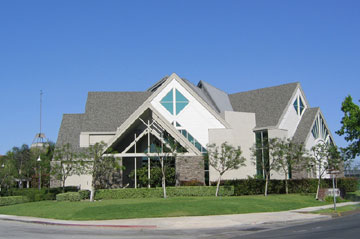 Moreover, the departing congregation, if it must start from scratch when it comes to buildings, will have to spend a tremendous amount of time, energy, and money to develop new church property. During my sixteen years at Irvine Presbyterian, we had four capital campaigns and built two major buildings. This meant we had fewer resources to devote to ministry and mission. (Photo: The Sanctuary and Activity Center of Irvine Presbyterian Church, built in 1995-6). Moreover, the departing congregation, if it must start from scratch when it comes to buildings, will have to spend a tremendous amount of time, energy, and money to develop new church property. During my sixteen years at Irvine Presbyterian, we had four capital campaigns and built two major buildings. This meant we had fewer resources to devote to ministry and mission. (Photo: The Sanctuary and Activity Center of Irvine Presbyterian Church, built in 1995-6).
So, though there may be situations when the kingdom of God is well-served by a departing congregation building a new church campus and a remaining congregation keeping the property, in most cases the mission of Christ would be enhanced by allowing the departing congregation to keep its property and helping those who are left in the PC(USA) find other churches to join. This might even give these other churches a helpful shot in the arm, financially and otherwise. So perhaps a win-win-win situation.
Ironically, or perhaps providentially, as I was working on this blog post today, I received an email from someone in the Presbytery of the Mid-South (covering parts of Tennessee, Arkansas, and Missouri). He sent to me a statement that was recently approved by the presbytery: “Proposed Procedures, Guidelines, and Standards for Dismissing Congregations.” You can download a PDF of this statement here. It lays out in much detail a process very much like the one I have envisioned here, though with much more wisdom and attention to specifics.
In my next post in this series, I’ll look at two actions taken by the last General Assembly that relate to the issue of church property.
The PC(USA) and Church Property, Part 10
Part 10 of series: The PC(USA) and Church Property
Permalink for this post / Permalink for this series
In my last post in this series I suggested that if a congregation has engaged in an appropriate process to consider leaving the PC(USA), and if the vote was at least two-thirds in favor of leaving, then the presbytery responsible for that congregation should, in most cases, allow it to leave with its property. I added that the congregation should consider contributing financially to the presbytery it is leaving.
Sometimes this very thing has happened. Often it has not. In fact, in many cases, either presbyteries or congregations have initiated legal action, thus taking the church’s business into the secular courts. This sort of thing can be quite expensive, not to mention costly in terms of energy, good will, and the image of the church, presbytery, and denomination. For example, when Londonderry Presbyterian Church in Londonderry, New Hampshire, voted to leave the PC(USA), it found itself in a legal battle with the Presbytery of Northern New England. In this case, the church initiated the lawsuit. The cost to the presbytery has been over $200,000 so far. One might assume that the congregation that left the PC(USA) had similar legal expenses. That’s a lot of money that wasn’t use for ministry and mission!
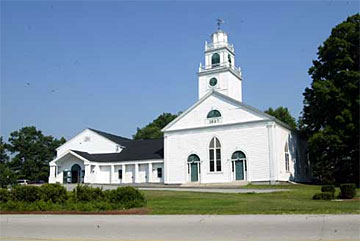 Note: The Londonderry Church voted 200-86 to leave the PC(USA) and join the New Wineskins Presbytery of the Evangelical Presbyterian Church. This presbytery was formed for former PC(USA) that join the EPC. Expensive legal fights ensued between the leaving congregation, the remaining congregation, and the presbytery. Late in the summer a settlement was reached in which the leaving congregation received a substantial amount of vacant property while the remaining congregation and presbytery retained use of the church facility and its land. From a distance, this seems fair to me. Too bad it couldn’t have been reached more graciously and inexpensively. (Photo: Londonderry Presbyterian Church) Note: The Londonderry Church voted 200-86 to leave the PC(USA) and join the New Wineskins Presbytery of the Evangelical Presbyterian Church. This presbytery was formed for former PC(USA) that join the EPC. Expensive legal fights ensued between the leaving congregation, the remaining congregation, and the presbytery. Late in the summer a settlement was reached in which the leaving congregation received a substantial amount of vacant property while the remaining congregation and presbytery retained use of the church facility and its land. From a distance, this seems fair to me. Too bad it couldn’t have been reached more graciously and inexpensively. (Photo: Londonderry Presbyterian Church)
In light of the legal costs they were incurring, the Presbytery of Northern New England sponsored resolution 03-21 in the PC(USA) General Assembly meeting last June. It stated, in part:
That the 218th General Assembly (2008) do the following:
1. Provide funds to the Office of General Assembly for the purpose of sharing the cost of legal fees defending our Constitution against the New Wineskins Non-geographic Presbytery of the Evangelical Presbyterian Church and a group which has joined that denomination.
2. From these funds, reimburse the Presbytery of Northern New England for half of all of its remaining legal costs up to a maximum of $185,000.
It was originally proposed that the denomination come up with $2,000,000 of funds for lawsuits against the New Wineskins Presbytery of the EPC and congregation that join the EPC. From this $2,000,000 the Presbytery of Northern New England would receive $185,000.
So, basically, the General Assembly was asked to approve a resolution that would fund lawsuits by PC(USA) presbyteries against the New Wineskins EPC presbytery, which is made up of congregations that, until recently, had been part of the PC(USA).
When the resolution was discussed in the General Assembly, someone added an amendment:
3. That the Office of the General Assembly establish and promote an Extra Commitment Opportunity (ECO) account that will be the source of this support and welcomes contributions from the whole church.
In other words, the funding for lawsuits would not be taken from the denominational budget, but would come from extra donations given precisely for this purpose. The amendment passed with 60% in favor. Then, after debate, the amended motion passed with 57% in favor (395 yeas; 286 nays; 9 abstentions)
In fact, the amendment stripped the resolution of its possible impact. It’s hard to imagine that people would give very much to support legal action against former PC(USA) churches and a fellow Presbyterian denomination. But, nevertheless, the fact that the General Assembly passed this resolution still astounds me . . . and distresses me. It seems, more than almost anything the General Assembly did, to strip away our mask of integrity and show the decaying heart of the PC(USA).
Or at least of part of the PC(USA). There were 286 people voting against the motion. Among these was Robert Austell, the Pastor of Good Shepherd Presbyterian Church in Charlotte, North Carolina. Austell was a commission to the 2008 General Assembly. He spoke passionately and persuasively against the “sue our fellow Christians” motion. Austell posted his testimony on his website:
Brothers and Sisters, please vote ‘no’ on this motion.
There is an immeasurable cost to what this motion proposes. And brothers and sisters, that cost is not the two million dollars, which is inconceivable enough as we struggle to support our missionaries. The immeasurable cost is the damage done to real human beings in our midst and to our witness to Jesus Christ in the world as “Christians sue Christians.” Friends, there is a better way!
One might say that we are experiencing a kind of divorce between some congregations and the PCUSA. In a local congregation, when a divorce is in process, a sharp attorney might advise one spouse to get all they can while the getting is good. But, as pastors and elders, we have a different perspective, particularly if one or both parties are Christian. We must be concerned that in these church dismissals, we function first as pastors and elders in Christ, rather than as legal counsel for one party. Brothers and sisters, there is a better way!
But what if a church initiates action? Jesus doesn’t call us to stockpile arms, but to lay down arms and shepherd his sheep. Will this encourage more churches to leave? On the contrary, grace is inviting and winsome while legal threat or retaliation further divides. In the big picture, litigation is a lose-lose situation for the people in our churches and it is deadly to the cause of Christ. Beloved, there is a better way!
I urge you to vote NO on this motion.
Way to go, Robert! Thanks for such a strong and wise word.
Tomorrow I’ll say a bit more about this. I'll explain why I believe the General Assembly acted wrongly by passing resolution 03-21, even as amended.
The PC(USA) and Church Property, Part 11
Part 11 of series: The PC(USA) and Church Property
Permalink for this post / Permalink for this series
In my last post I summarized one action of the 2008 General Assembly of the Presbyterian Church (USA). The Assembly voted in favor of a Resolution 03-21, which authorized the denomination to help pay for lawsuits pitting PC(USA) presbyteries against churches and/or denominational bodies of the Evangelical Presbyterian Church. The churches in the lawsuits are congregations that have left the PC(USA) for the EPC, and that are trying to keep their church property. Because the resolution was amended so that the funding for the lawsuits would come from special gifts only, the resolution lost its teeth. Nevertheless, it made a strong symbolic statement of the will of the General Assembly on the matter of legal battles associated with church property.
As I mentioned in my last post, I disagree strongly with this action of the General Assembly. There are many reasons for my disagreement, including:
1. While the PC(USA) is cutting funds for essential ministry and mission, it seems ludicrous to devote funds to lawsuits over church property. This remains true even if those funds are from special, dedicated gifts. The General Assembly should be directing giving to evangelism, church planting, doing justice, and caring for the poor -- not to suing fellow Presbyterians.
In fact, what actually happened at the General Assembly is even more unsettling. Though I was not there at this time, one of my blog readers was present. He describes the context for the vote on Resolution 03-21 this way:
[R]right before GA took up this overture, we saw a video presentation about the horrors of pastoral sexual abuse at a mission in San Francisco. Generations of young men had been abused. We were asked to give San Francisco Presbytery $100,000 to help defray the massive counseling costs for these victims. We voted it down. In the next item of business, we authorized $2,000,000 for lawsuits. I have never felt so heartsick in my life.
I can only shake my head with wonder and sadness.
2. The PC(USA)’s understanding of the Church of Jesus Christ does not hold that only PC(USA) churches are truly and correctly ministries of God’s kingdom. We acknowledge other denominations and believe that God is working in and through them. Thus it is fully consistent with our basic theology to allow that some PC(USA) might be better served to be aligned with other denominations. We have no inherent theological reason to insist that churches and church properties must remain in the PC(USA).
3. When PC(USA) churches and governing bodies engage in lawsuits with other churches or denominations, this make a horrendous public statement about our values, theology, and utter lack of grace or charity. Nothing would confirm a cynic’s view of the church more than seeing churches and church bodies using God’s money to sue each other.
4. The damage to congregations when churches and church bodies sue each other is major. Out of pastoral concern for the people involved, we should make every effort to refrain from such lawsuits.
5. I want to reiterate a point I made earlier in this series. Is it ever right for some of Jesus’ people to use Jesus’ money to sue others of Jesus’ people over who gets to use Jesus’ property?
6. My strongest reason for disagreeing with the action of the General Assembly is that it is contrary to Scriptural teaching. Though there is not place in the Bible that directly addresses the case of churches suing churches, we do find an analogous situation in 1 Corinthians 6. Here is the passage:
When any of you has a grievance against another, do you dare to take it to court before the unrighteous, instead of taking it before the saints? Do you not know that the saints will judge the world? And if the world is to be judged by you, are you incompetent to try trivial cases? Do you not know that we are to judge angels—to say nothing of ordinary matters? If you have ordinary cases, then, do you appoint as judges those who have no standing in the church? I say this to your shame. Can it be that there is no one among you wise enough to decide between one believer and another, but a believer goes to court against a believer—and before unbelievers at that? In fact, to have lawsuits at all with one another is already a defeat for you. Why not rather be wronged? Why not rather be defrauded? But you yourselves wrong and defraud—and believers at that. (1 Cor 6:1-8, NRSV)
This passage clearly teaches that Christians should not sue other Christians in secular court. Such disagreements should be solved in the Christian community. A wronged party, according to this passage, should choose to be wronged rather than to seek victory in secular courts.
I wasn’t present for the debate in the General Assembly over Resolution 03-21. I don’t know if somebody reminded that Assembly of 1 Corinthians 6. And I don’t know if somebody responded to this point with some biblical justification in favor of PC(USA) lawsuits against other Presbyterians. But the apparently cavalier way in which the General Assembly approved of a resolution that seems, on the surface, to be inconsistent with Scripture is deeply distressing to me. It suggests that the PC(USA) has indeed jettisoned biblical relevance and authority, and not simply when it comes to homosexuality.
I should note at this point that the majority of lawsuits between churches leaving the PC(USA) and presbyteries are initiated by the churches. The presbytery is usually the defendant in the lawsuit. I wonder how many churches have wrestled with the implications of 1 Corinthians 6 before they sued their presbytery. And I wonder how many presbyteries grappled with the biblical statement: “In fact, to have lawsuits at all with one another is already a defeat for you. Why not rather be wronged? Why not rather be defrauded?”
I have never been directly involved in a church leaving the PC(USA), so I can’t speak from personal experience about why a church would sue its presbytery. But I do know from what several people have reported to me that churches have done this to protect themselves from harsh and vindictive presbytery actions. Some presbyteries, it seems, if they get word of a church discussion of leaving the PC(USA), have threatened to engage in extreme measures to snuff out the conversation. Pastors will be put on leave or removed. Church elder boards will be ousted and presbyteries will take over. It appears that such actions have been encouraged by national leaders in the PC(USA). So, rather than turning to their presbyteries for guidance and grace, churches try to protect themselves from atrocious behavior on the part of their presbyteries.
Now I’ve been around the PC(USA) long enough to realize that blame for this sickening situation falls on both sides of the fence. Presbyteries have sometimes mistreated churches and engendered the fear that churches feel. Churches have sometimes failed to honor their presbyteries and done that which is contrary to our Constitution, not to mention Scripture, in their relationships with presbytery leaders. When Presbyterians end up spending tons of money suing each other in secular court, it’s the sad, natural consequence of a long history of relational conflict.
By its vote on Resolution 03-21, the General Assembly not only failed to help heal this conflict, but actually made matters worse. The Assembly encouraged the kinds of lawsuits that are unbiblical, unedifying, and, I would argue, ultimately unPresbyterian. The Assembly poured fuel on the fire of schism, bitterness, and terrible stewardship.
But then, only one day later, the General Assembly weighed in once again on the issue of churches leaving the denomination. And, once again, the Assembly did something stunning. I’ll explain tomorrow.
The PC(USA) and Church Property, Part 12
Part 12 of series: The PC(USA) and Church Property
Permalink for this post / Permalink for this series
I ended yesterday’s post by promising to discuss another stunning move by the General Assembly in relationship to the church property issue. I will fulfill this promise on Tuesday. Today and Monday I want to focus on a breaking story from Oklahoma. (If you're new to my blog, I should say that my weekend blogging is lighter and more inspirational. I get back to heavy lifting when the week starts.)
According to the Tulsa World, the Presbytery of Eastern Oklahoma has offered to sell the property where the Kirk of the Hills had been meeting for forty years to Kirk of the Hills for $1.75 million. Here’s a bit of history: Two years ago, Kirk of the Hills, a 2500+ member congregation in Tulsa, Oklahoma, voted almost unanimously to leave the PC(USA) and join the Evangelical Presbyterian Church. The congregation intended to keep its well-developed property, which it had built at its own expense. Apparently, the presbytery had helped Kirk of the Hills get off the ground financially forty years ago, but these costs had been repaid over the years. Nevertheless, the Presbytery of Eastern Oklahoma demanded that the congregation vacate the property, even though the presbytery had no congregation that needed the property, and Kirk of the Hills had no other property to use for ministry. An extensive court battle ensued, and in August, an Oklahoma judge ruled that the presbytery did own the property. Kirk of the Hills promised to appeal the decision. (I have no idea how much of Jesus’ money got burned up in this litigation, but I bet it was plenty.)
The presbytery’s offer to sell the property to Kirk of the Hills was not without strings attached, even in addition to one and three-quarters million financial strings. If Kirk of the Hills buys the property, the congregation must also drop its legal appeal. But if the church appeals and wins, it owns the property without having to pay the presbytery. If the church does not appeal and pays what the presbytery demands, it owns the property and the presbytery has a whole lot of money. Moreover, the legal precedent would help to intimidate most other churches who might think about challenging the financial empire of the Presbytery of Eastern Oklahoma.
The Rev. Greg Coulter, the leader of the presbytery, said that the $1.75 figure was “a very fair and reasonable settlement” since the property was worth more than this figure. He didn’t mention that it was worth so much because the congregation built the buildings at their own expense. But it could be that Coulter is speaking truly here. If, for example, the property, with its buildings, is worth $17.5 million, then the presbytery is asking for a tithe of its value, which impresses me as a fair request. If the property is worth more, the fairness increases; if less, it decreases, as far as I’m concerned.
Rev. Coulter went on to explain what he and the presbytery were trying to accomplish:
"We're trying to find an appropriate balance between our constitutional responsibilities as members of the Presbyterian Church USA and our pastoral responsibilities toward our brothers and sisters in Christ who have been partners in ministry for more than 40 years with us.
 I want to parse this statement carefully, since it helps us to understand the presbytery’s motivation. Rev. Coulter says that the presbytery is “trying to find an appropriate balance between our constitutional responsibilities . . . and our pastoral responsibilities.” He assumes that constitutional responsibilities go on one side of the scale and pastoral responsibilities go on the other. That creates the balance. In the way Rev. Coulter and the presbytery see things, their constitutional responsibilities are opposed to their pastoral responsibilities. They seem to know that their actions are not helpful to the church, but they defend these actions as being demanded by the PC(USA) Constitution. I want to parse this statement carefully, since it helps us to understand the presbytery’s motivation. Rev. Coulter says that the presbytery is “trying to find an appropriate balance between our constitutional responsibilities . . . and our pastoral responsibilities.” He assumes that constitutional responsibilities go on one side of the scale and pastoral responsibilities go on the other. That creates the balance. In the way Rev. Coulter and the presbytery see things, their constitutional responsibilities are opposed to their pastoral responsibilities. They seem to know that their actions are not helpful to the church, but they defend these actions as being demanded by the PC(USA) Constitution.
If this is true, doesn’t it call into question the rightness of the PC(USA) Constitution? If loyalty to the Constitution means that presbyteries have to do what which is not pastoral, that which is not best for congregations, then shouldn’t the Constitution be changed? Do we want to have a church Constitution that puts institutional loyalty ahead of pastoral care?
Frankly, I think Rev. Coulter and his colleagues should re-read the PC(USA) Constitution, and not just the part about church property held in trust for the denomination (G-8.0201). Consider what is said in our Book of Order about the responsibilities of a presbytery (G-11.0103, italics added):
b. to coordinate the work of its member churches, guiding them and mobilizing their strength for the most effective witness to the broader community for which it has responsibility; . . .
f. to provide encouragement, guidance, and resources to its member churches in the areas of leadership development, church officer training, worship, nurture, witness, service, stewardship, equitable compensation, personnel policies, and fair employment practices; . . .
g. to provide pastoral care for the churches and members of presbytery, visiting sessions and ministers on a regular basis; . . .
i. to divide, dismiss, or dissolve churches in consultation with their members; . . .
j. to control the location of new churches and of churches desiring to move; . . .
Also, through its Committee on Ministry, the presbytery offers special care for churches in hard times (G-11.0502, italics added):
i. It shall serve as an instrument of presbytery for promoting the peace and harmony of the churches, especially in regard to matters arising out of the relations between ministers and churches. Its purpose shall be to mediate differences and reconcile persons, to the end that the difficulties may be corrected by the session of the church if possible, that the welfare of the particular church may be strengthened, that the unity of the body of Christ may be made manifest.
From these passages, it’s clear that pastoral care for churches is not something to be pitted against constitution responsibilities. Indeed, caring for congregations, wanting their best, and even sending them to other denominations is an explicit constitutional responsibility of the presbytery. The presbytery is expected by our Constitution to do far more than make sure church property stays in the PC(USA).
Furthermore, I would encourage Rev. Coulter and his colleagues to read, not just the chapter in the Book of Order on presbyteries, but also the first four chapters of the Book of Order. These chapters place our whole ministry as a denomination within the larger work of God in the world. We’re not in the business of building a denomination, but serving God by participating in his mission in the world. Therefore, if it’s in the best interest of a congregation and its mission to keep its property when it moves to another denomination, then it’s could be completely constitutional for the presbytery to release that congregation, property and all. There is no demand in the Constitution that a presbytery must hang onto the property when a church leaves, though there could be situations when this would be best (as in a close vote of a congregation, or in a case where another church could use the vacated property, etc.).
Moreover, as I’ve explained earlier in this series, the PC(USA) exists under the authority of and for the mission of Jesus Christ. All church property belongs truly and ultimately to him, to be used for his purposes. So Rev. Coulter and his colleagues in the Presbytery of Eastern Oklahoma are not in any way bound or encouraged by our Constitution to kick Kirk of the Hills out of the property they themselves developed, if that property would be well used for that congregation and its mission, even when it is an EPC church. Surely the leaders of the Presbytery of Eastern Oklahoma would acknowledge that the EPC is part of the kingdom of God, and that an EPC church belongs to Jesus Christ. If a church were trying to sell its property to a commercial enterprise or to a pagan cult, then the presbytery would do well to prevent it. But, when I last checked, the EPC is pretty much like the PC(USA) in the basics of faith and mission. In fact, to my knowledge, no denomination is closer to the PC(USA) than the EPC.
For many reasons, I would argue that a balanced reading of our Constitution makes it clear that there is no need to pit constitutional concerns against pastoral concerns for a congregation . The presbytery is constitutionally compelled to do what’s best for its congregations and their mission, and I don’t see where this responsibility ends just because a congregation moves to another limb of Christ’s body. If a presbytery has another congregation that needs and can use well the property of a departing church, then it might have a good argument for hanging onto the property. But if a presbytery doesn’t have such a congregation, if it’s planning to rent or sell the property, and if the departing congregation will be able to use the property in the mission of Christ, then, I believe, the Constitution of the PC(USA) directs the presbytery to let the church go with its property.
I’ll finish up my response to this story on Monday.
The PC(USA) and Church Property, Part 13
Part 13 of series: The PC(USA) and Church Property
Permalink for this post / Permalink for this series
On Friday I summarized a breaking story from the Tulsa World. After two years of litigation, the Presbytery of Eastern Oklahoma has offered to sell the property that was used by Kirk of the Hills for forty years to Kirk of the Hills for $1.75 million. Two years ago, Kirk of the Hills voted almost unanimously to leave the PC(USA) and join the EPC. They tried to keep their property, but the presbytery sought to evict them. This led to extensive litigation and a judge’s ruling in August that the presbytery owns the property. Kirk of the Hills promised to appeal, so the presbytery countered by offering to sell them the property if they would forever end their appeal.
In Friday’s post I began to examine in detail the explanation of the presbytery’s action given by its leader, Rev. Greg Coulter. I tried to show that his way of opposing the constitutional duties of the presbytery with the presbytery’s pastoral concern was a significant misreading of the PC(USA)’s Constitution. In fact, pastoral concern for a congregation is a constitutional duty of a presbytery. The presbytery exists for far more than making sure the PC(USA) hands onto its property (or, more accurately, Jesus’ property entrusted to the presbytery).
Rev. Coulter had a bit more to say about his presbytery’s offer:
"We believe this is a grace-filled offer, and we hope for a grace-filled response.
"We believe this would allow them to worship, to continue their community programs, and to move on in their mission. We believe this helps them move forward."
A grace-filled offer? When I last checked, grace meant giving something underserved, something for nothing. When we’re saved by grace, we don’t have to earn it. We don’t have to pay $1.75 million for our salvation, or even $1, or even one good work, because God paid it all through Christ. It cheapens the language of grace to use it in this context. Besides, it’s hardly gracious to sell to a congregation the property it developed with its own money. No, this isn’t grace-filled. It’s much more about law than grace.
In what Rev. Coulter said, he actually admitted that letting Kirk of the Hills keep its property would “allow them to worship, to continue their community programs, and to move on in their mission.” So what he is saying, in effect, is that if Kirk of the Hills doesn’t cough up the money, then the presbytery is ready to do that which will impede the worship, community programs, and mission of Kirk of the Hills. Rev. Coulter is openly admitting that the presbytery is ready to do that which will squelch worship, ministry, and mission, unless they get their money. And who loses if the presbytery does this? Kirk of the Hills? Yes. It has to find and build a new campus, and that takes a lot of money and effort. The people in the community for whom the church exists? Yes. The programs that utilized the church buildings are gone. The kingdom of God? Yes, because the work of the kingdom is hampered. The triune God? Yes. Because God’s worship and mission will be impaired.
If Rev. Coulter really believes what he said about helping to move Kirk of the Hills forward in worship, ministry, and mission, then I can’t believe he’d be willing to evict them from their property under any reasonable circumstances. If keeping the property will help Kirk of the Hills in worship, ministry, and mission, then how could the presbytery think it’s right to evict them? It wouldn’t be gracious to let them keep the property. It would be good stewardship of Jesus’ resources. It would be an obvious contribution to the kingdom of God.
According to the Tulsa World, Rev. Coulter said he hopes the church would accept the offer. “That’s the only way healing starts,” he said. Hmmm. So healing starts when the church pays the presbytery $1.75 million for the property it developed with its own money. Hmmm. That doesn’t sound too much like healing to me, at least not the healing that has anything to do with grace. I can’t seem to remember too many times in the Gospels when Jesus healed people only when they paid him first. Hmmm.
Rev. Coulter seems to like the idea of a grace-filled action by the presbytery and a grace-filled response by the church. I’m with him on this 100%. But I don’t think what the presbytery is proposing has much to do with grace. The presbytery can do much better than that, and so can the church.
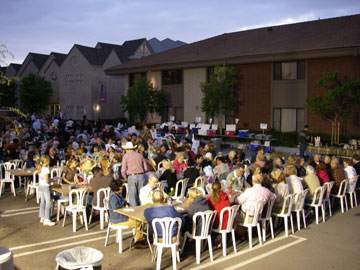 What would a grace-filled presbytery action look like? How about this: The presbytery extends grace to the Kirk of the Hills by allowing it to retain its property at no cost. Moreover, the presbytery throws a giant party for Kirk of the Hills, thanking God for their forty years of shared ministry, and blessing Kirk of the Hills as it enters a new season of its service to Christ through the EPC. (Photo: My farewell party at Irvine Presbyterian Church a year ago. When a church leaves one denomination for another, it’s rather like when a pastor leaves one church for another ministry. Sometimes the church being left gets hurt and mad, making the pastor’s transition painful. Sometimes the church throws a party to celebrate God’s grace and sovereignty. Parties are so much better!) What would a grace-filled presbytery action look like? How about this: The presbytery extends grace to the Kirk of the Hills by allowing it to retain its property at no cost. Moreover, the presbytery throws a giant party for Kirk of the Hills, thanking God for their forty years of shared ministry, and blessing Kirk of the Hills as it enters a new season of its service to Christ through the EPC. (Photo: My farewell party at Irvine Presbyterian Church a year ago. When a church leaves one denomination for another, it’s rather like when a pastor leaves one church for another ministry. Sometimes the church being left gets hurt and mad, making the pastor’s transition painful. Sometimes the church throws a party to celebrate God’s grace and sovereignty. Parties are so much better!)
What would a grace-filled response from the church look like? Try this: The church accepts the gracious offer of the presbytery and the party to celebrate their shared ministry. At that party, church leaders present the presbytery with a check (or I.O.U.) for $1.75 million, in thanks for forty years of partnership, and to help the presbytery plant a new church.
How’s that for grace-filled? Or is it too idealistic, too impractical? It reminds me a little of that impractical parable Jesus told of the Prodigal Son and his Prodigal Father. That Jesus, he always had crazy ideas, like turning the other cheek and walking the second mile and giving up your life for others. I wonder what he’d do with his property in Tulsa, Oklahoma.
The PC(USA) and Church Property, Part 14
Part 14 of series: The PC(USA) and Church Property
Permalink for this post / Permalink for this series
In recent posts I’ve argued that the Presbytery of Eastern Oklahoma should allow the Kirk of the Hills to keep its property even though it has left the PC(USA) and joined the Evangelical Presbyterian Church. I’m not just singling out this one presbytery, however. I have made the case for a presbytery allowing a church to leave the denomination with its property if the church’s process is appropriate and if the vote of the congregation is at least two-thirds in favor of leaving.
One might object that I’m not being fair to presbyteries and their leaders. After all, they believe, rightly, that the Constitution of the PC(USA) states that all church property is “held in trust . . . for the use and benefit of the Presbyterian Church (U.S. A.)” (G-8.0201). They interpret this to mean that presbyteries should seek to keep congregational property within the denomination, even if this requires costly court battles. Though I have argued that the Constitution of the PC(USA) actually gives plenty of room for dismissing congregations with their property to other denominations, my view isn’t dominant among presbytery leaders. So, for them, keeping property in the PC(USA), or making sure the presbytery is compensated financially when a departing church keeps its property, is a matter of Constitutional duty.
Moreover, one might also object that I am not seeing things from the perspective of the presbytery. After all, I have been a pastor of a congregation, not a presbytery official. I may not realize how discouraging it is for presbyteries to lose congregations, how contrary to a presbytery’s mission, and how costly in terms of mission dollars. Currently, the average PC(USA) church contributes about $20.00 per member to the presbytery, of which about $5.00 goes on to the General Assembly. This means if a church the size of Kirk of the Hills (2000+ members) leaves the denomination, the cost to the presbytery is would be more than $30,000 a year. (Note: in my suggested process for a congregation that leaves, I argued that a church should gradually wind down its contribution to the presbytery, and consider a special gift besides.)
It’s true that I have never been on presbytery staff, nor held a leading role in a presbytery (moderator, vice-moderator, etc.). But I have been active in two presbyteries, and have had close relationships with presbytery officials in Los Ranchos Presbytery. It isn’t hard for me to imagine how hard it might be, emotionally and practically, for presbytery leaders to lose churches to other denominations.
In fact, I’ve experienced something quite similar in my tenure as a parish pastor. Let me cite a few examples.
A Family Leaves Because of Their Teenagers
First, I think of times when leading members of Irvine Presbyterian Church chose to leave this congregation and join another. For example, early in my pastorate in Irvine, a couple from the church met with me. They were central leaders in the congregation, arguably the most influential. They were also major contributors to the church (though I never knew exactly what people gave). They explained that they loved Irvine Presbyterian Church, but their teenage children had not connected to the youth ministry (which, at the time, was pretty weak; it’s much different today). Their kids had gotten involved in the top-notch youth ministry of a large, independent church in Irvine. Reluctantly, they had decided to leave Irvine Pres and move their family to the other church.
As you might well imagine, I was terribly disappointed. I think to some small extent I took it personally, though I believed their reason for leaving had nothing to do with me. I also worried greatly about the budgetary impact from their leaving. Yet I could understand why they wanted their children to be in an excellent youth ministry, and why they were choosing to keep their family together. So, by God’s grace, I was able to bless them and their move. We maintained a caring friendship over the years. And, in time, God brought new leaders and contributors to the Irvine church.
A Man Leaves Because He Is Unhappy with My Leadership
On another occasion, another leader in the church met with me to announce that he and his family were leaving. This departure did have something with me and my leadership. He was frustrated that I was not moving the church more quickly ahead in areas of disciple and mission. Our conversation was a hard one. Not only were we about to lose a key family, but also the reason for leaving had to do with me. I found myself wanting to be defensive, even to get angry. But, somehow, I managed to glimpse a larger vision of the kingdom of God. This man was not my enemy, but my friend and brother. Our differences were significant, and we wouldn’t be able to be in the same congregation anymore, but we were still part of Christ’s mission together.
Years later, that man and I continue to be good friends. Neither of us burned the bridge when he left. Over the years, he would sometime join us for worship. At times he became a trusted advisor to me. I still wish he hadn’t left our church (and denomination), but God has greatly blessed him and his ministry as a lay person since his departure.
An Elder Leaves to Become a Southern Baptist
My final example concerns a man named Buddy. He was one of my closest friends in the Irvine congregation and a key elder on the church session (board of elders). Buddy’s partnership in ministry meant a great deal to me and to our church.
One day I received a phone call from Rick Warren. (Yes, the Rick Warren. He was a casual friend whose church was about ten miles away from mine.) Rick began by saying, “I have something to ask you that you’re not going to want to give me.”
“What is that?” I asked. I couldn’t imagine anything that I had to offer Rick Warren.
“I want to hire Buddy for my staff. He’ll become a key leader in our Purpose-Driven ministry. I need somebody with Buddy’s maturity and experience. Obviously he can’t stay our your elder board, which is why I’m calling you.”
“Ugh!” I said. “But if that’s what God wants, then I don’t want to stand in the way.”
“I owe you two draft choices and another player to be named later,” Rick added. Thanking me for my support.
As I got off the phone, I felt almost sick to my stomach. I hated the thought of losing Buddy . . . and to a Southern Baptist church, no less. But I had to remember that the kingdom of God is much bigger than my church or my ministry. So, with sadness, we sent Buddy off to Saddleback.
 A few months later I participated in his ordination at Saddleback. I had never before helped ordain a PC(USA) elder to the role of a Southern Baptist minister. I had never before particpated in any Southern Baptist ordination, for that matter. Though I rejoiced in God’s new call for Buddy, I still felt sad about losing such a fine partner in ministry. (Photo: The worship center of Saddleback Church. Talk about church property! Sheesh!) A few months later I participated in his ordination at Saddleback. I had never before helped ordain a PC(USA) elder to the role of a Southern Baptist minister. I had never before particpated in any Southern Baptist ordination, for that matter. Though I rejoiced in God’s new call for Buddy, I still felt sad about losing such a fine partner in ministry. (Photo: The worship center of Saddleback Church. Talk about church property! Sheesh!)
A couple of months ago I had supper with Buddy. We are still dear friends. It was great to hear of all the ways God is using him at Saddleback. Though Irvine Pres and I missed Buddy after he left, and though our ministry was hurt by his absence, nevertheless, his kingdom impact was much greater at Saddleback than anything he would have experienced at Irvine Pres. I can see so clearly that God moved Buddy to Saddleback.
I’ll stop with my stories. I could tell many more like these. My point is that I do have some idea how it feels to invest in something – in my case, in somebody – only to see that investment pay off in another ministry. In none of the examples I’ve given did those who left Irvine Presbyterian join a PC(USA) church. Yet in every instance, God used them mightily in their new ministries. My loss, and Irvine Presbyterian Church’s loss, was clearly a gain for the kingdom God. And that is what really matters, isn’t it?
I’m sure there are times when it’s not the best thing for a PC(USA) congregation to leave the PC(USA), and to leave with its property. I’ve discussed some of these situations earlier in this series. But surely there are times when God is, in fact, leading a PC(USA) to join another denomination. And, surely, in many of these cases the kingdom of God is best served by presbyteries allowing the churches to leave with their property.
No, I haven’t stood in the shoes of presbytery leaders going through this process. But I’ve worn similar shoes, and found that sometimes it’s right to walk the second mile in them as people leave my ministry for another. I wish more denominational leaders, including presbytery leaders, could have this perspective and experience.
The PC(USA) and Church Property, Part 15
Part 15 of series: The PC(USA) and Church Property
Permalink for this post / Permalink for this series
As I’ve explained in two recent posts (1, 2), on Thursday, June 26, 2008, the General Assembly of the Presbyterian Church (U.S.A.) approved Resolution 03-21. This resolution provided for the provision of funds from the General Assembly to presbyteries engaged in lawsuits with congregations that have left the PC(USA) and joined the Evangelical Presbyterian Church and have tried to keep their church property. An amendment to the resolution weakened its effectiveness by having all funding for the lawsuits come from special contributions.
Nevertheless, the symbolic statement of the Assembly was a strong one. They endorsed and encouraged lawsuits between churches and denominational bodies over church property. If a PC(USA) congregation votes to leave the denomination, it should be aware that its presbytery, with the approval of the General Assembly, will try to keep church property and will be prepared to go to court to ensure this result. Given the fact that the General Assembly didn’t actually provides funds from its budget, its clear that the symbolic statement was the main point. The vote on this resolution was meant to threaten and intimidate any congregations that might consider leaving the PC(USA). The Assembly’s vote said: “If you leave, we’ll keep your property, and will fight you in court to make sure we keep it. So beware!”
The next day, Friday, June 27, 2008, the General Assembly considered another resolution having to do with church property and litigation. Resolution 04-28 was co-authored by Robert Austell and Archie Smith. Austell, you may recall, was one of those General Assembly commissioners who spoke against Resolution 03-21. I quoted Austell’s remarks a couple of posts ago. As you might well imagine, the tone and substance of Austell’s resolution was radically different from that “go ahead and sue our fellow Presbyterians” resolution that passed on Thursday. Here is the whole text of Resolution 04-28:
The 218th General Assembly (2008) of the Presbyterian Church (U.S.A.)
1. Directs the Stated Clerk to send this resolution to the presbyteries, synods, and sessions, indicating the will of the assembly that presbyteries and synods develop and make available to lower governing bodies and local congregations a process that exercises the responsibility and power “to divide, dismiss, or dissolve churches in consultation with their members” (Book of Order, G-11.0103i) with consistency, pastoral responsibility, accountability, gracious witness, openness, and transparency.
2. Believing that trying to exercise this responsibility and power through litigation is deadly to the cause of Christ, impacting the local church, other parts of the Body of Christ and ecumenical relationships, and our witness to Christ in the world around us, [the General Assembly] urges [congregations considering leaving the denomination,] presbyteries[,] and synods to implement a process using the following principles:
• Consistency: The local authority delegated to presbyteries is guided and shaped by our shared faith, service, and witness to Jesus Christ.
• Pastoral Responsibility: The requirement in G-11.0103i to consult with the members of a church seeking dismissal highlights the presbytery’s pastoral responsibility, which must not be submerged beneath other responsibilities.
• Accountability: For a governing body, accountability rightly dictates fiduciary and connectional concerns, raising general issues of property (G-8.0000) and specific issues of schism within a congregation (G-8.0600). But, full accountability also requires preeminent concern with “caring for the flock.”
• Gracious Witness: It is our belief that Scripture and the Holy Spirit require a gracious witness from us rather than a harsh legalism.
• Openness and Transparency: Early, open communication and transparency about principles and process of dismissal necessarily serve truth, order, and goodness, and work against seeking civil litigation as a solution.
The crucial affirmations in this resolution are those that have to do with litigation between churches. The resolution doesn’t mince words when it affirms that “trying to exercise this responsibility and power [for congregations leaving the denomination] through litigation is deadly to the cause of Christ.” This is because “Scripture and the Holy Spirit require a gracious witness from us rather than a harsh legalism.” So the process when congregations consider leaving should be open so as to “work against seeking civil litigation as a solution.”
In the Rationale that accompanied Resolution 04-28, Austell and Smith explain:
To be direct, if a church goes through the trauma of an internal split, wouldn’t we rather the members go to church anywhere than end up disillusioned and quitting on a local church and presbytery that have been to court in a protracted legal battle? Wouldn’t we rather lose some dirt or brick or even lose face than poison the well of witness in our community? As the resolution states, we believe litigation by Christians against Christians is deadly to the cause of Christ.
Not unlike me, Austell and Smith are hopeful about the potential for churches and presbyteries to deal graciously with the issues associated with a congregation’s departure:
What do we envision? We call on local church leadership and presbytery leadership to care pastorally for majority and minority groups in a church seeking dismissal. This could result in a final picture, not of two embittered enemies in court, but in mutual blessing and partnership in the midst of the sadness of parting. We envision presbytery leadership and local church leadership working together to bless and make way for a majority group and to take great care to relocate and shepherd a minority group. This could be the last great joint mission effort of two parts of Christ’s body who are focusing on different mission fields.
What happened with Resolution 04-28? Given the fact that only a day earlier the General Assembly had voted to supply funds for lawsuits over church property, even when these lawsuits were between denominational cousins and fellow Presbyterians (PC(USA) and EPC), and given the fact that the “sue your fellow Christians” resolution had won with 57% of the vote, you’d rightly expect that the General Assembly would reject Resolution 04-28 by about the same margin. After all, how could Austell and Smith expect an Assembly that had just approved to fund lawsuits among Christians to agree that such litigation is, in fact, “deadly to the cause of Christ”?
So what happened? Resolution 04-28 passed, with 76% of commissioners voting affirmatively (519 yes; 157 no; 8 abstain). How amazing! This means that around 200 commissioners who voted on Thursday to fund litigation between churches voted on Friday that such litigation was “deadly to the cause of Christ.” Whoa!
What are we to make of this discrepancy? Honestly, I don’t know. Were the 200 who switched sides hopelessly confused? Or were they just patting the New England Presbytery on the head by affirming their "sue our fellows" resolution but not funding it? Do these commissioners really believe that litigation between churches over church property is “deadly to the cause of Christ”? Or were they just trying to “make nice” in an effort to keep the PC(USA) together? Or are they convinced that litigation that is “deadly to the cause of Christ” is, nevertheless, necessary for the health of the PC(USA)? Or . . . ? I don’t know. You tell me.
This is part of what makes it so tricky and trying to remain faithful in the PC(USA). If the denomination would simply be clear about what it affirms – whether we’re talking about homosexuality, church property, the nature of Christ, or whatever – then we could decide where we stand and what to do about it. But the denomination is endlessly being “tossed to and fro and blown about by every wind of doctrine” (Eph 4:14). One day we vote to fund lawsuits against our fellowship Presbyterians. The next day we vote that such litigation is “deadly to the cause of Christ.” I wonder how much longer the PC(USA) will continue to affirm and do that which hurts the cause of Christ.
So is there a way out of the church property crisis? I’ve already made some suggestions in this series. In my next post I’ll sum up what I’ve said before and add a few final thoughts.
The PC(USA) and Church Property, Part 16
Part 16 of series: The PC(USA) and Church Property
Permalink for this post / Permalink for this series
Today I’ll finish this series on the PC(USA) and property. (Is that cheering I hear in the background?) I thought I’d review a few main points and add some concluding remarks.
 The Book of Order of the PC(USA) states that all church property is “held in trust . . . for the use and benefit of the Presbyterian Church (U.S.A.)” (G-8.0201). Taken out of context, this passage might suggest that any congregation that leaves the PC(USA) must always surrender its property. In fact, it seems that quite a few people, including many leaders of denominational bodies, interpret the “held in trust” clause in this manner. But, given the larger claims of the Book of Order, including the fact that the PC(USA) does not exist to advance itself, but rather to further the cause of Christ, and the fact that the PC(USA) explicitly acknowledges that our denomination is only one part of the Church of Jesus Christ, and the fact that we have a process for dismissing a congregation to another denomination, and the fact that we are committed to ecumenical partnerships with other denominations, it seems fully consistent with the Book of Order for a presbytery to dismiss a congregation with its property in certain situations. This is consistent with the larger mission and purpose of the PC(USA) because this whole denomination, property and all, exists for the use and benefit of Jesus Christ. Those who read the “held in trust” clause as preventing presbyteries from letting congregations leave with their property intact are missing the larger point of the Book of Order, not to mention the larger point of what it means to be part of the Church of Jesus Christ. The Book of Order of the PC(USA) states that all church property is “held in trust . . . for the use and benefit of the Presbyterian Church (U.S.A.)” (G-8.0201). Taken out of context, this passage might suggest that any congregation that leaves the PC(USA) must always surrender its property. In fact, it seems that quite a few people, including many leaders of denominational bodies, interpret the “held in trust” clause in this manner. But, given the larger claims of the Book of Order, including the fact that the PC(USA) does not exist to advance itself, but rather to further the cause of Christ, and the fact that the PC(USA) explicitly acknowledges that our denomination is only one part of the Church of Jesus Christ, and the fact that we have a process for dismissing a congregation to another denomination, and the fact that we are committed to ecumenical partnerships with other denominations, it seems fully consistent with the Book of Order for a presbytery to dismiss a congregation with its property in certain situations. This is consistent with the larger mission and purpose of the PC(USA) because this whole denomination, property and all, exists for the use and benefit of Jesus Christ. Those who read the “held in trust” clause as preventing presbyteries from letting congregations leave with their property intact are missing the larger point of the Book of Order, not to mention the larger point of what it means to be part of the Church of Jesus Christ.
From a logical and theological point of view, I don’t think the Book of Order needs to be changed in order for presbyteries to feel both free and, at times, obligated to let congregations leave with their property. But I am aware that, in practice, congregations often feel intimidated by presbyteries when it comes to matters of property, and presbyteries often feel slighted by congregations that don’t consult with them before voting to leave the denomination. We have a huge lack of mutual trust, honesty, and grace in matters of church property.
For this reason, it might be necessary to amend the Book of Order in one way or another. I would be supportive of some amendment to G-8.0201. It might read something like this:
G-8.0201 Property Is Held in Trust
All property held by or for a particular church, a presbytery, a synod, the General Assembly, or the Presbyterian Church (U.S.A.), whether legal title is lodged in a corporation, a trustee or trustees, or an unincorporated association, and whether the property is used in programs of a particular church or of a more inclusive governing body or retained for the production of income, is held in trust nevertheless for the use and benefit of the Presbyterian Church (U.S.A.), which exists for the use and benefit of Jesus Christ and his mission. Therefore, there may be situations in which legal ownership of church property should be transferred to another denomination or Christian ministry.
That’s not polished language, but you get my drift.
The way the Book of Order talks about the situations we’re facing in the PC(USA) is not, in my view, particularly helpful. We have a section that reads:
G-8.0601 Property of Church in Schism
The relationship to the Presbyterian Church (U.S.A.) of a particular church can be severed only by constitutional action on the part of the presbytery. (G-11.0103i) If there is a schism within the membership of a particular church and the presbytery is unable to effect a reconciliation or a division into separate churches within the Presbyterian Church (U.S.A.), the presbytery shall determine if one of the factions is entitled to the property because it is identified by the presbytery as the true church within the Presbyterian Church (U.S.A.). This determination does not depend upon which faction received the majority vote within the particular church at the time of the schism.
For one thing, I think the word “schism” is not especially helpful here. It is too inflammatory. When those in the PC(USA) describe those who leave as “schismatic” and those who leave describe the PC(USA) as “heretical” or “apostate,” we’ve left Christian truth and charity far behind. Nevertheless, this passage from the Book of Order appears to limit the actions of the presbytery, not to mention the work of the Spirit and the lordship of Christ. If I read it correctly, G-8.0601 says that if a church votes to leave the PC(USA), let’s say by a 80% to 20% vote, the presbytery can only “determine” that the 20% faction “is entitled to the property because it is identified by the presbytery as the true church within the Presbyterian Church (U.S.A.).” The presbytery does not seem to be empowered to recognize that the 80% group should keep its property, even in a situation where the 20% group wouldn’t be able to use it or doesn’t want to keep it. Doesn’t it seem better to say something like: “the presbytery shall determine how the property might best be used for the mission of Jesus Christ”?
If I’m reading G-8.0601 correctly (and I’d be happy to be shown that I’m wrong), then I think the Book of Order is making a theological and tactical mistake here. When a church leaves the denomination, the most important factor for determining who should own the property is not whether or not the church is a “true church within the Presbyterian Church (U.S.A.).” This shouldn’t be the main factor even when there is a minority of the congregation that votes to stay in the PC(USA). The most important question, and the only one that ultimately matters, is: “What is best for the kingdom of God?” Or, more simply, “What does Jesus want to do with his property?” It would be the height of arrogance to assume that Jesus always wants to keep PC(USA) property in the PC(USA).
In fact, some presbyteries have shown the kind of kingdom perspective I’m advocating. They have let churches leave the denomination with their property, sometimes at no expense to the church, sometimes selling the property to the church at a significant discount. But other presbyteries have taken a “PC(USA) only” approach to property ownership, and have, in fact, spent a whole lot of Jesus’ money fighting for the legal ownership to his property.
This move is terrible stewardship, but that’s not all. It’s also an example of the sort of narrow-minded institutionalism that is killing the PC(USA). The more we focus on the PC(USA) and its success, the less we’re focused on the kingdom of God and its success. Sometimes we get so wrapped up in our own self-preservation as a denomination that we forget our true mission. We forget the call of Jesus to deny ourselves and take up our cross. We forget that sacrifice isn’t expected only of individuals, but also of the church. We forget that we are to give ourselves away for the sake of the kingdom of God. We forget that all church property belongs truly to Jesus Christ.
Our intramural lawsuits are not actually protecting the PC(USA), but injuring it. For example, if you were looking for a church, would you want to join a denomination that sues former churches and sister denominations? I wouldn’t. Not in a million years! And neither do thousands upon thousands of potential Presbyterians. So, as we’re fighting each other for property, we’re chasing people away from the Presbyterian church. In our effort to save ourselves, we’re killing ourselves off.
Fights between presbyteries and churches over church property not only reflect terrible stewardship and suicidal institutionalism, but also damage the mission of Christ. The last General Assembly was absolutely right when it affirmed, in Resolution 04-28, that “litigation is deadly to the cause of Christ.” How many people are turned off, not just to the PC(USA), but also to the gospel by headlines about church lawsuits? I hate to think of the number. Our actions confirm the worst stereotypes of Christians as self-absorbed, institutionally-bound, materialistic, unloving hypocrites. I wonder if we’d continue on this path if we realized how many people we’re chasing away from Christ by our lawsuits and petty in-fighting.
What will save us from this mess? Nothing. The only hope comes if we ask the question differently. Who will save us from this mess? The answer comes clearly from Scripture, though the context isn’t at all similar. In writing to the Romans Paul says:
For I do not do the good I want, but the evil I do not want is what I do. Now if I do what I do not want, it is no longer I that do it, but sin that dwells within me. So I find it to be a law that when I want to do what is good, evil lies close at hand. For I delight in the law of God in my inmost self, but I see in my members another law at war with the law of my mind, making me captive to the law of sin that dwells in my members. Wretched man that I am! Who will rescue me from this body of death? Thanks be to God through Jesus Christ our Lord! (Romans 7:19-25)
Only Jesus Christ can save the PC(USA) from our sinful ways. Institutional renewal could take all sorts of forms. Yet what the PC(USA) looks like in the future or even whether there is a PC(USA) is not the main point. The main point is Jesus Christ as Lord and Savior and Head of the Church. The main point is his mission and his glory.
I believe that what’s needed now more than ever in the PC(USA) is a widespread return to Christ. In the old days we’d call this repentance. We need to turn from our sin and turn to Christ. We need to turn from our self-interest and turn to Christ’s interest. We need to offer ourselves, our churches, and our properties to Christ, recognizing his lordship over all.
I’m not making this up because I’m so pious or clever. I’m simply restating what we Presbyterians say we believe. In fact, I will close this series by quoting the first section of the PC(USA) Book of Order. If you’ve never read this, it’s well worth your attention. And if you’ve read it before, I invite you to read it again.
G-1.0100 1. The Head of the Church
Christ Is Head of the Church
a. All power in heaven and earth is given to Jesus Christ by Almighty God, who raised Christ from the dead and set him above all rule and authority, all power and dominion, and every name that is named, not only in this age but also in that which is to come. God has put all things under the Lordship of Jesus Christ and has made Christ Head of the Church, which is his body.
Christ Calls the Church Into Being
b. Christ calls the Church into being, giving it all that is necessary for its mission to the world, for its building up, and for its service to God. Christ is present with the Church in both Spirit and Word. It belongs to Christ alone to rule, to teach, to call, and to use the Church as he wills, exercising his authority by the ministry of women and men for the establishment and extension of his Kingdom.
Christ Gives the Church Its Faith and Life
c. Christ gives to his Church its faith and life, its unity and mission, its officers and ordinances. Insofar as Christ’s will for the Church is set forth in Scripture, it is to be obeyed. In the worship and service of God and the government of the church, matters are to be ordered according to the Word by reason and sound judgment, under the guidance of the Holy Spirit.
Christ Is the Church’s Authority
d. In affirming with the earliest Christians that Jesus is Lord, the Church confesses that he is its hope and that the Church, as Christ’s body, is bound to his authority and thus free to live in the lively, joyous reality of the grace of God.
Thanks be to God! Amen.
|